
IBRAHIM MEÏTÉ SIKELY
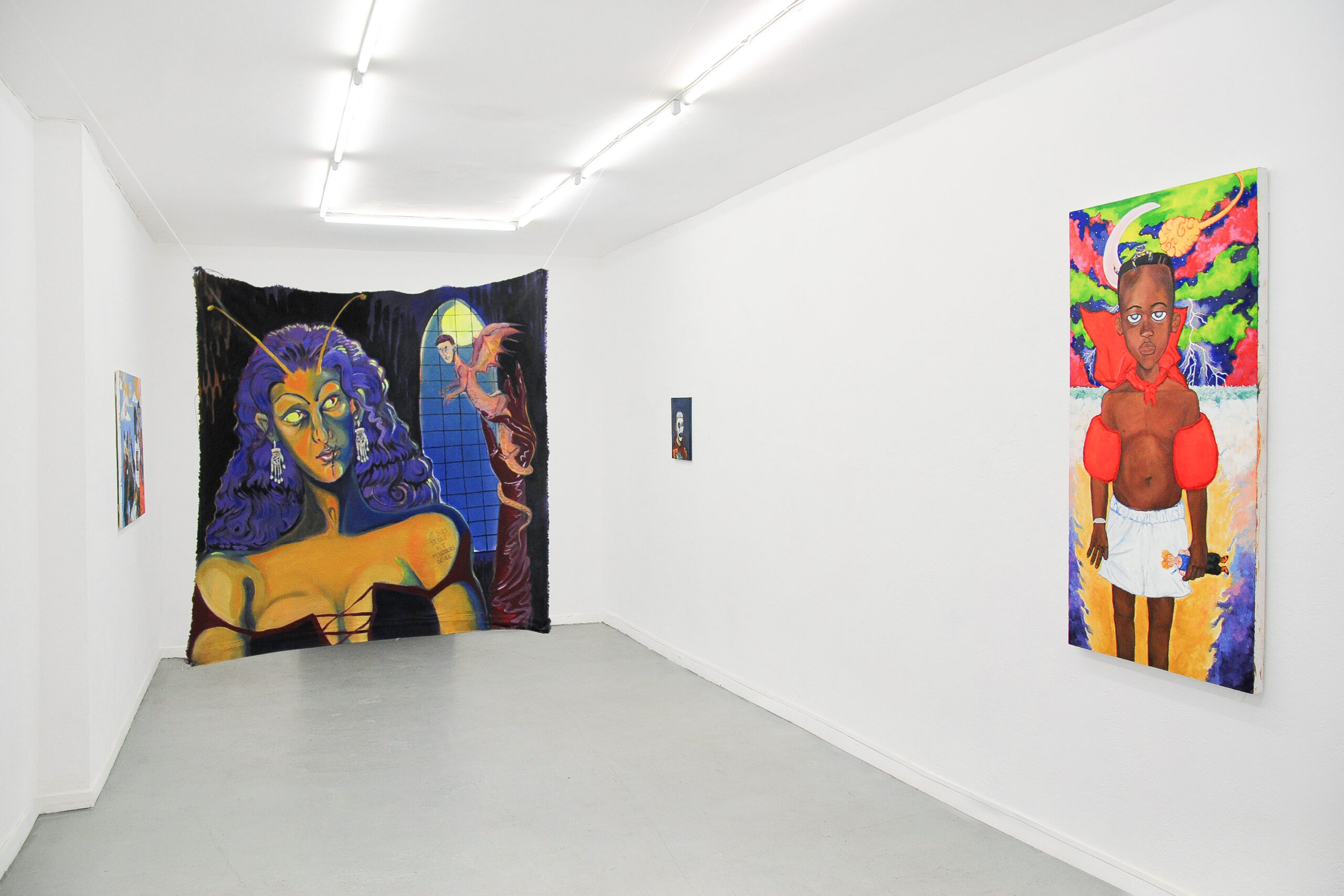
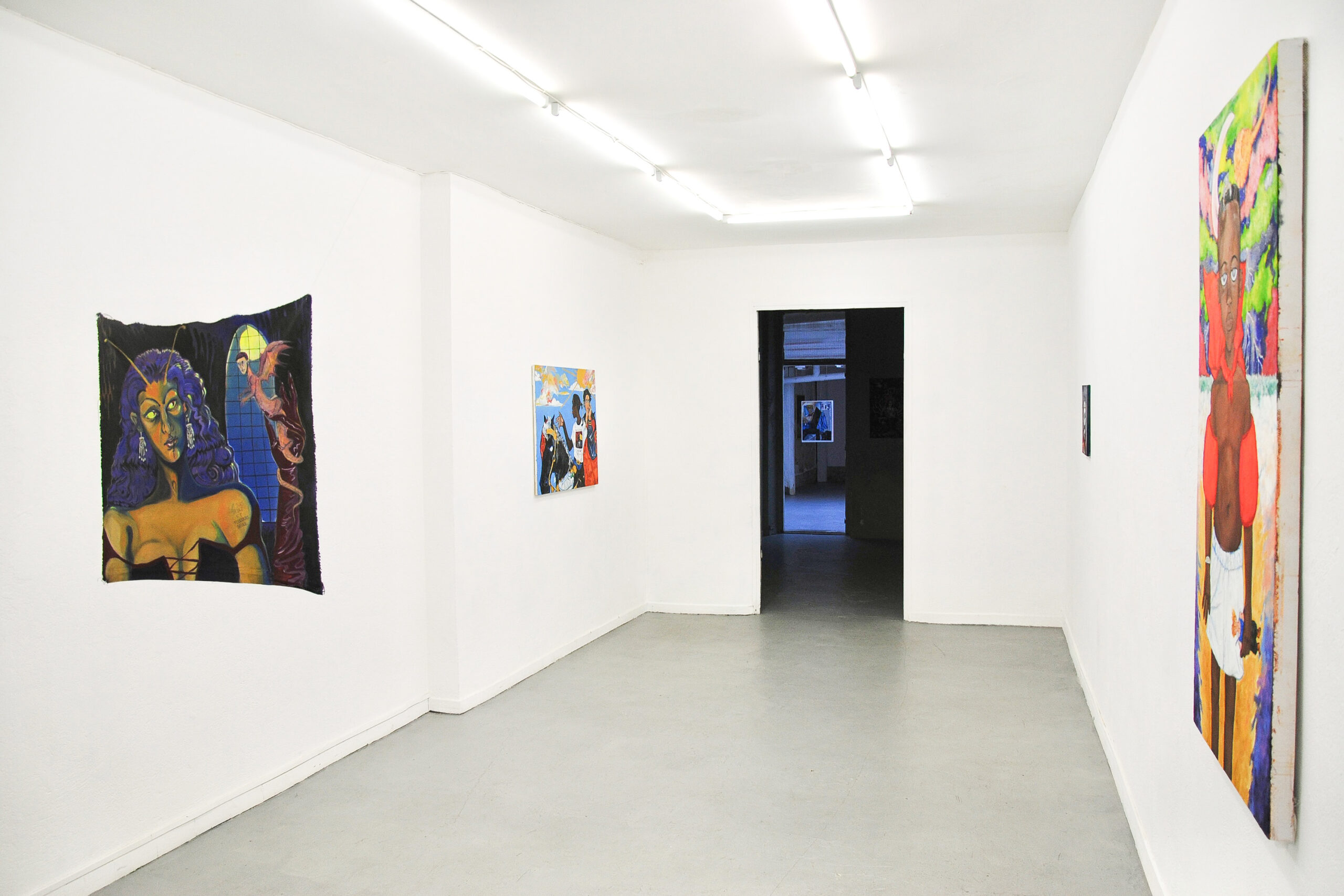
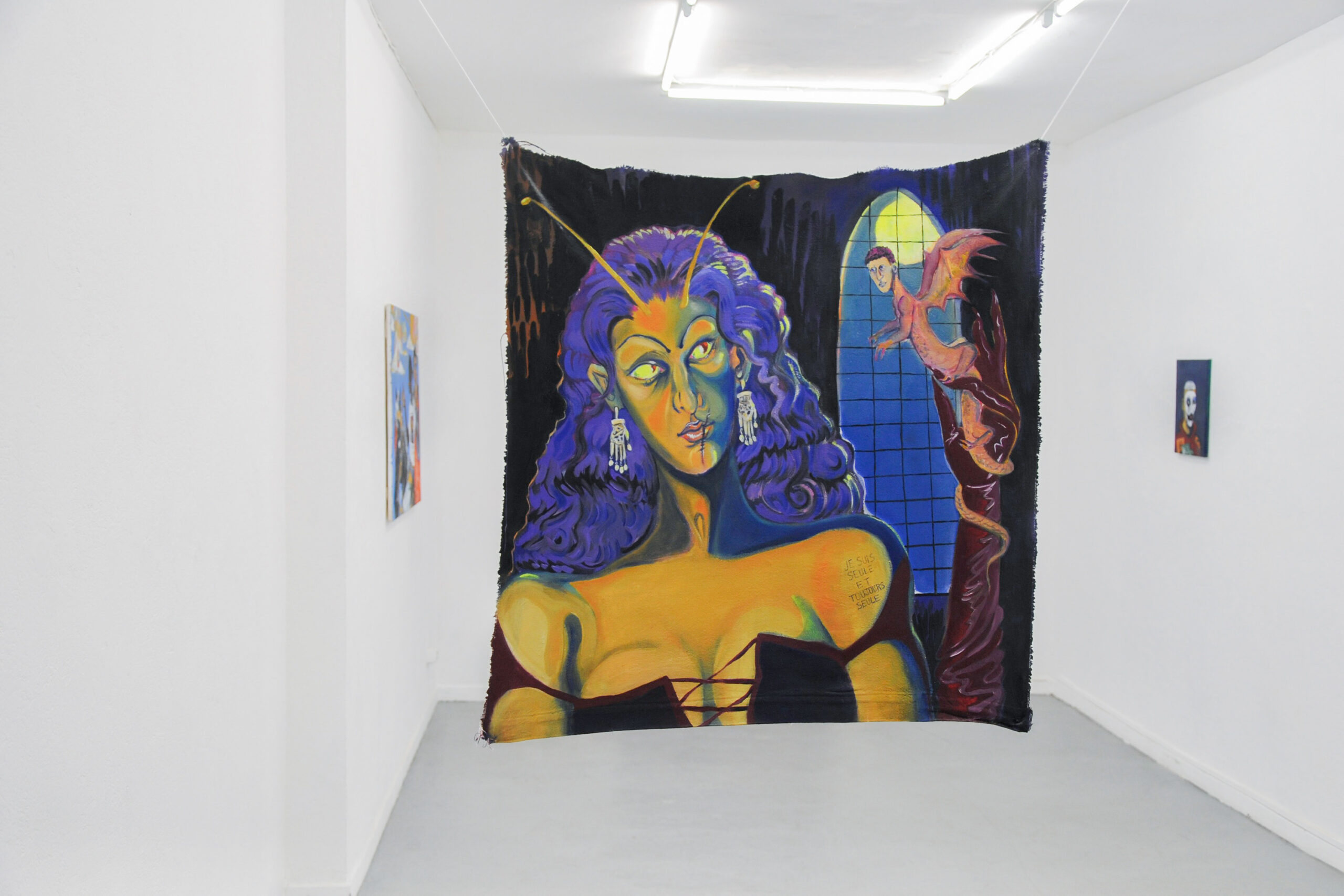
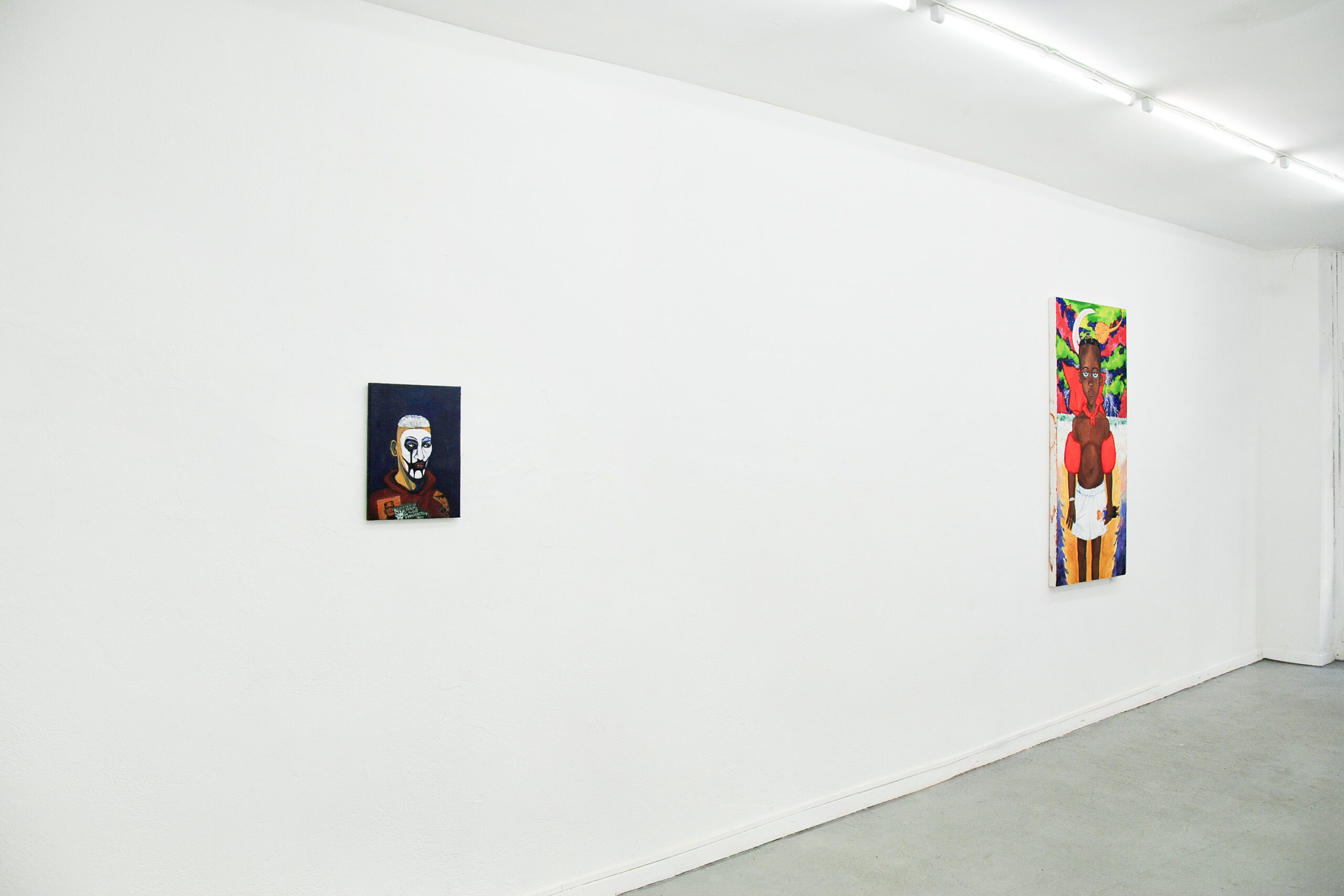
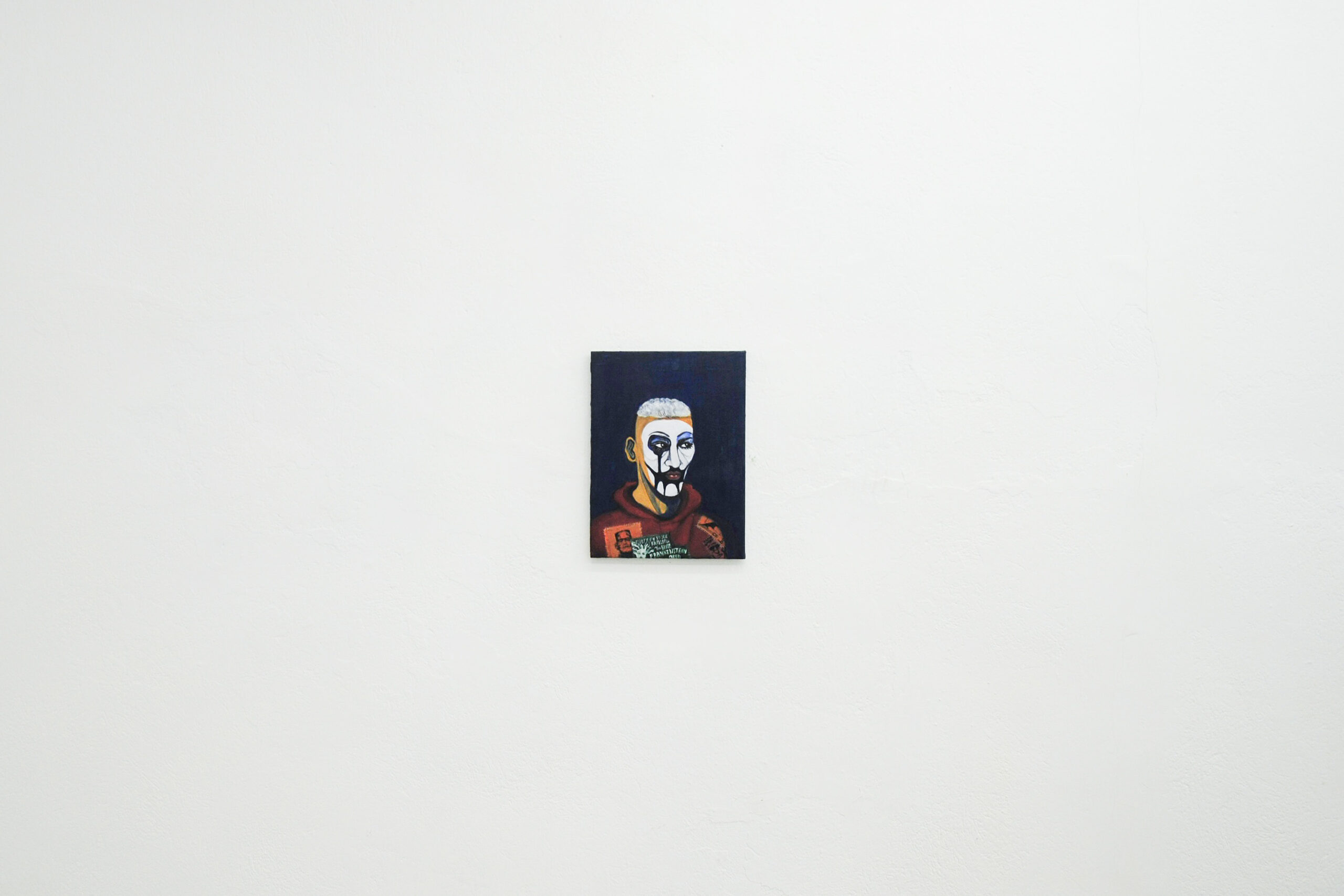
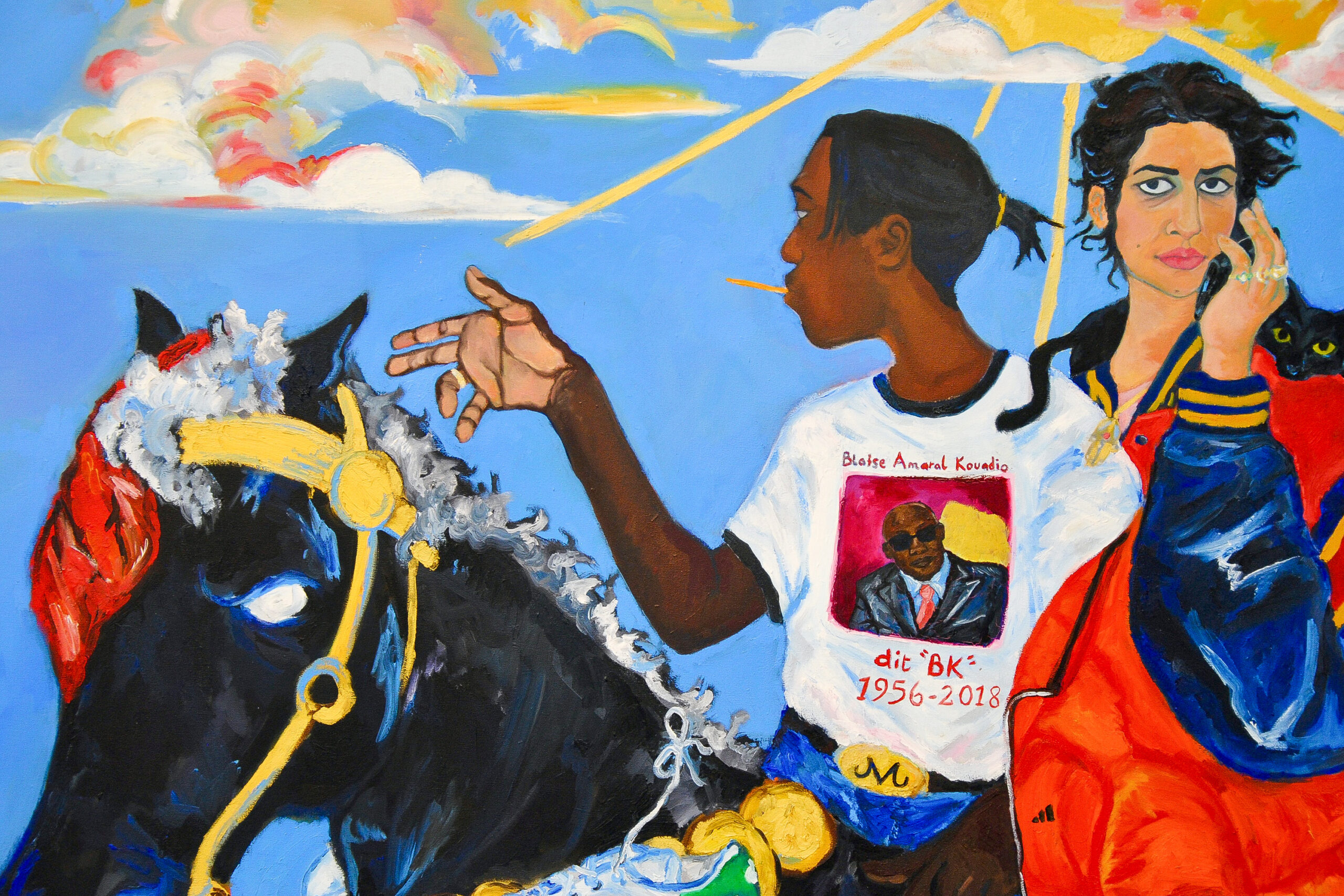
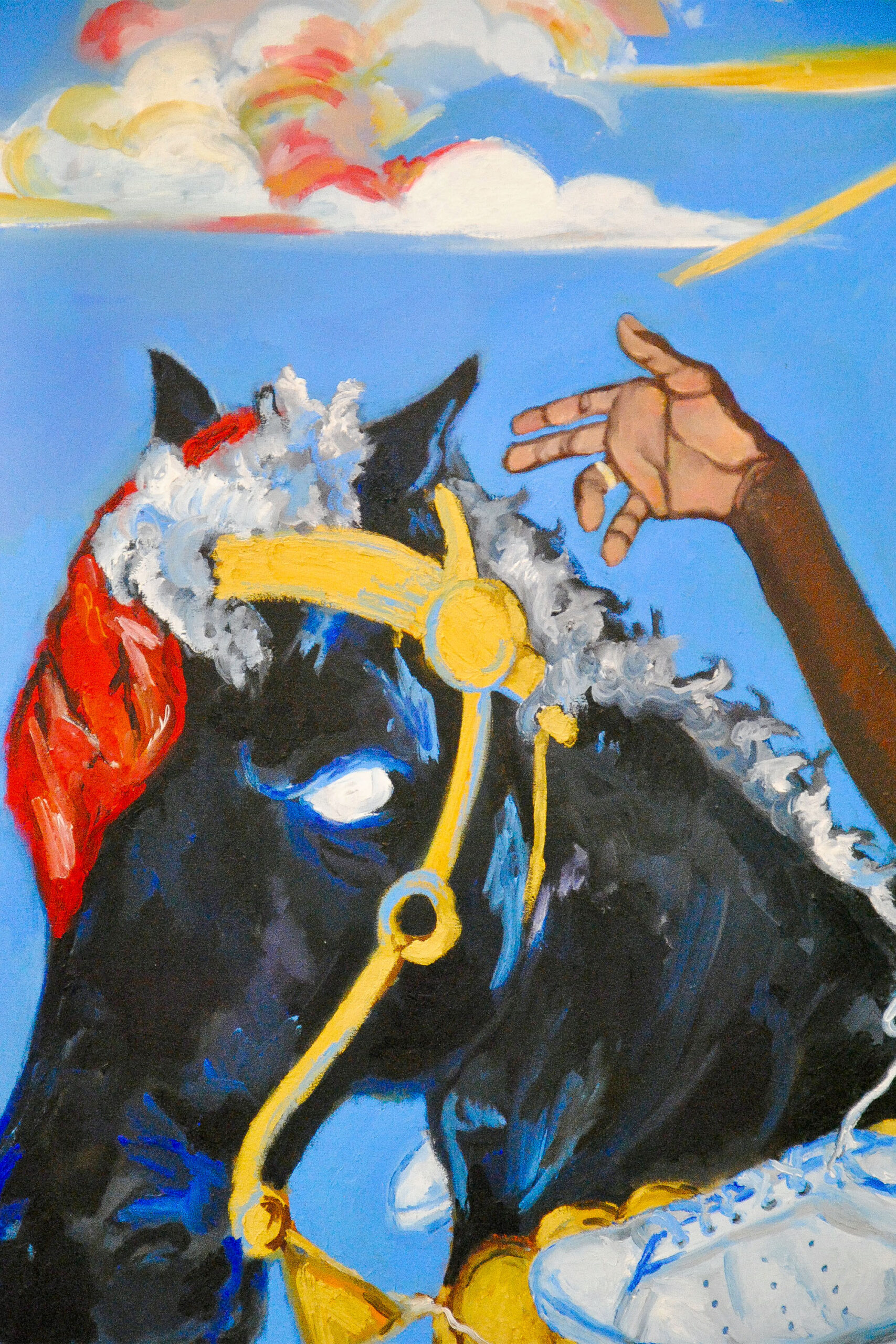
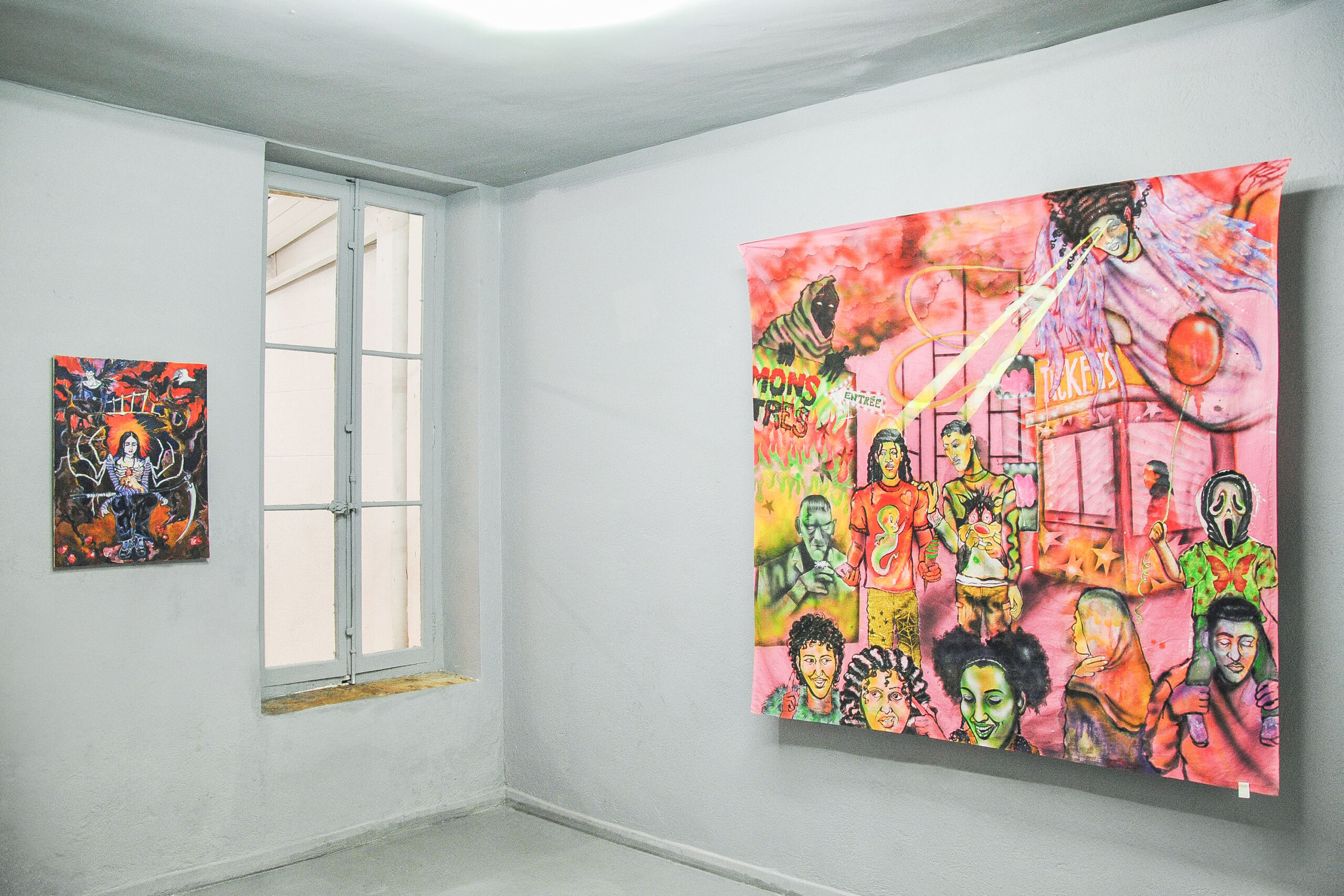
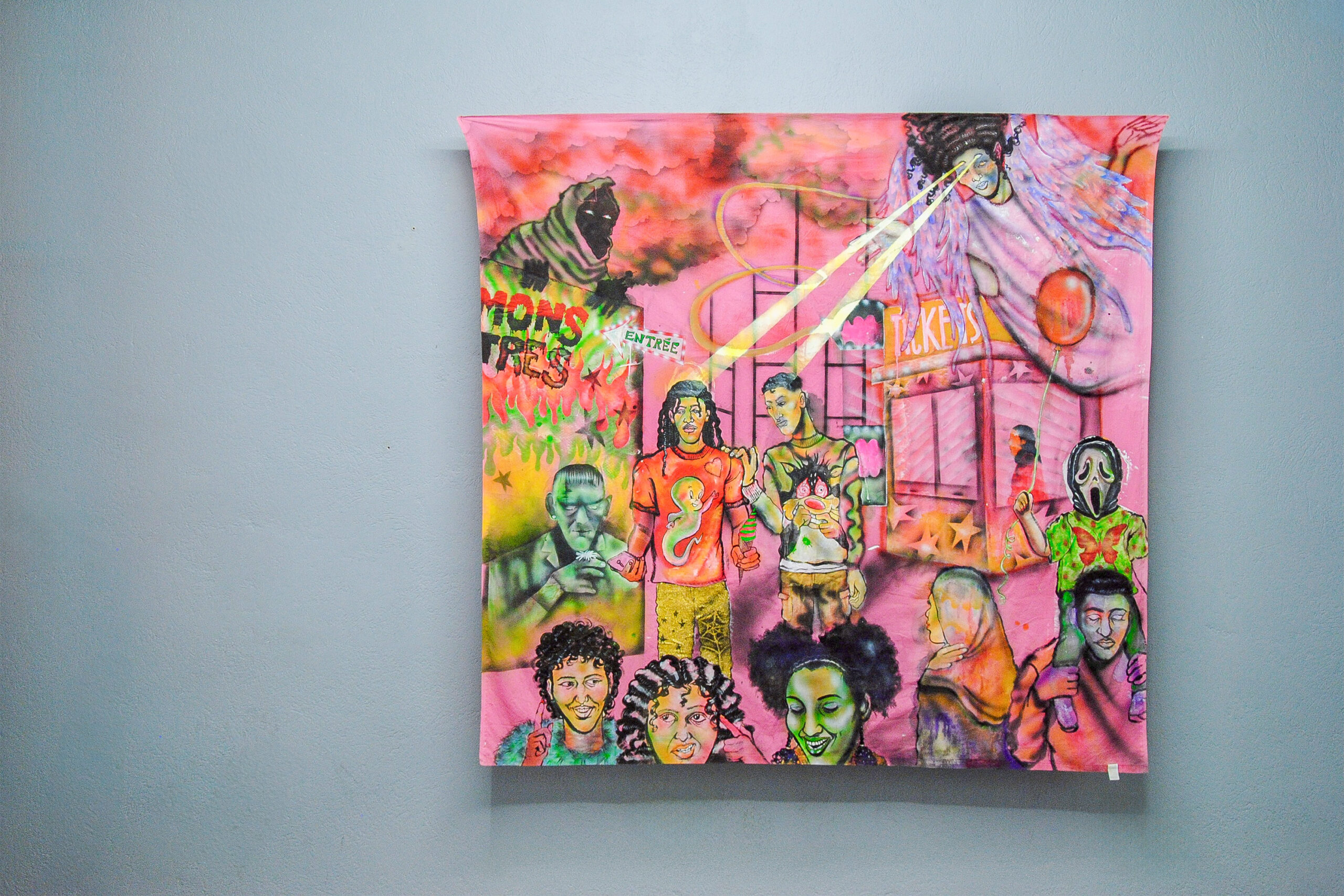
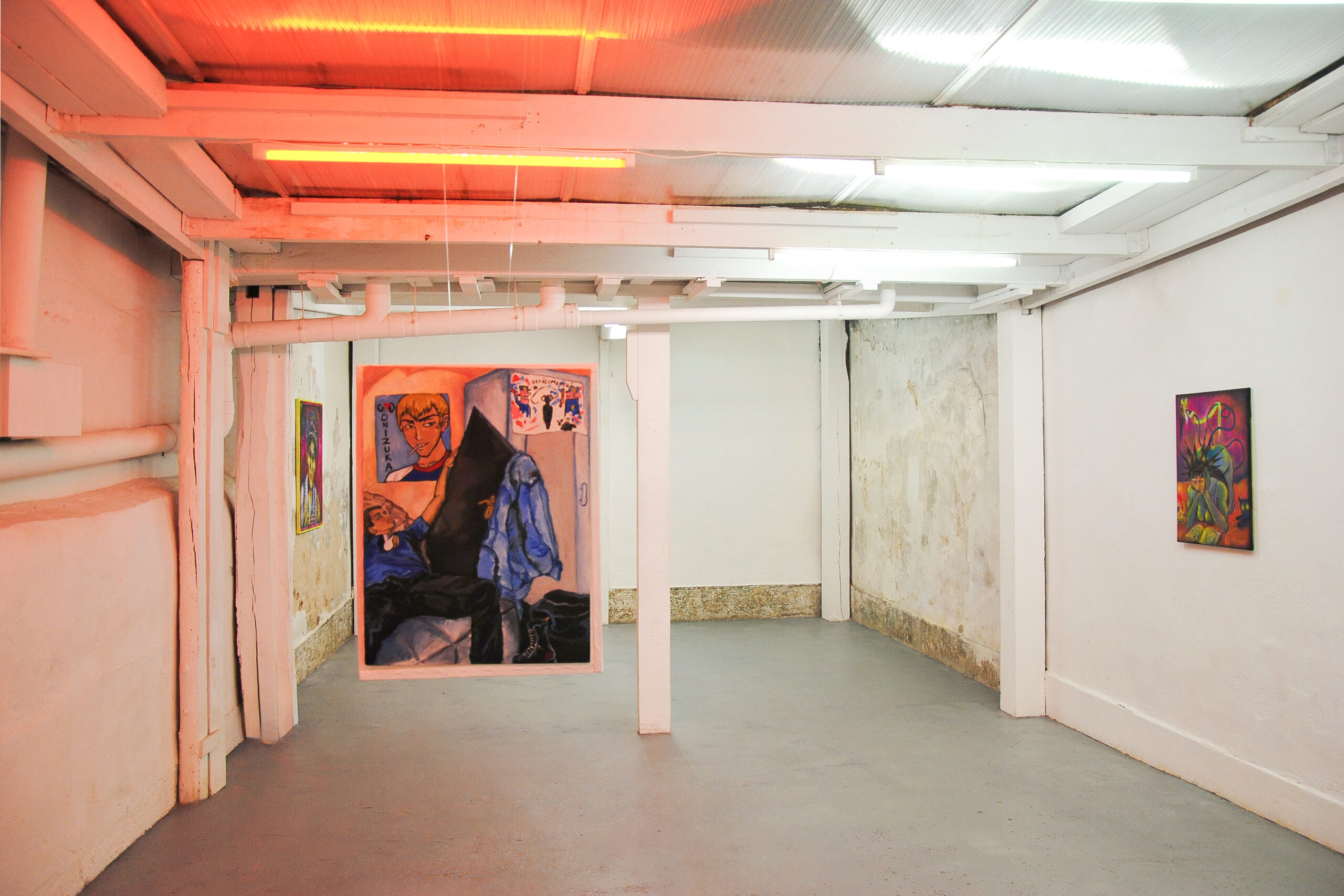
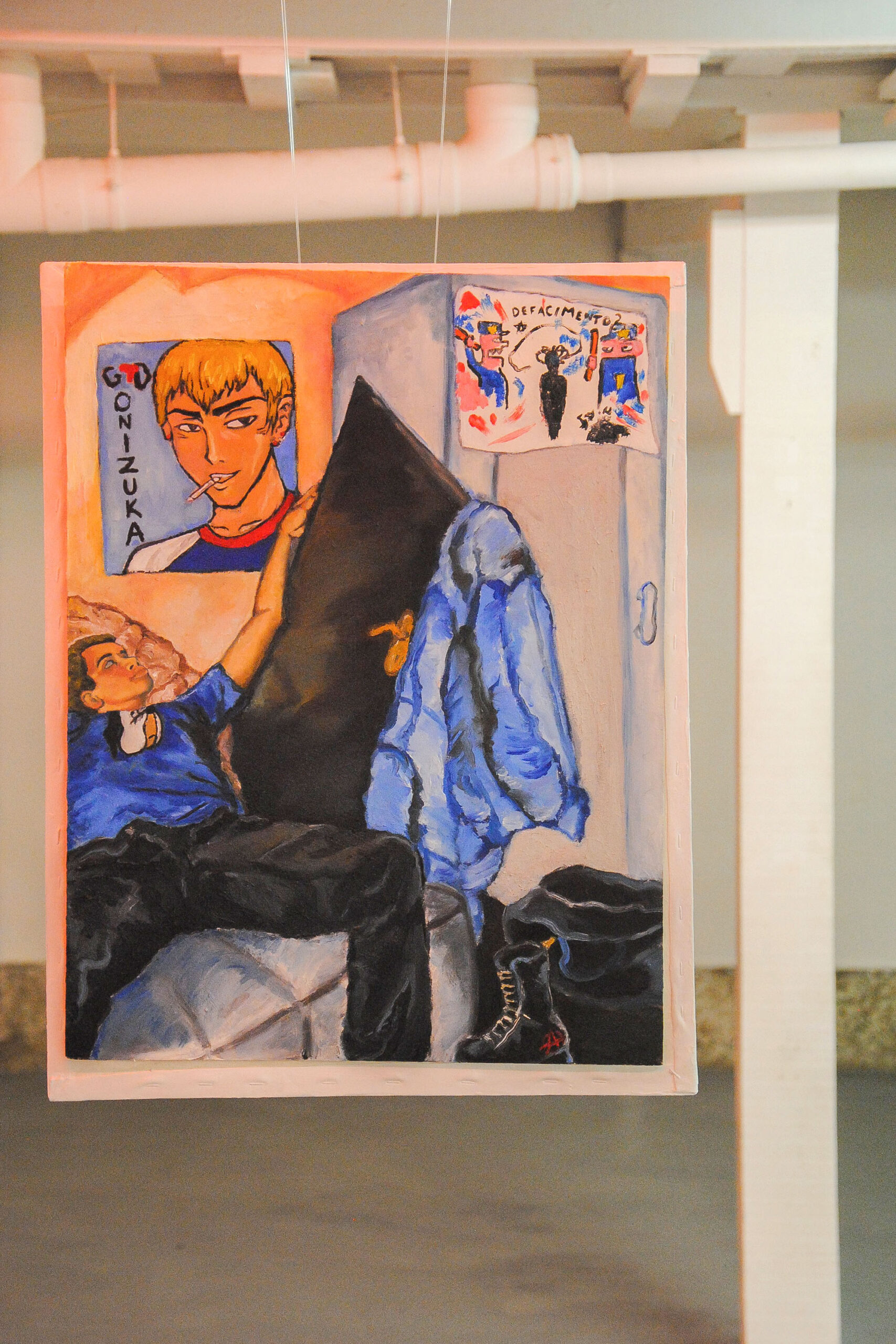
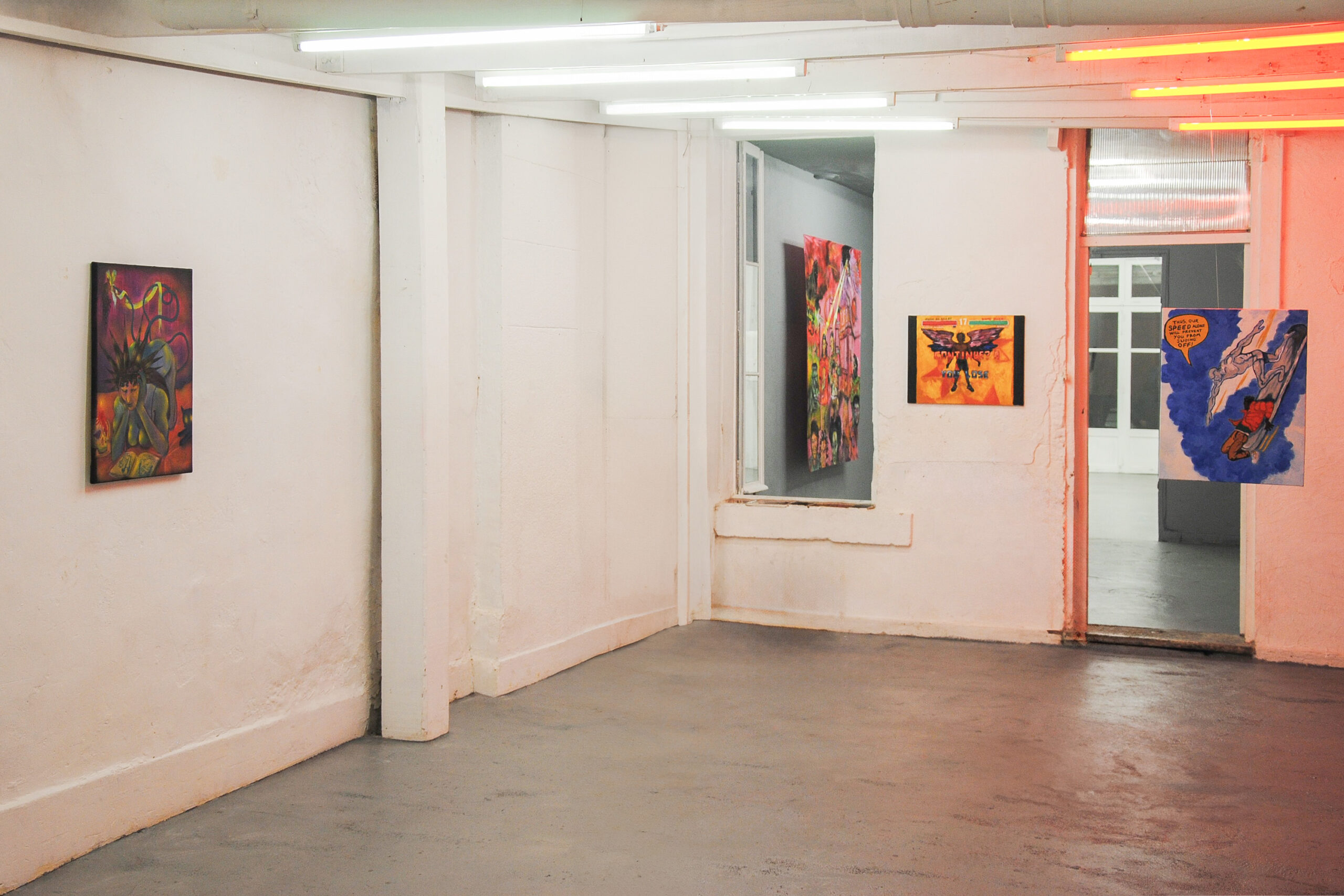
For their second duo exhibition, Neïla Czermak Ichti and Ibrahim Meïté Sikely present a selection of paintings, some of them previously unseen. The title of the exhibition refers to the song LOVE YOU TO DEATH, which tells a vampiric love story as salty sweat drips from her breast. Imaginations are unleashed and magical worlds open up.
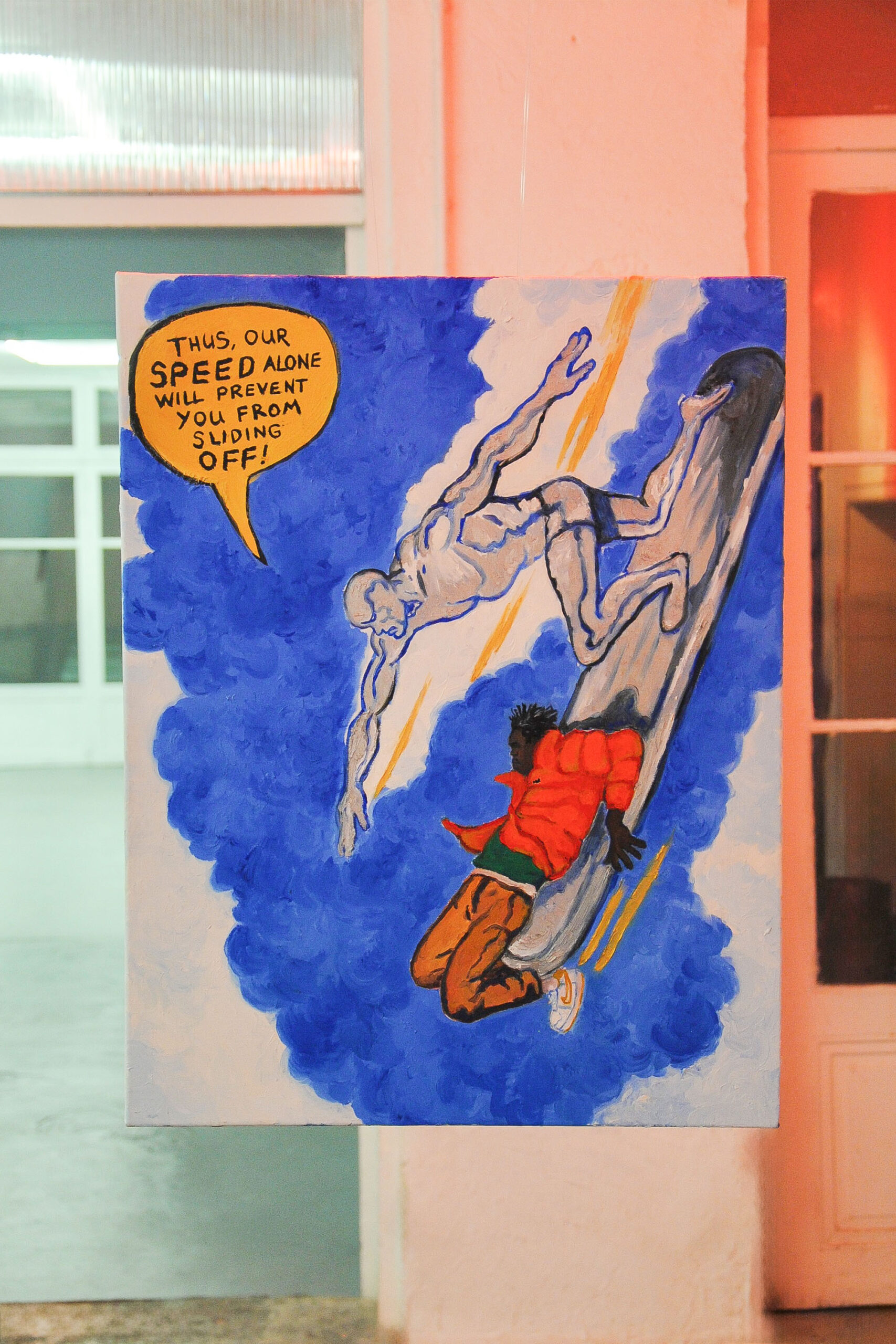
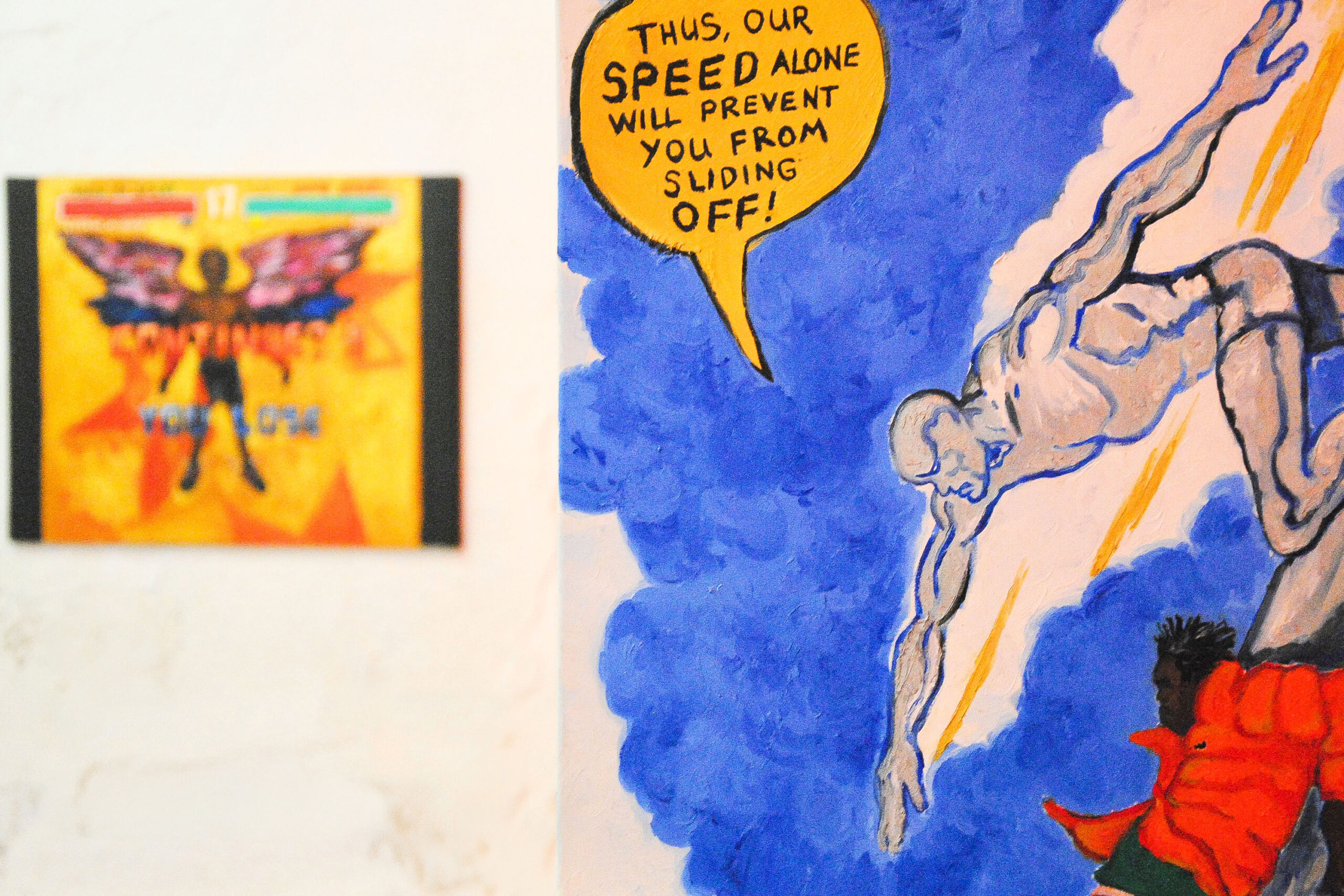
In this selection of works, Ibrahim Meïté Sikely proposes a narrative thread in which the artist stands at the center. Like a retrospective gaze from childhood to adulthood, these canvases are lessons in learning, pictorial memories of struggle and determination. In Tête d’Etoile (2021), “this little one is like an extension, the fire that a part of my soul could not manage to extinguish.” Adorned with inflatable armbands and a red cape—like a miniature armor recalling his childhood fragility—he looks out at the world with an almost incandescent intensity. In the background, between sky and earth, the artist depicts elements of his inner energy—blazing flames and rumbling lightning—symbolizing a growing power. From this Saiyan-like energy, Ibrahim employs a plurality of techniques, articulating flat areas and impasto, loading muscular clouds and winged limbs with pictorial matter.
Beneath the appearance of bright, shimmering colors, and through multiple references to pop culture, the artist scatters clues. He does not settle for playful citation of these emblems; rather, they function here as icons, codes, and messages, understandable to those who recognize them—much like the parabolic imagery of Renaissance works. One finds the memory of police violence through Defacement by Basquiat, and a critique of established systems through the figure of Onizuka (Droopy Season, 2020); a gothic and ominous universe through the presence of Ryûk, the psychopomp god from Death Note (Shinigami Realm, 2021); an allegory of space-time and interworlds through Future Trunks (Tête d’Etoile, 2021). Each of these references points to questions of justice and vendetta, healing and trauma, bitterness and pride, darkness and power. While brilliance, speed, and movement appear at first glance, the actions remain suspended. In the broad blue expanses and the rendering of the sky, like a dilated time, one reads the depth of a melancholy and an opening toward possibilities yet to be conquered.
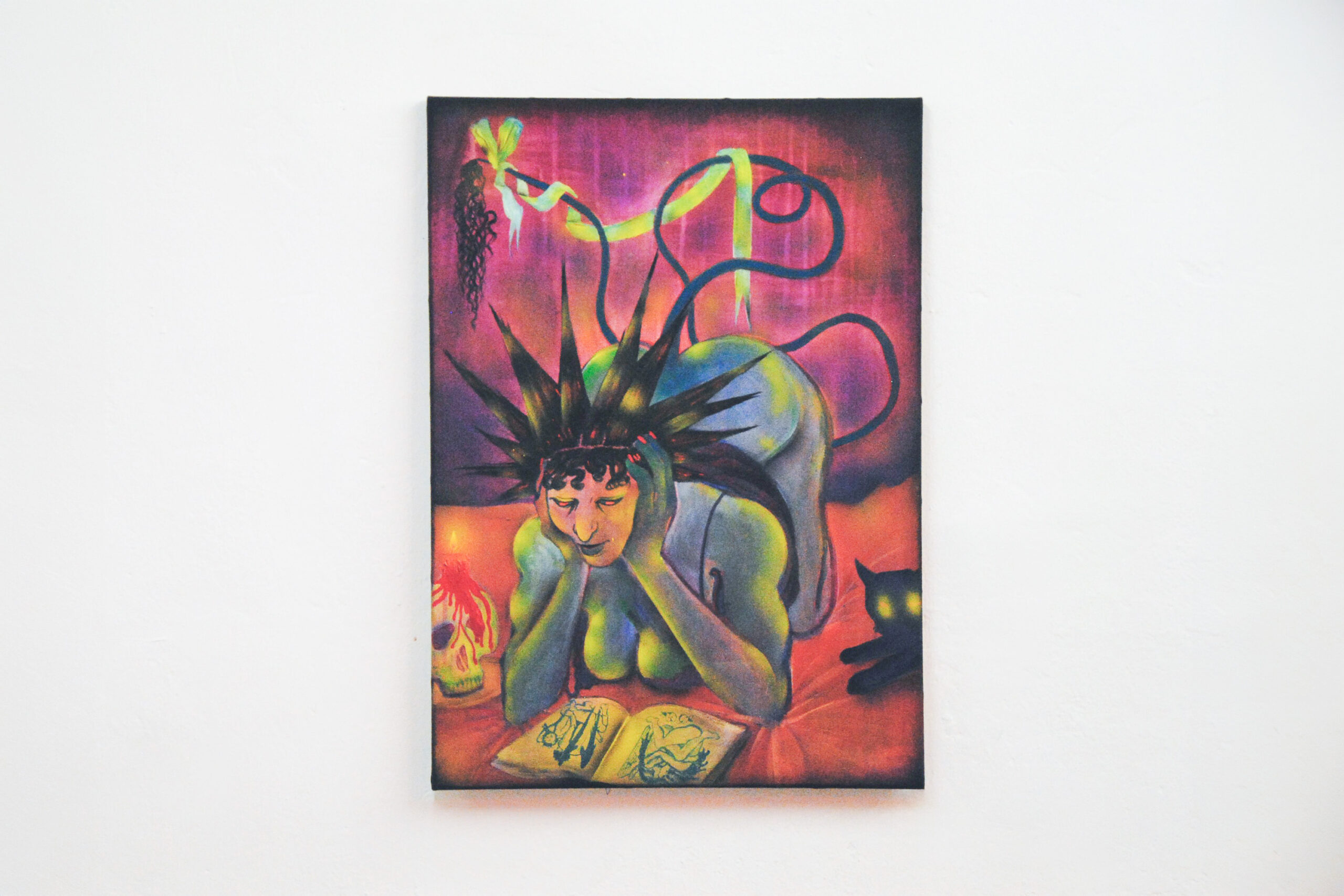
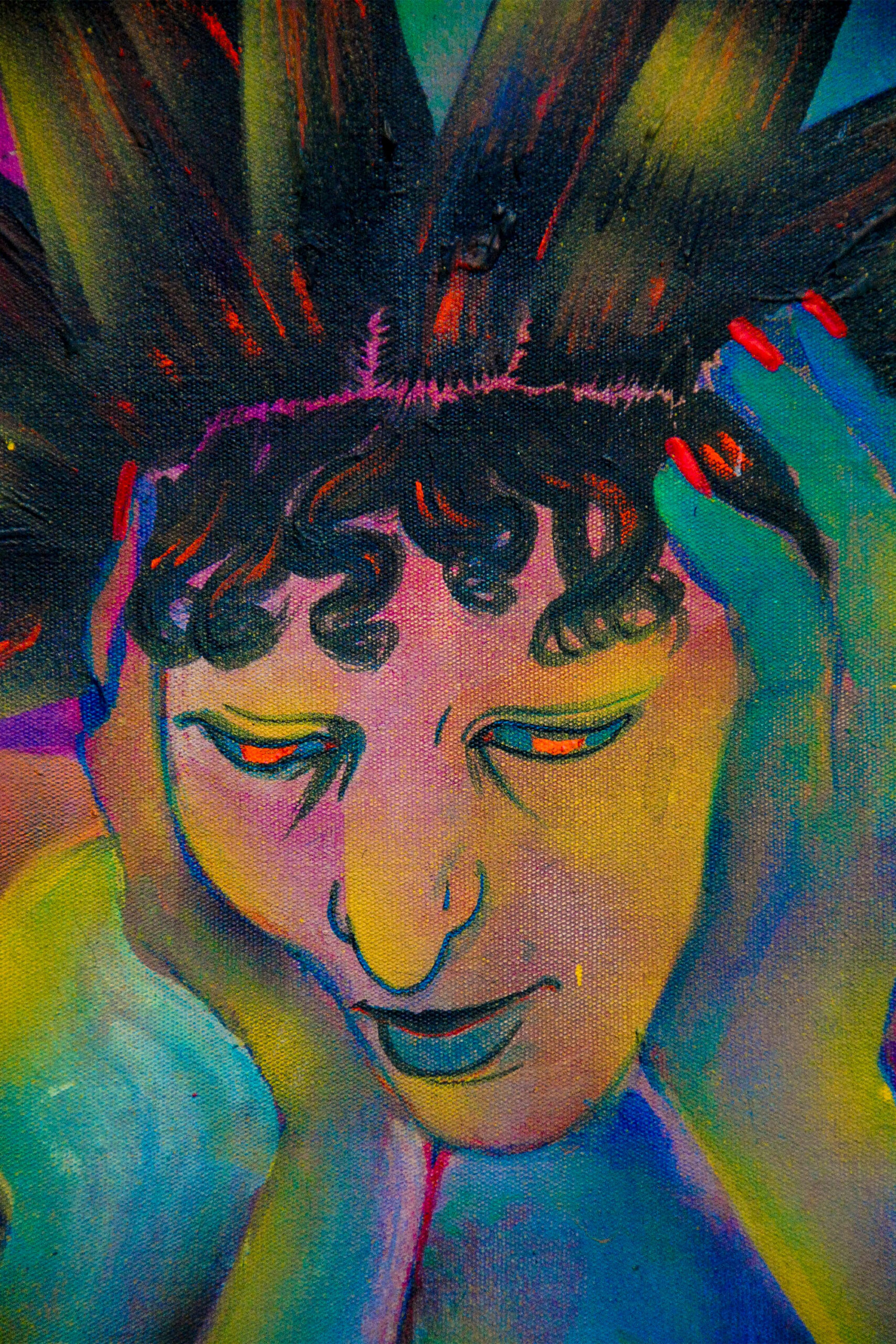
In this new series of paintings, Neïla Czermak Ichti asserts a gothic aesthetic inherited from her taste for horror and fantasy films, as well as death metal and old-school rap album covers. With Erudite (2021), the artist opens a path toward stranger, invisible worlds. She portrays a hybrid being, its naked, fleshly body crouched on a bed, a punk mohawk on its head, a ribbon bow at its tail—evoking both the figure of the alu-fiélonne, the feminine counterpart of cambions in occult literature, and the cursed heroines of Octavia Butler. Genetically modified, endowed with intuition and hypersensitivity, they traverse hostile lands. Here, her protagonist studies and reads an illustrated book of aphorisms on desire. Through these attributes and elements, Neïla shifts passion toward death.
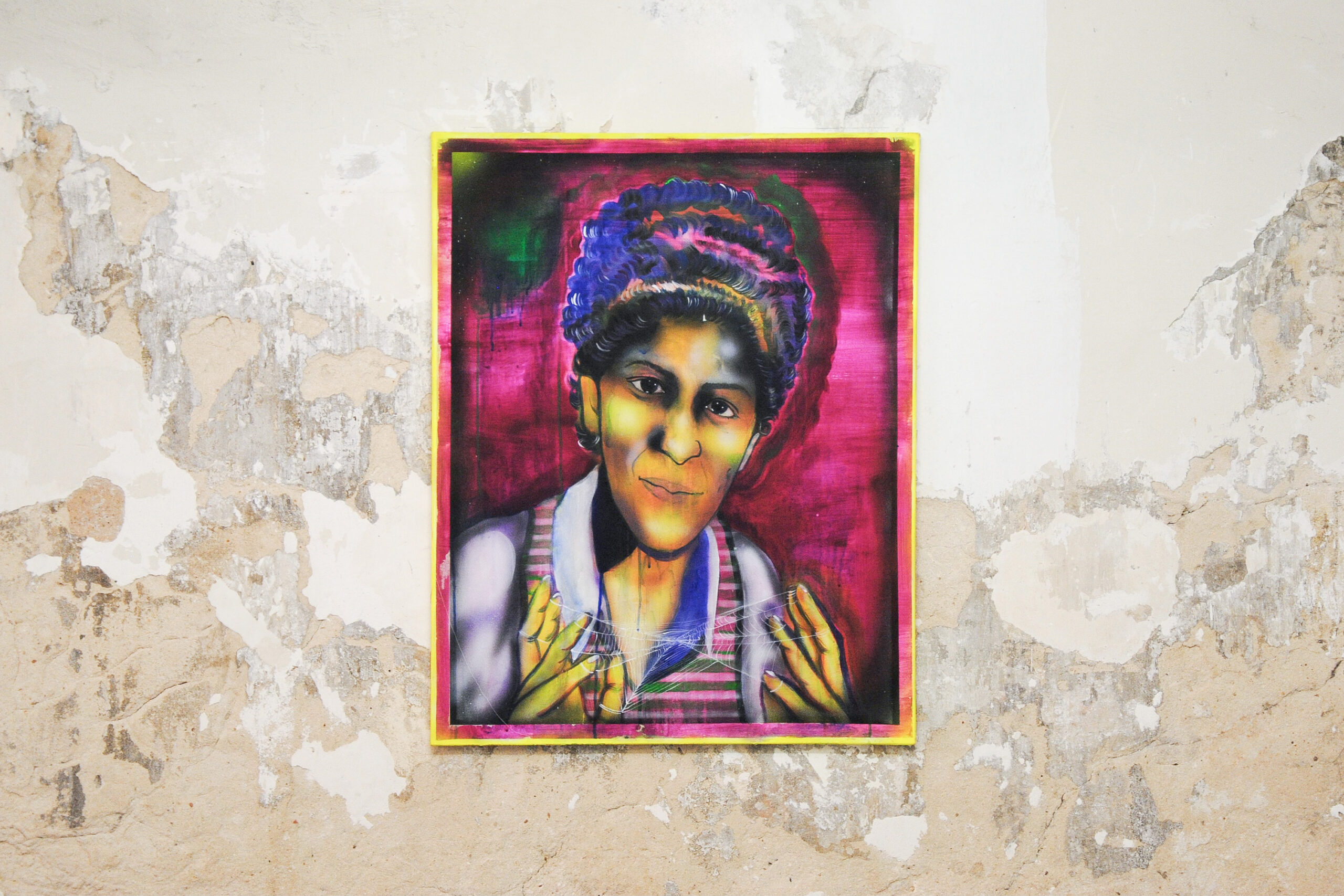
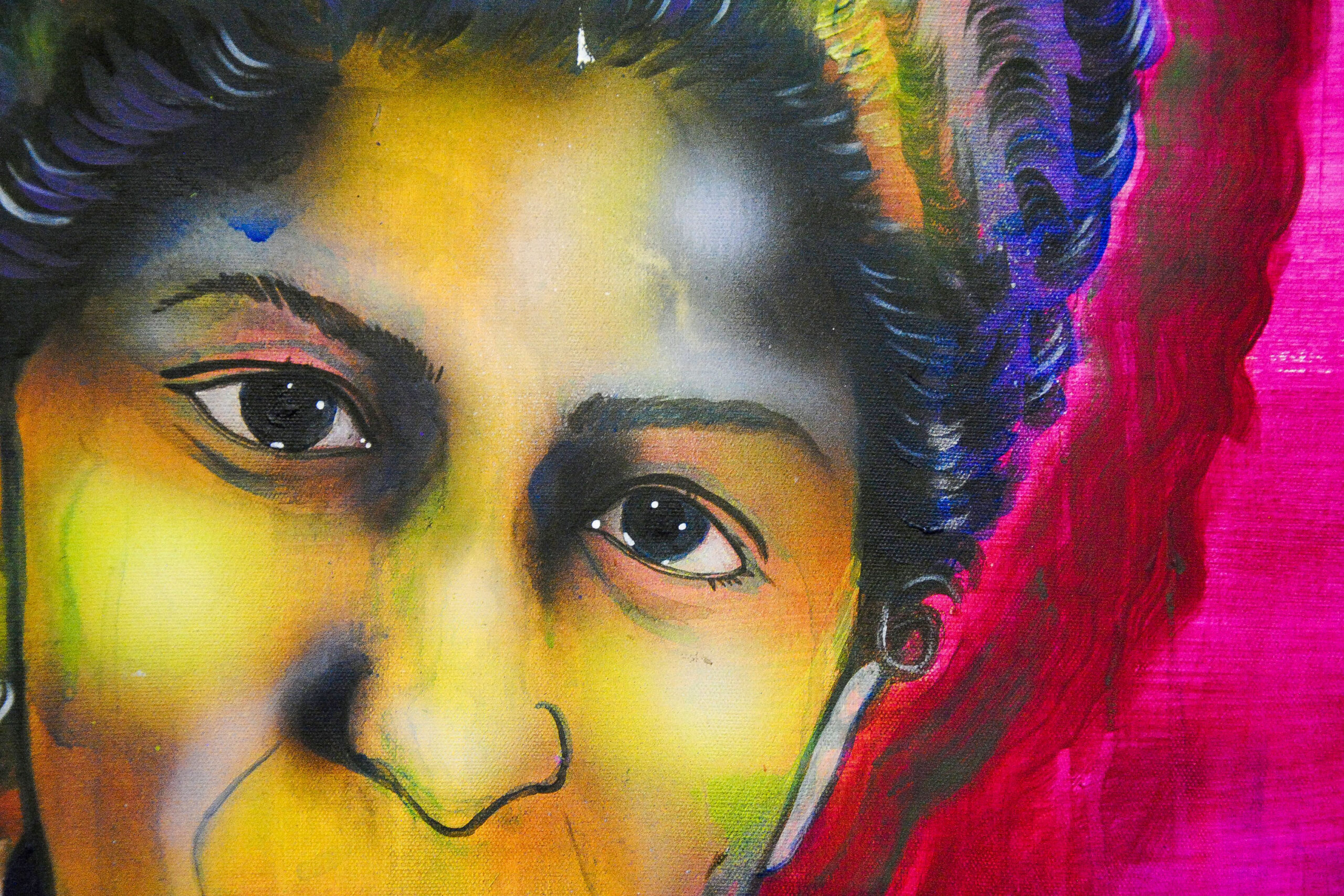
The works of Neïla Czermak Ichti convey an affection for the night, where everything shines more intensely: the yellow eyes of cats and the warmth of candles (L’Erudite, 2021), the lights of the fairground and the glitter of trousers (Les Anges de la Porte Dorée, 2021), the leather of corsets and the power of the moon (Dame à l’oiseau, 2021). A dark, shadowy atmosphere emerges, underscored by chromatic accents of phosphorescent highlights scattered here and there like points of light. Each of these paintings thus addresses inner fires and journeys. The spider web in One of the Most Hardcore She Is (Amel) (2021) symbolizes patience and resilience, while Aziz (2021) represents the artist’s avatar in GTA traversing isolated virtual spaces.
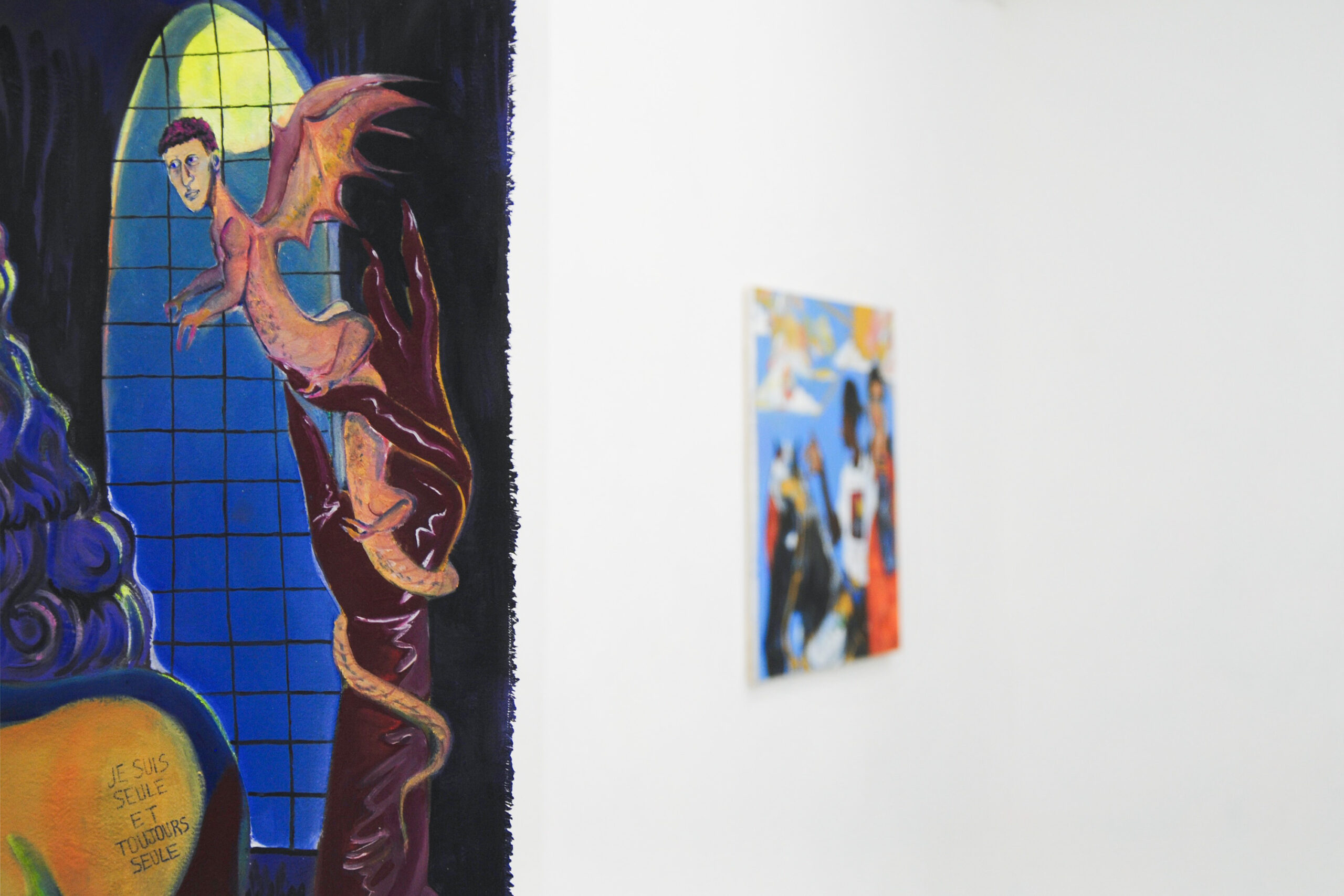
Yet the artist embraces this solitude, inscribed in ink on the skin—“JE SUIS SEULE ET TOUJOURS SEULE [I AM ALONE AND ALWAYS ALONE]”—while populating these worlds with fabulous companions. Witches, angels, Frankenstein’s creature, bats, dragons, vampires, ghosts, and monsters are depicted within their own realms. Safe there, they can be themselves and reveal, in intimacy, their beauty, tenderness, and warmth.
Anne Vimeux, Elise Poitevin