
Sarah Netter is an artist and translator based in Marseille. His work blends sculpture, writing, installation, and performance to reveal, with a touch of irony, the political narratives embedded in the history of textiles—costumes, uniforms, fashions, patterns. His practice, at once sculptural and scriptural, economical and sexy, humorous and crafty, draws on the principles of autofiction-theory; it questions our languages and our clothing, the stereotypes they convey, and emancipatory perspectives.
For Transdressing, his first solo exhibition, Sarah Netter borrows a phrase from Kate Bornstein’s Gender Outlaw: On Men, Women and the Rest of Us. This choice also spontaneously responds to the desire for a striking title—a word that resonates, that slips “dressing” into a gesture of transgression.
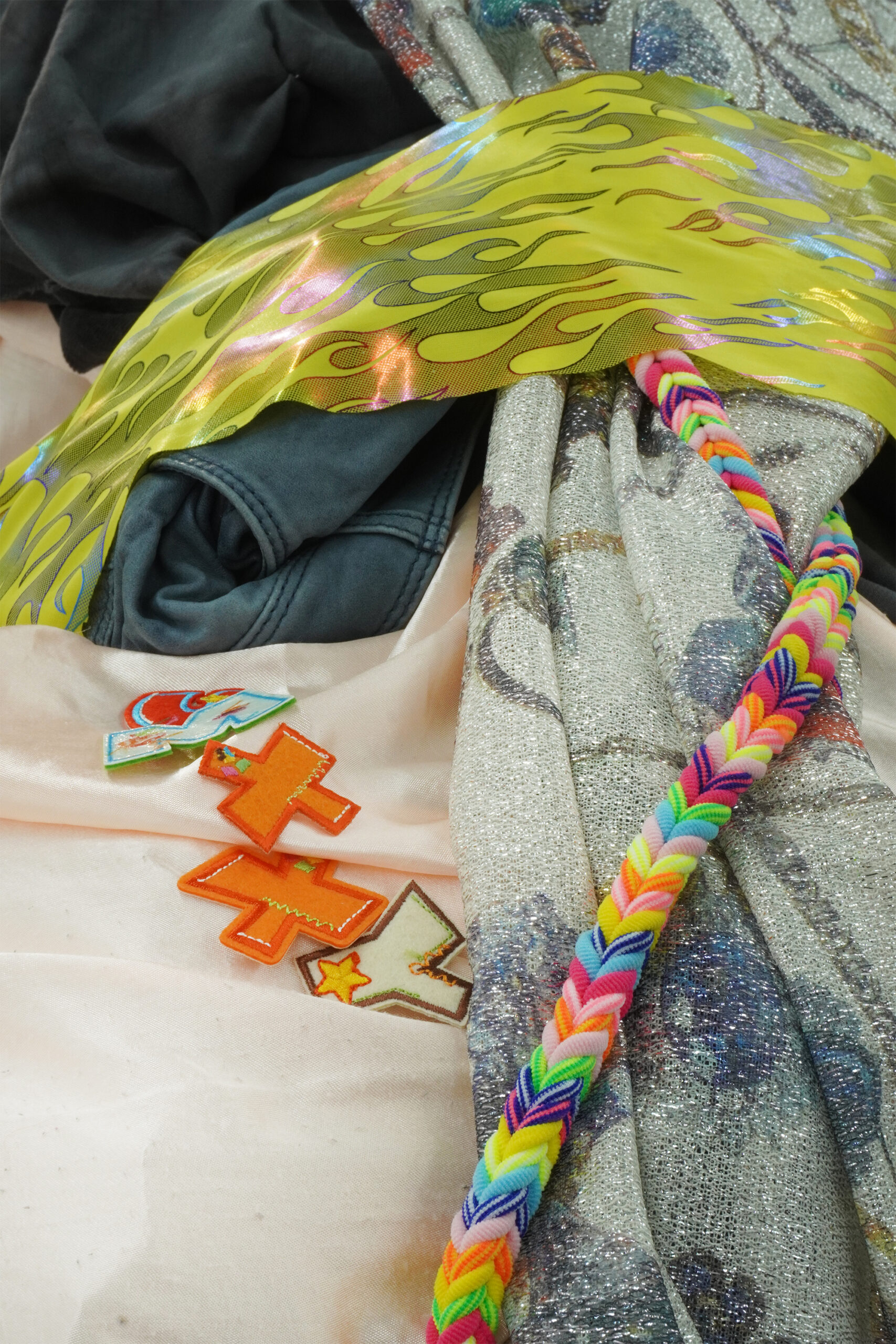
Taking worn textiles from her “material library” as his starting point, Netter dissects their methods of production, their uses, and their symbolism. Through everyday clothing, linens, and fabrics, the exhibition explores the invisible structures that shape our ways of being: hierarchies of taste, gender assignments, and socialization processes, from childhood to adulthood. Here, the exhibition revalues craft, a manual practice long (and still) relegated to the domestic, feminine, and childlike spheres, placing it at the center as a tool for critical analysis and empowerment.
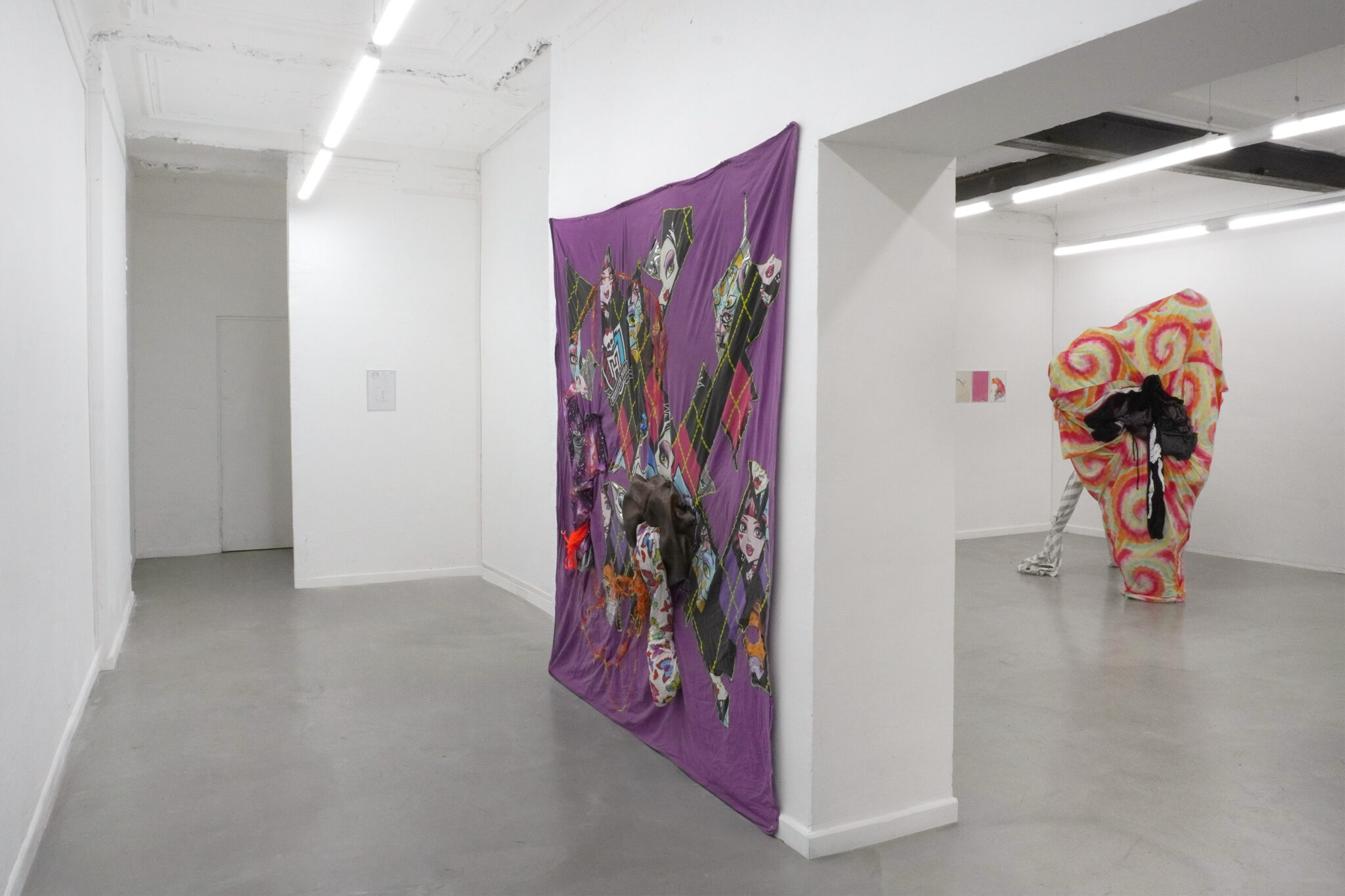
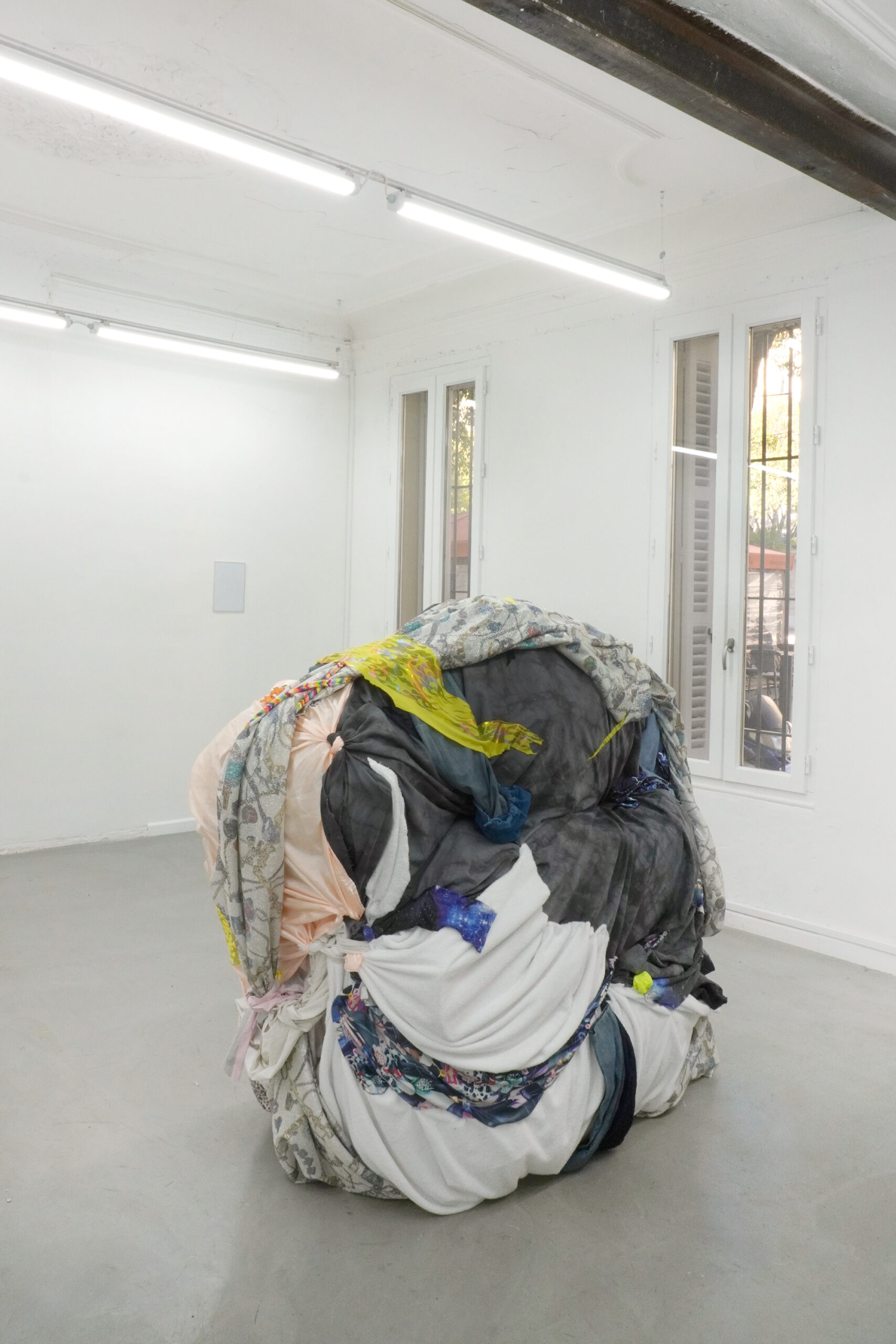
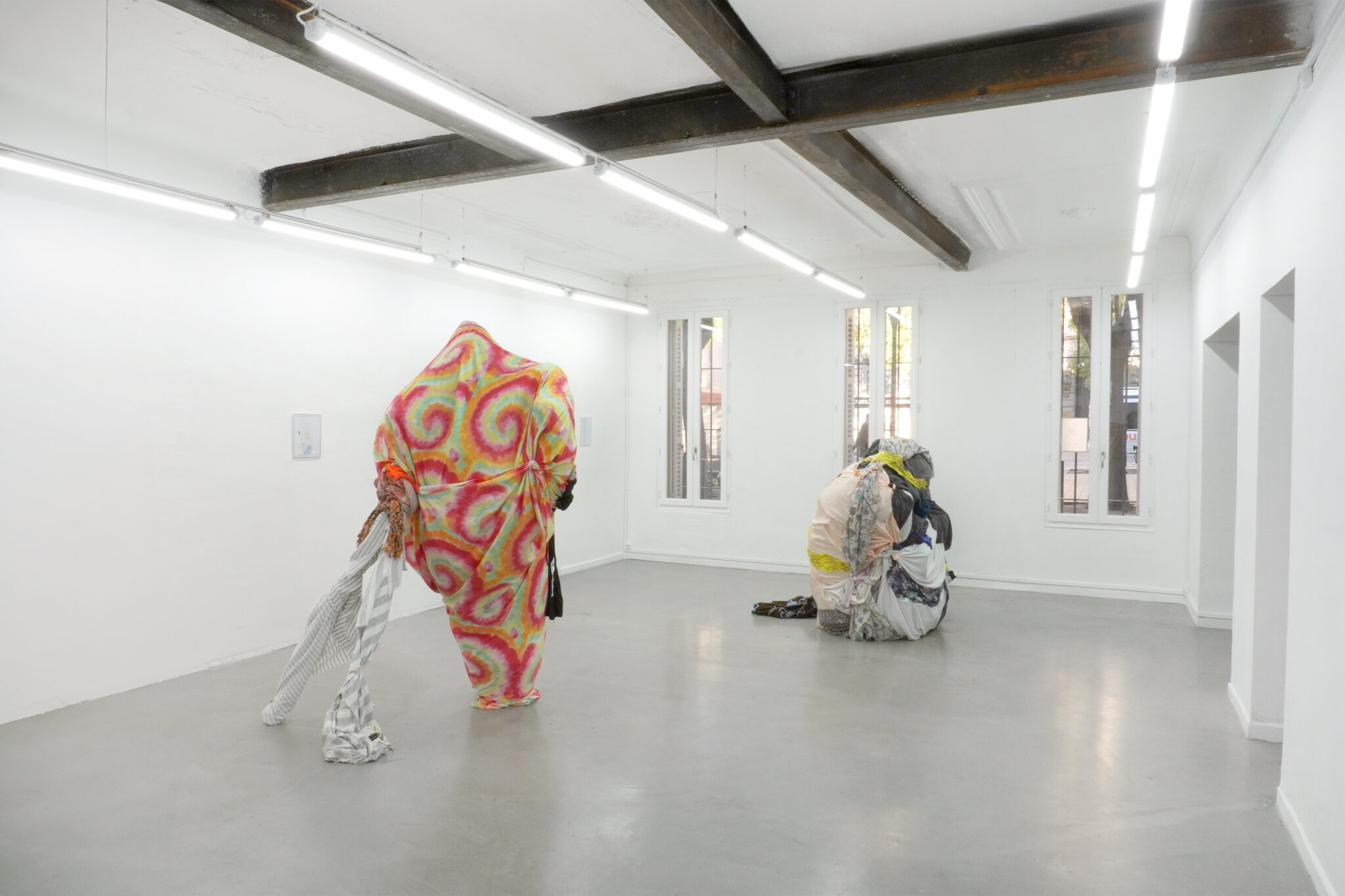
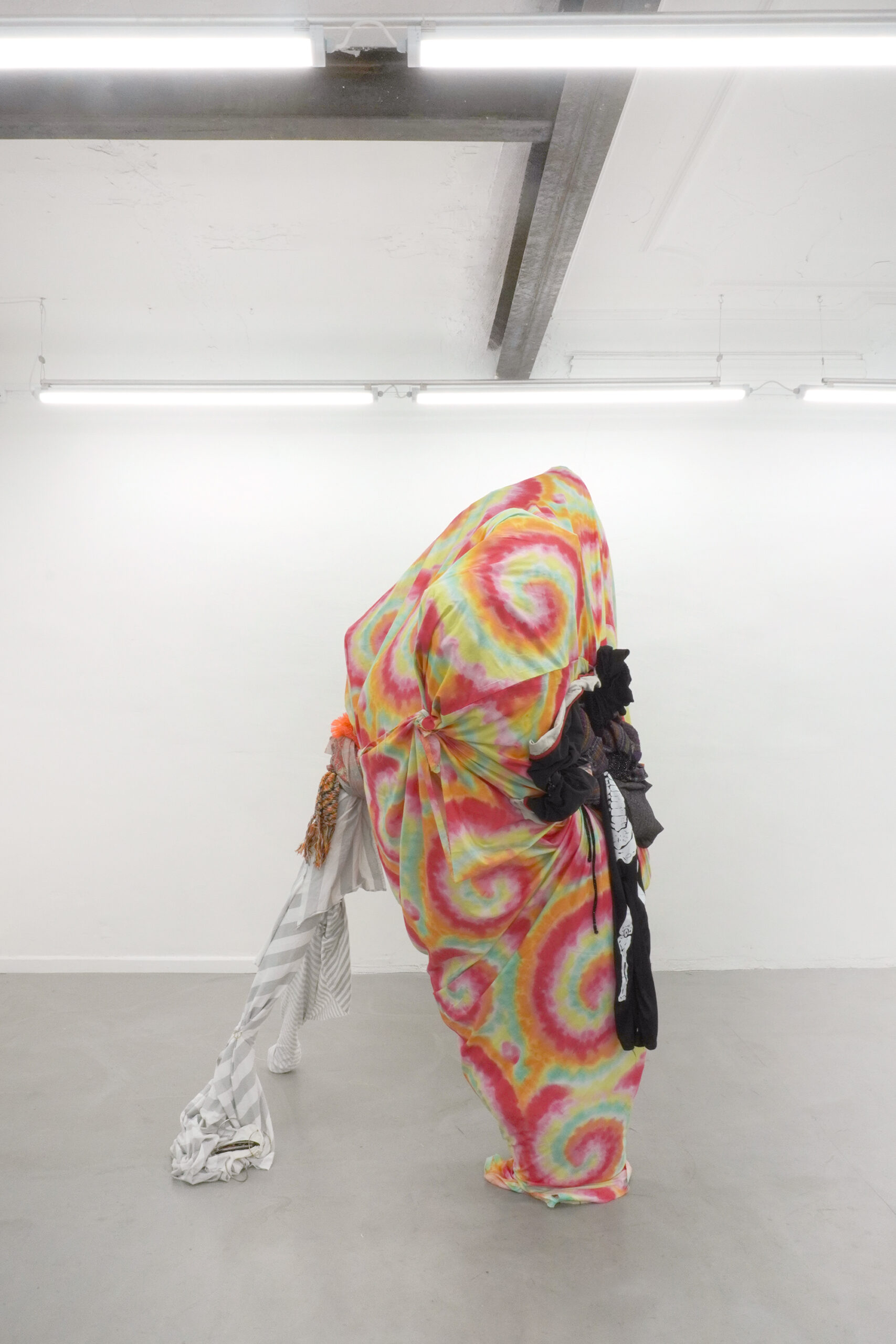
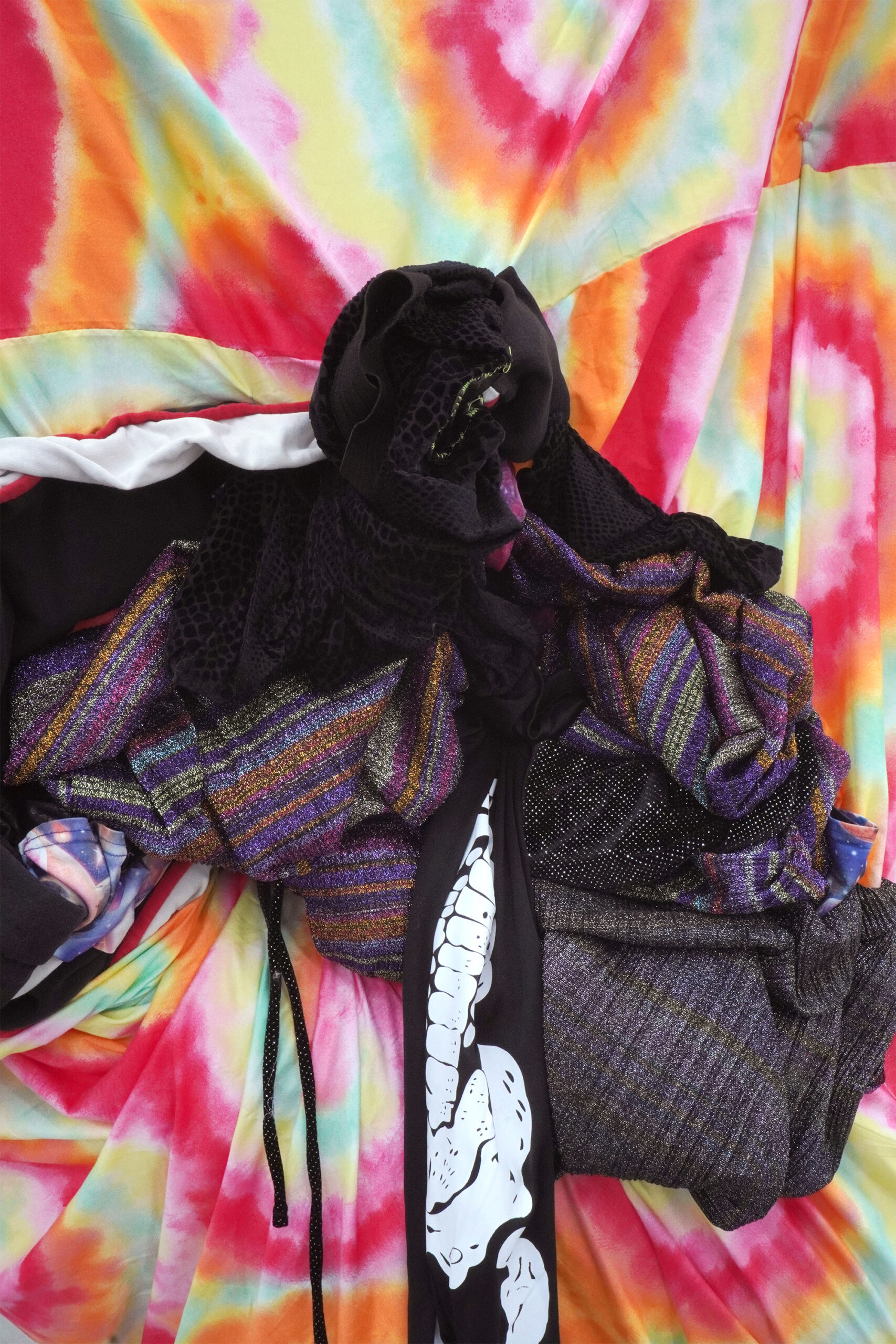
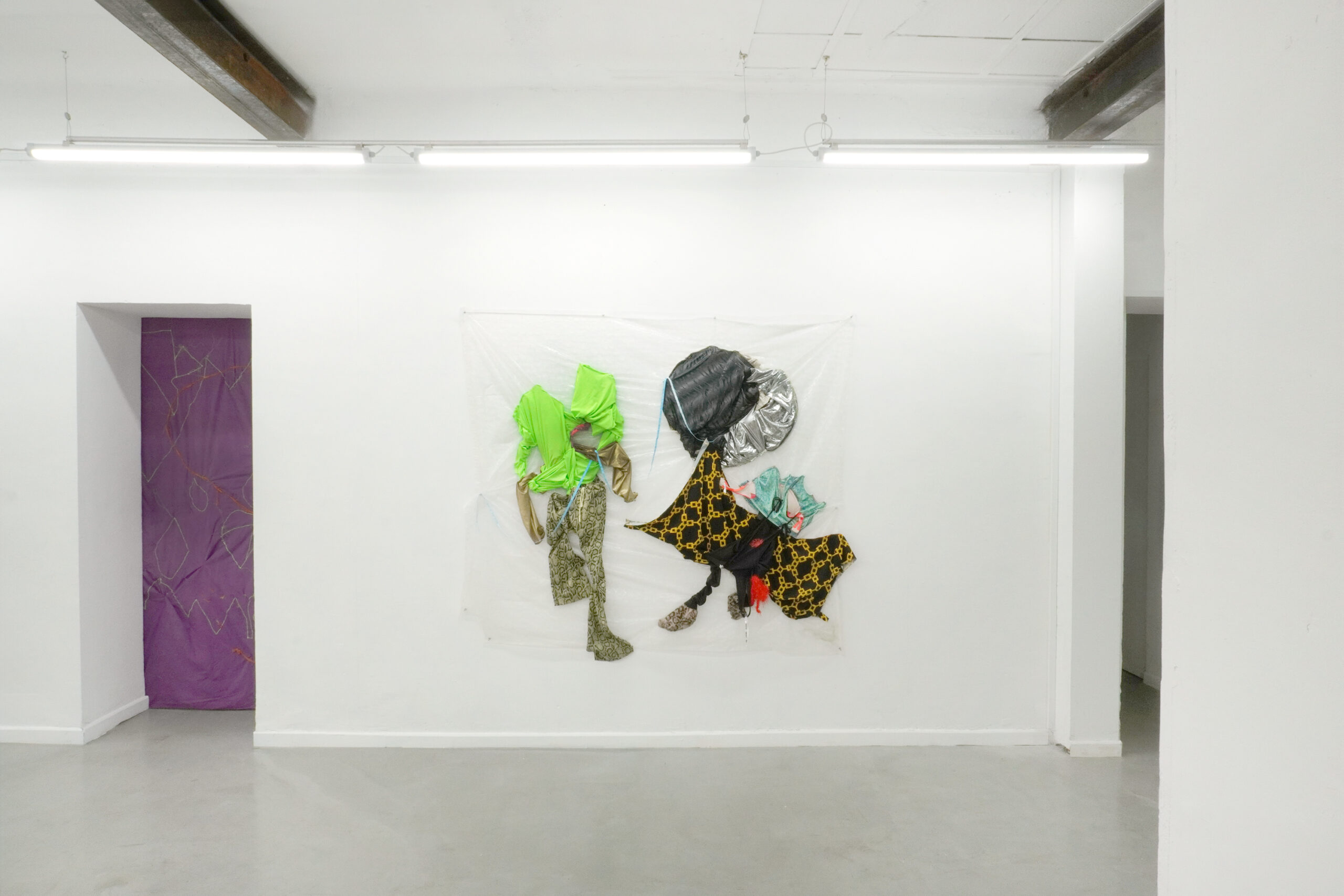
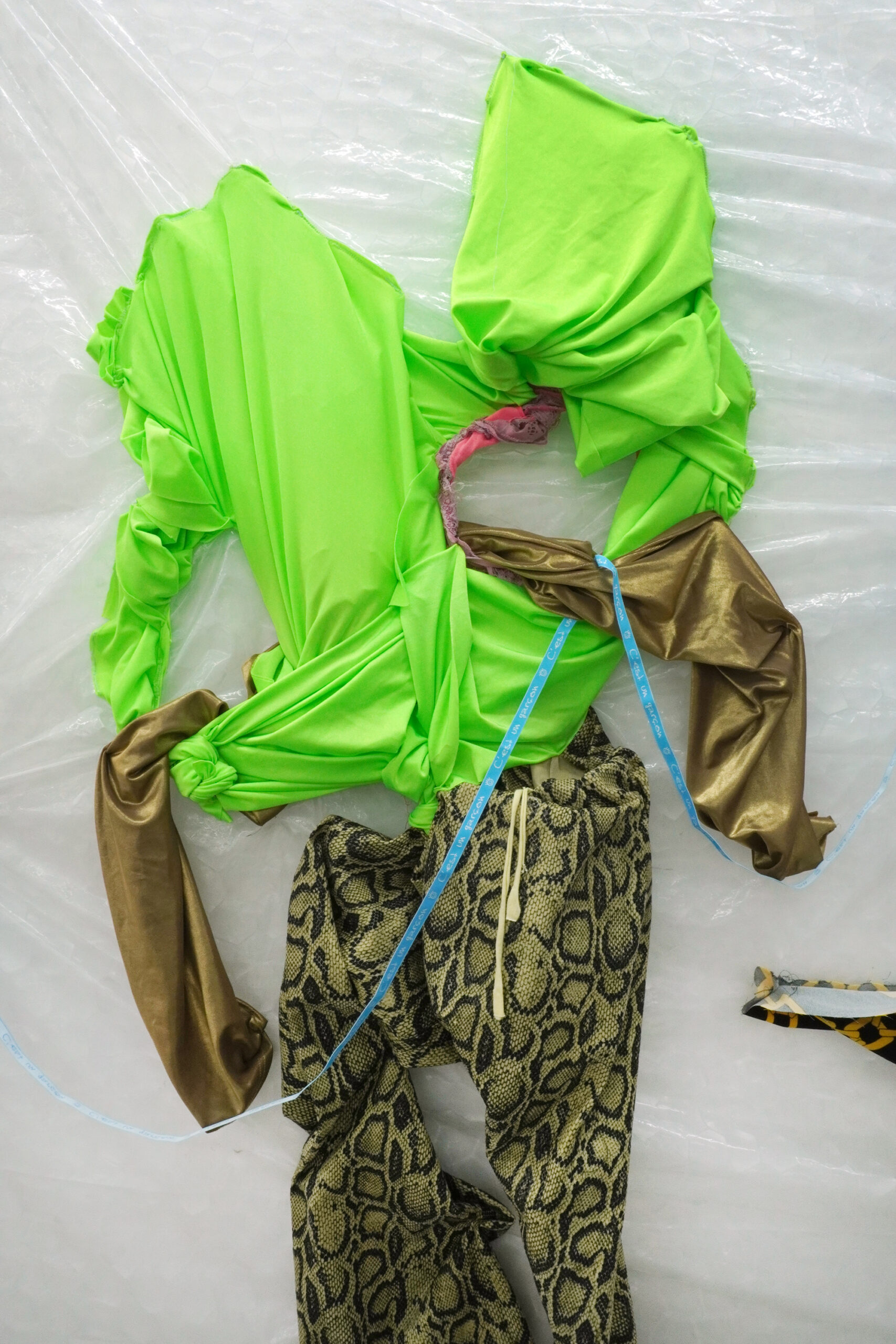
It is within this framework that Monster High and Gender Reveal Party take shape. These three-dimensional patchworks extend the logic of assembling disparate fabrics, giving them a physical and almost corporeal presence. Made from a bed sheet for one and a shower curtain for the other, they combine materials, patterns, and accessories to recompose sections of fabric imbued with generational imagery: from fantasy dolls with spooky-grunge looks of the 2010s to family rituals celebrating and announcing future births.
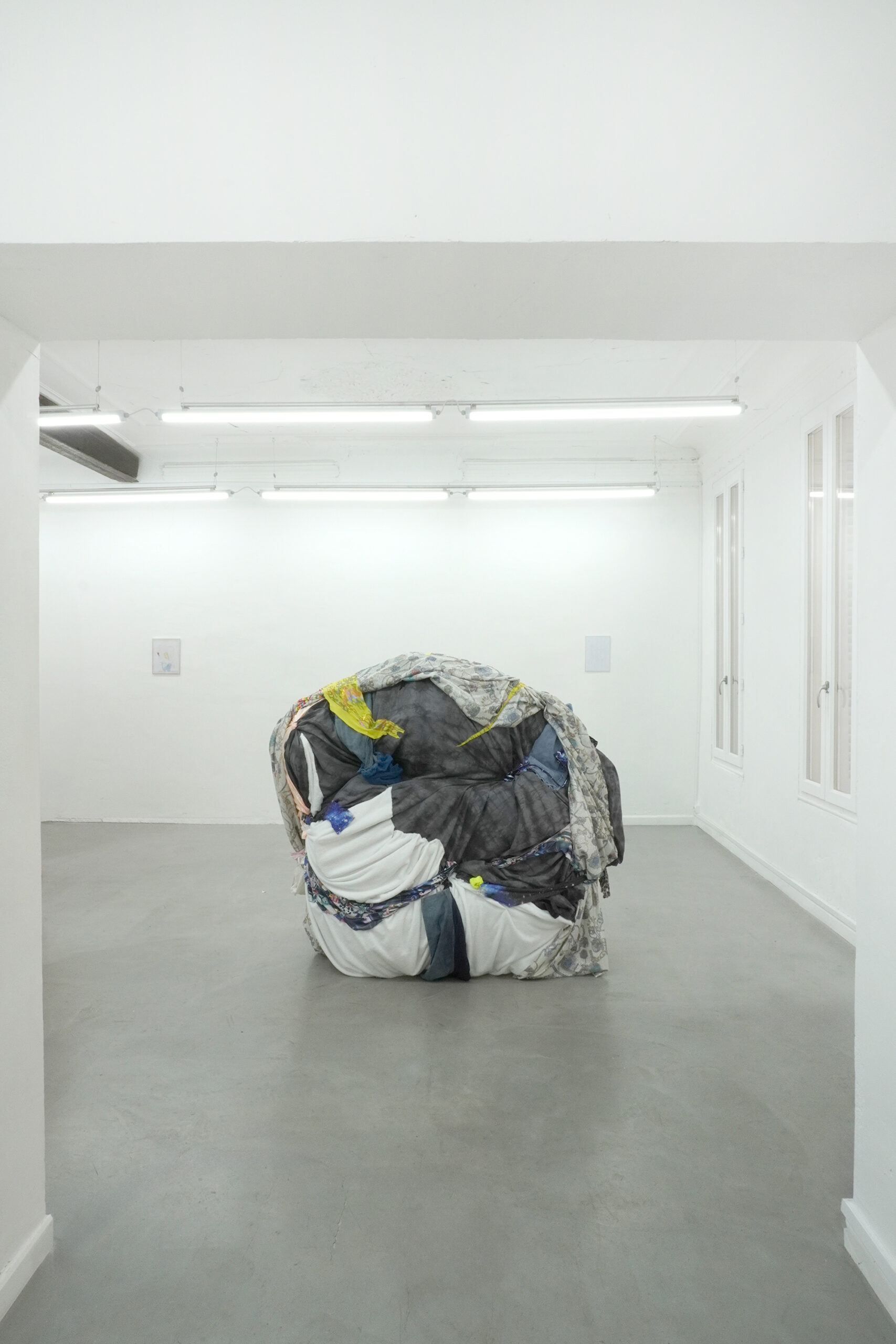
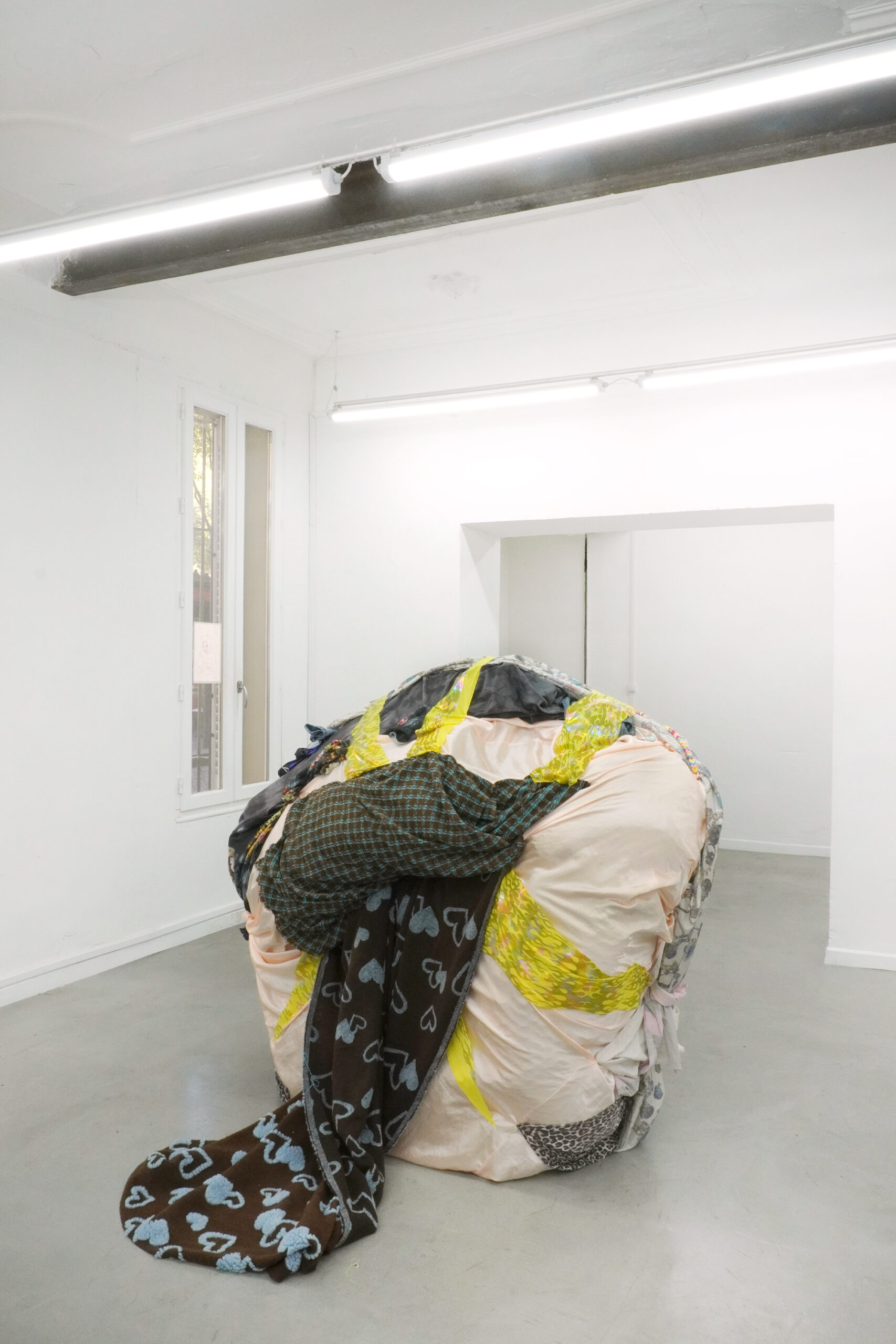
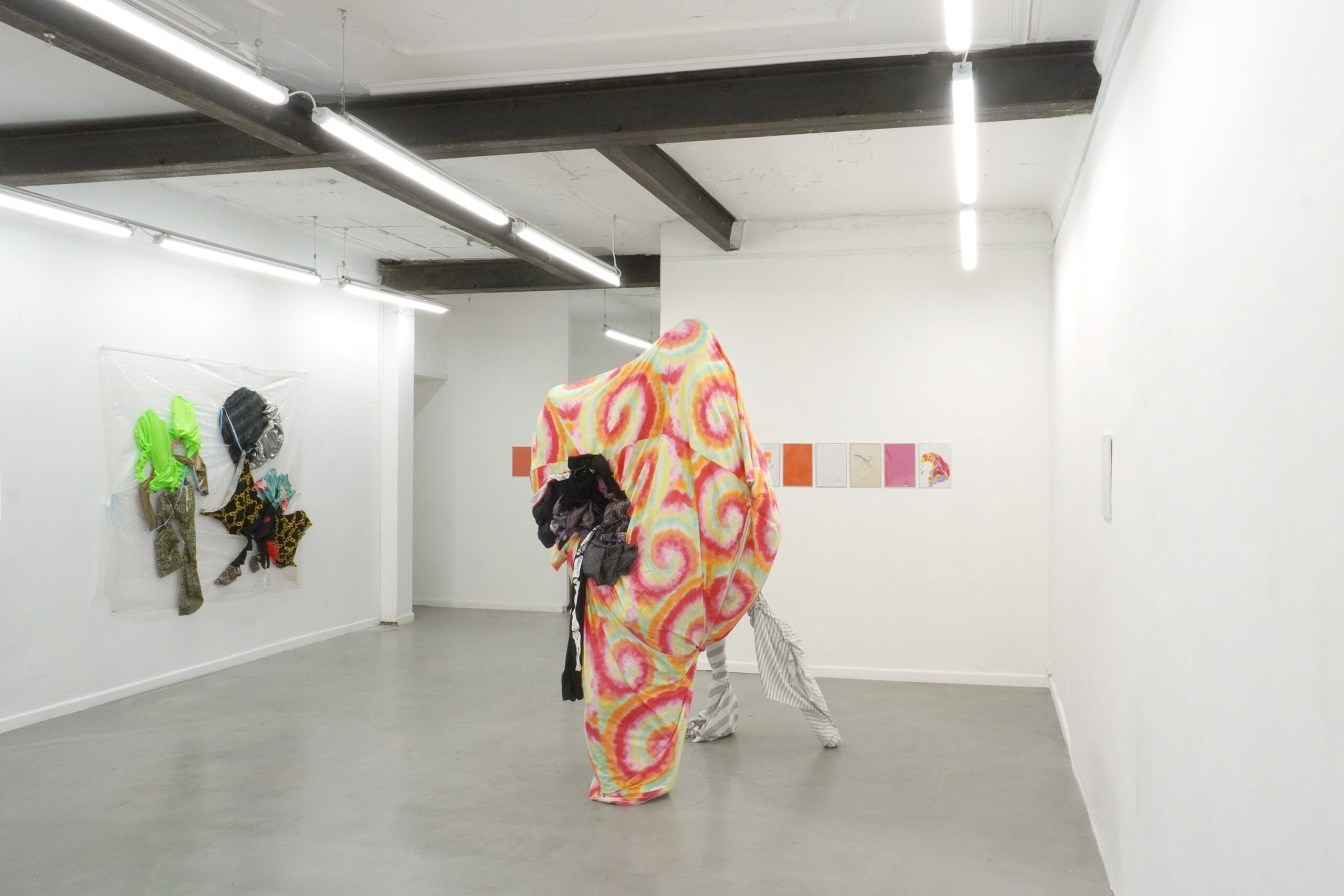
At the center of the exhibition space, two voluminous sculptures structure the visitor’s journey. Their versatile silhouettes oscillate between fictional corporeal forms and extraordinary creatures. Constructed from a wooden frame, chicken wire, and textiles, they are designed for quick dismantling, maximizing both resources and space. The first sculpture is composed of towels, a worn blanket with heart motifs, iridescent yellow flames in stretch fabric, and satin sheets. Placed at the entrance, it welcomes us like a broad smile. The second piece features a black hole at its center—a dark stain composed of vinyl and a skeleton costume—that appears to extend into the middle of a surface of ultra-vivid, psychedelic colors.
Entitled Mix and Match, the sculptures allude both to the trend of juxtaposing disparate patterns, styles, and colors to create a form of harmony, and to the idea of a duo, of two stage characters. The works themselves are bifrons, meaning they have two faces: they are interpreted differently depending on the angle, unfold from multiple perspectives, and multiply viewpoints.
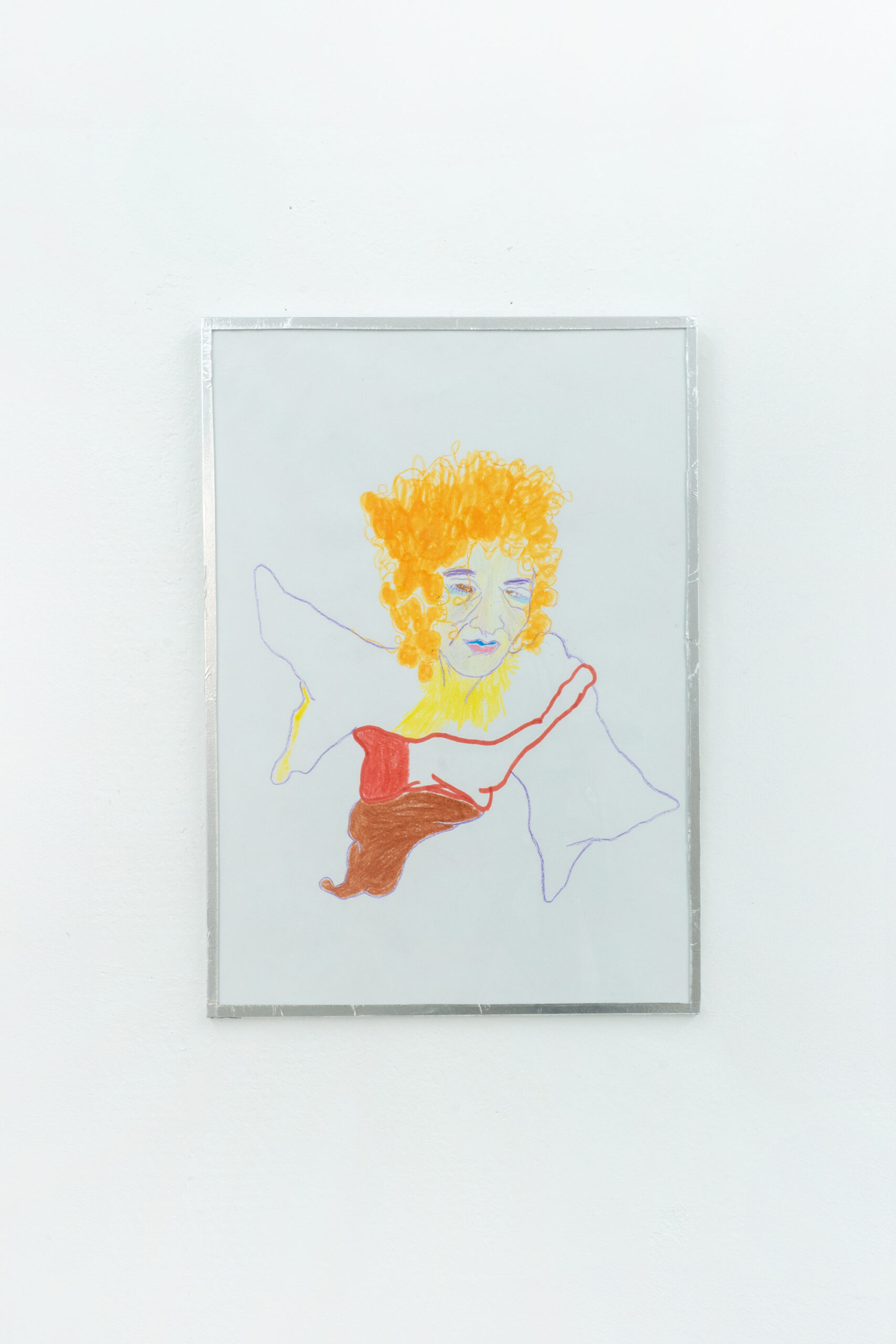
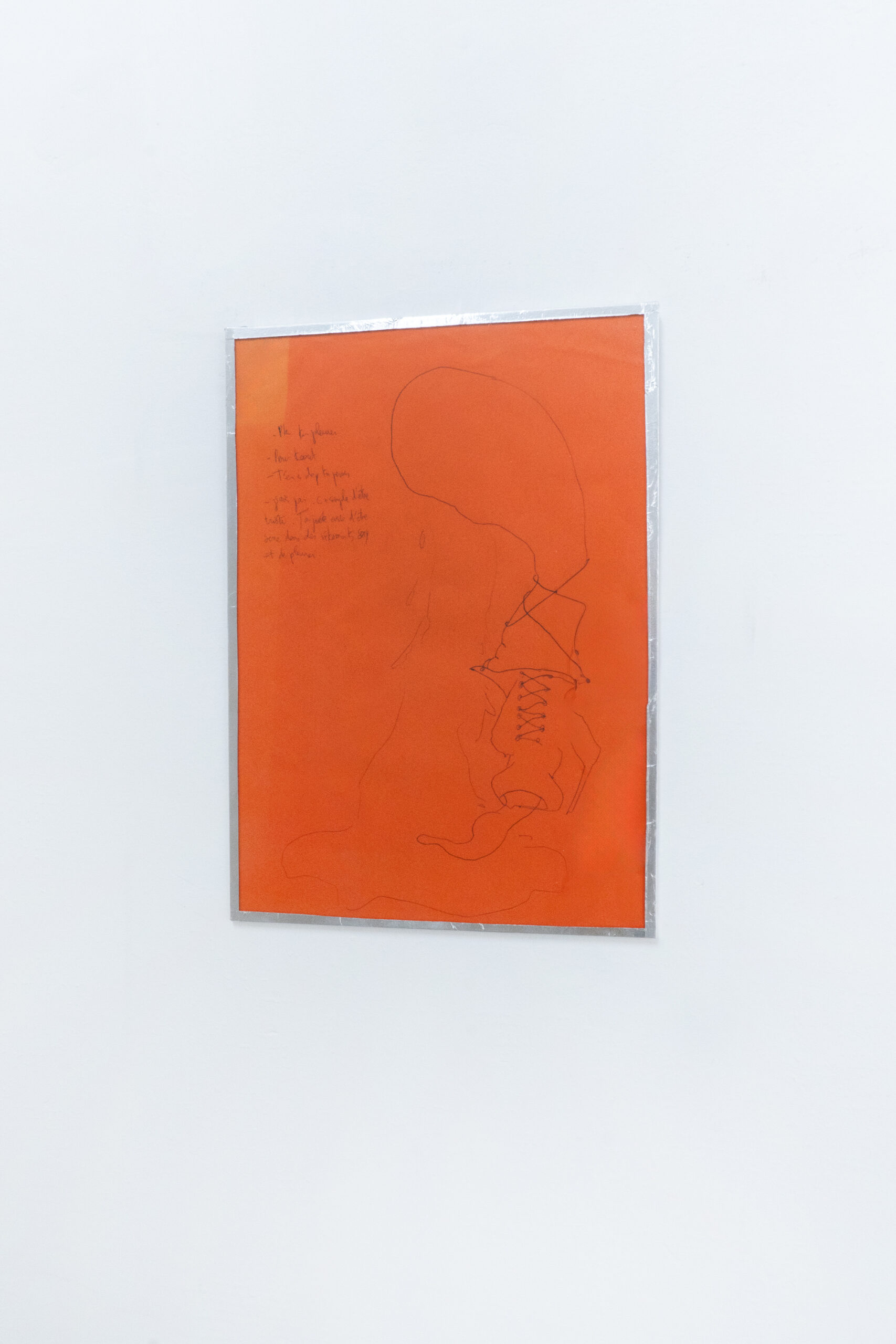
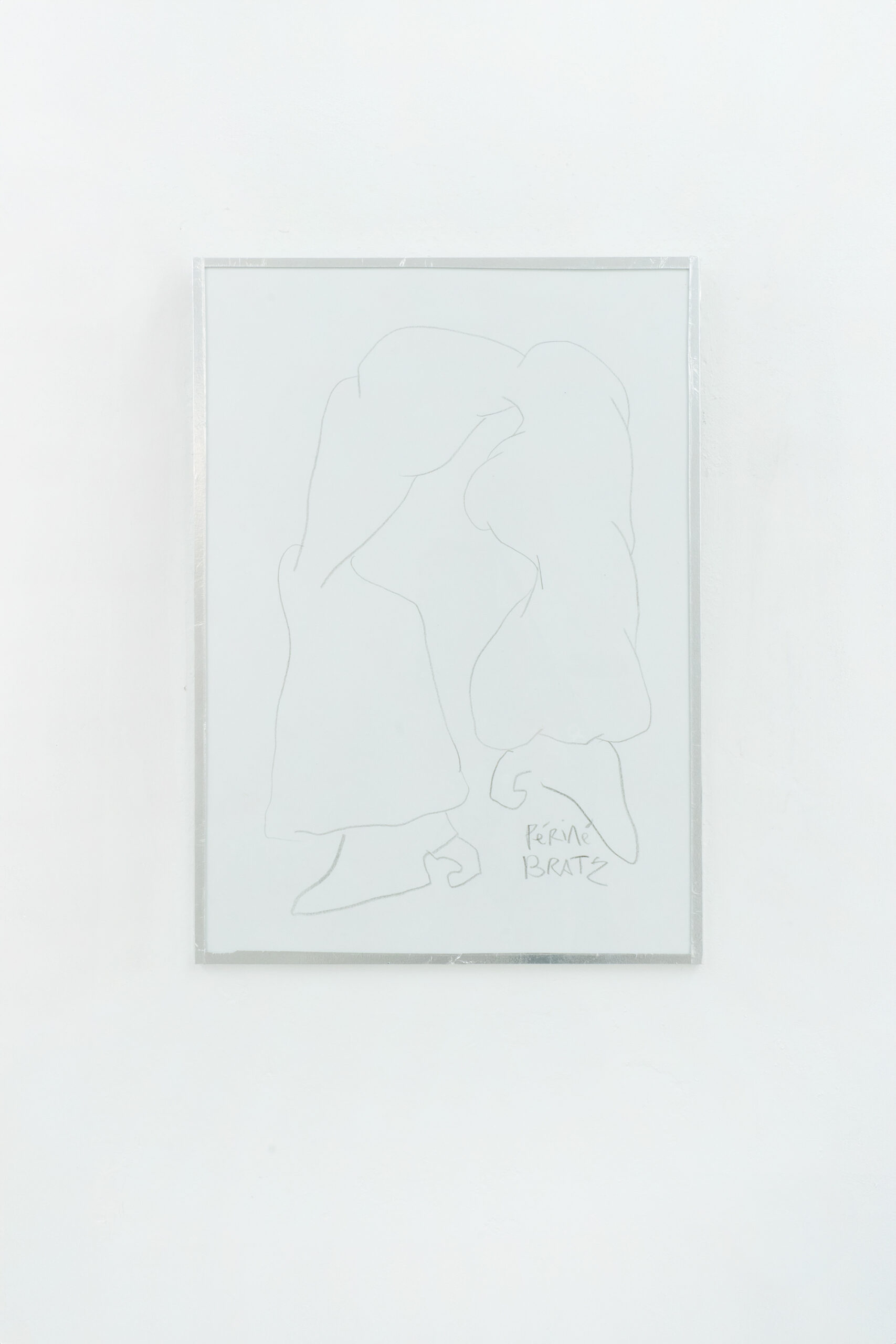
A series of drawings, presented for the first time, shows self-portraits or fictional aliases, but also forms in transformation, fragments of text, boots, bodices—a fragmented vocabulary, like fleeting thoughts, that surrounds and complements Netter’s sculptural work. A sound installation makes these inner thoughts audible, reflecting the daily experiences that can cross our minds and influence our relationship with our bodies. Like a voice resonating within us, these new works, in contrast to an analytical stance, ultimately offer a space for play, a letting go of discourse, an admission of vulnerability.
While echoes of childhood and adolescence permeate the entire project, Netter reminds us that this continuum extends into adulthood: the desire to belong, the urge to be “cool,” to conform to a certain environment. The exhibition then becomes a mirror—a mirror in which we observe ourselves, dress up, and construct identities, personas, and different ages of ourselves.
So, the real question is: did you dress up to come?