
PRUNE PHI
QUENTIN FROMONT
ZOE METRA
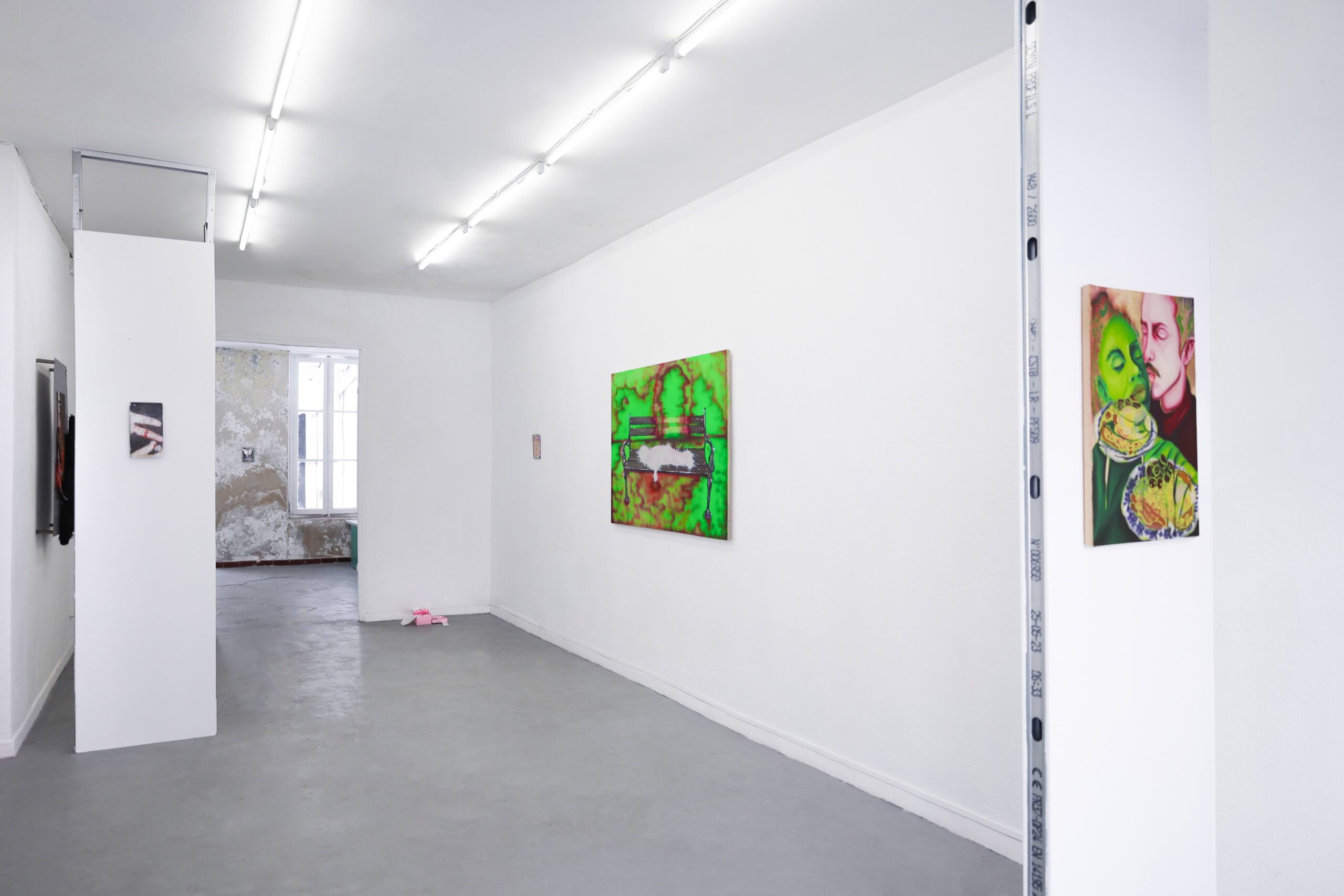
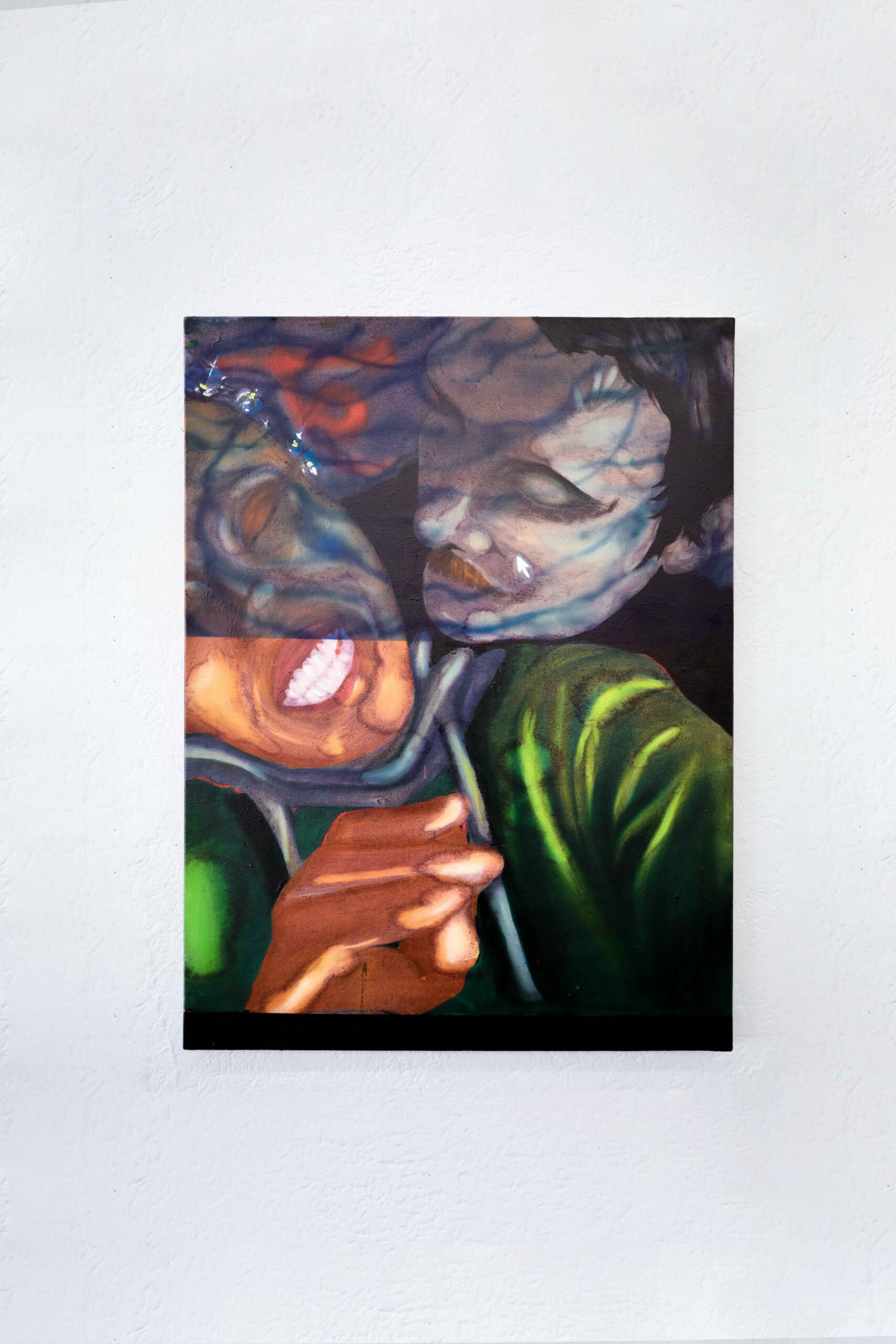
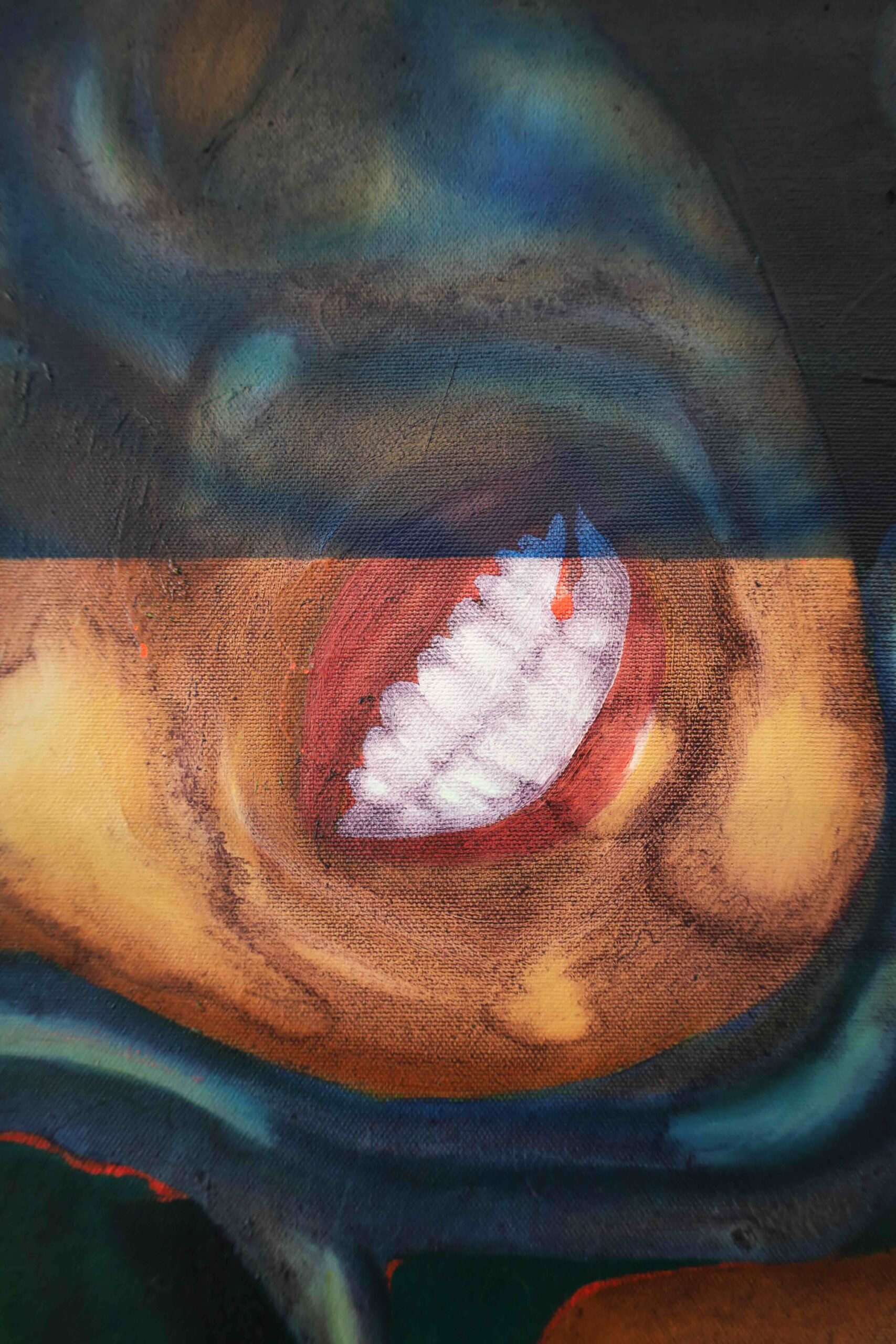
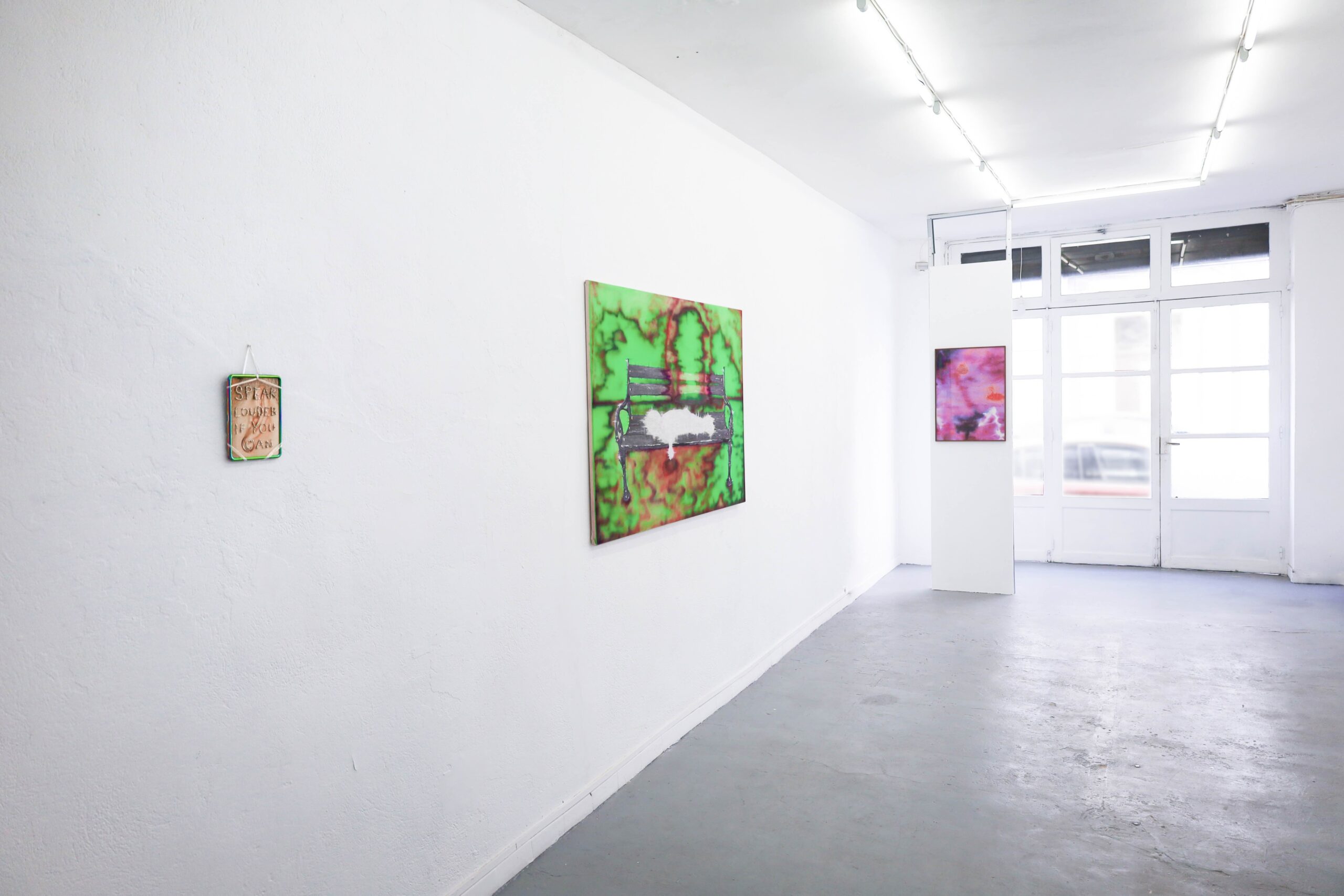
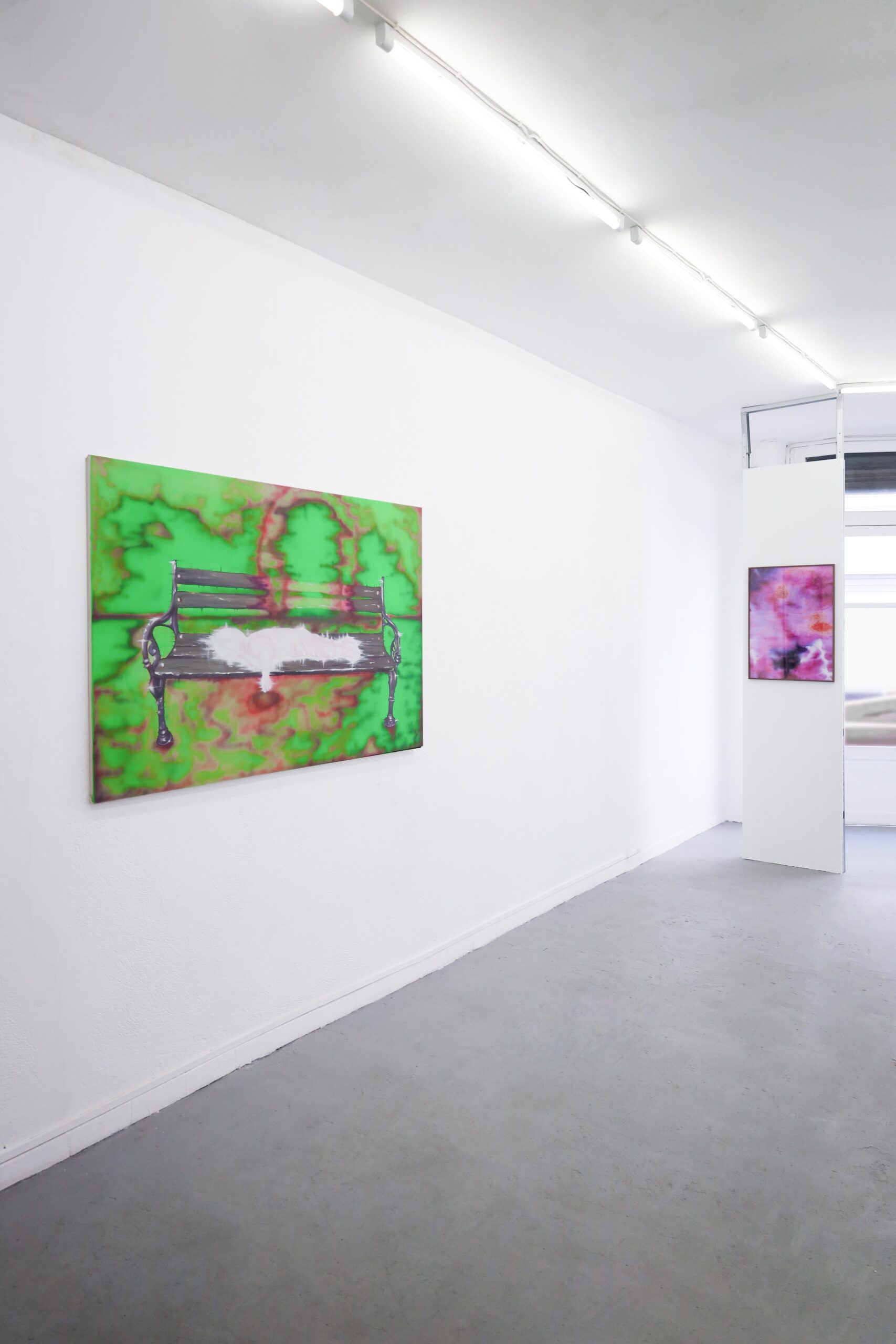
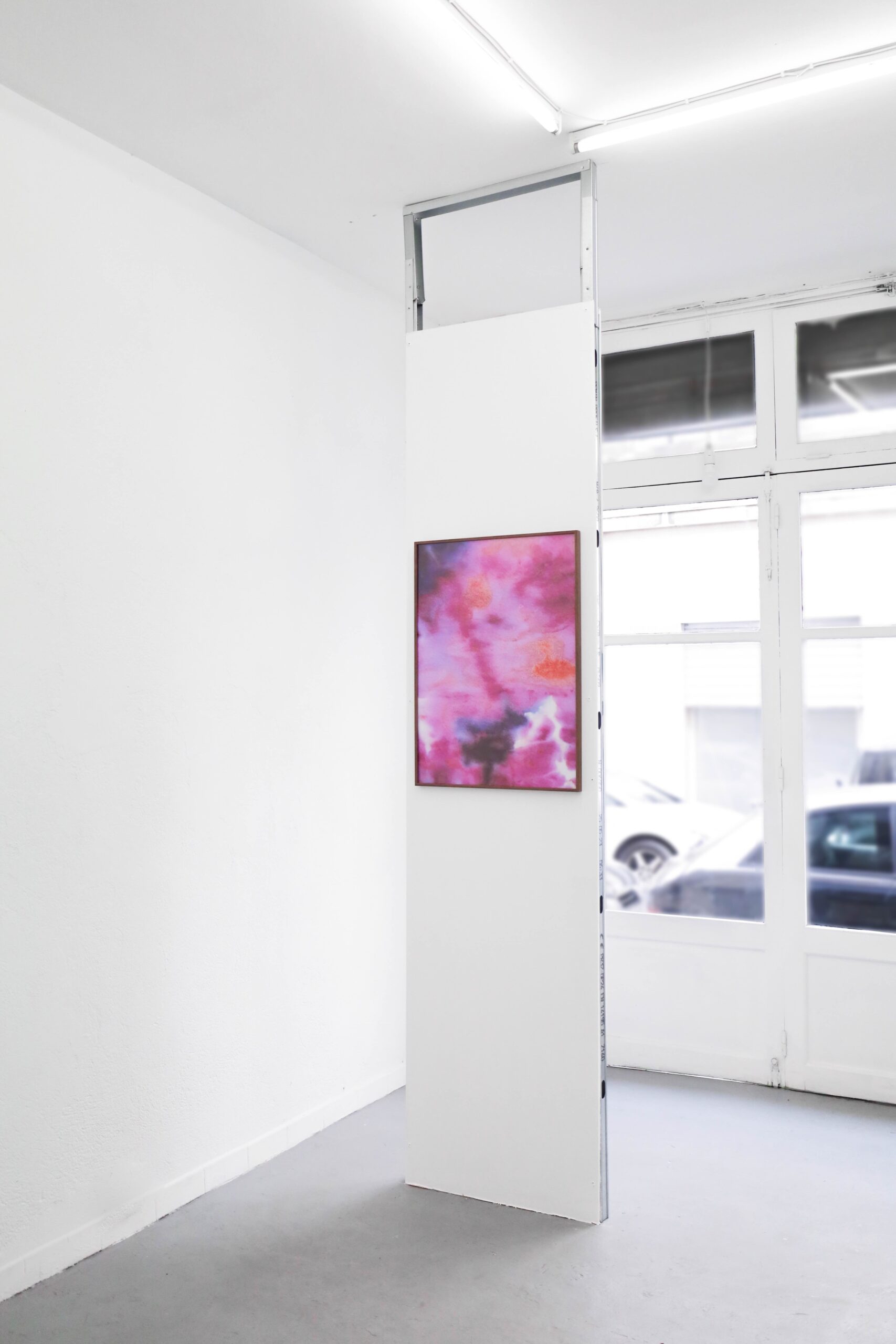
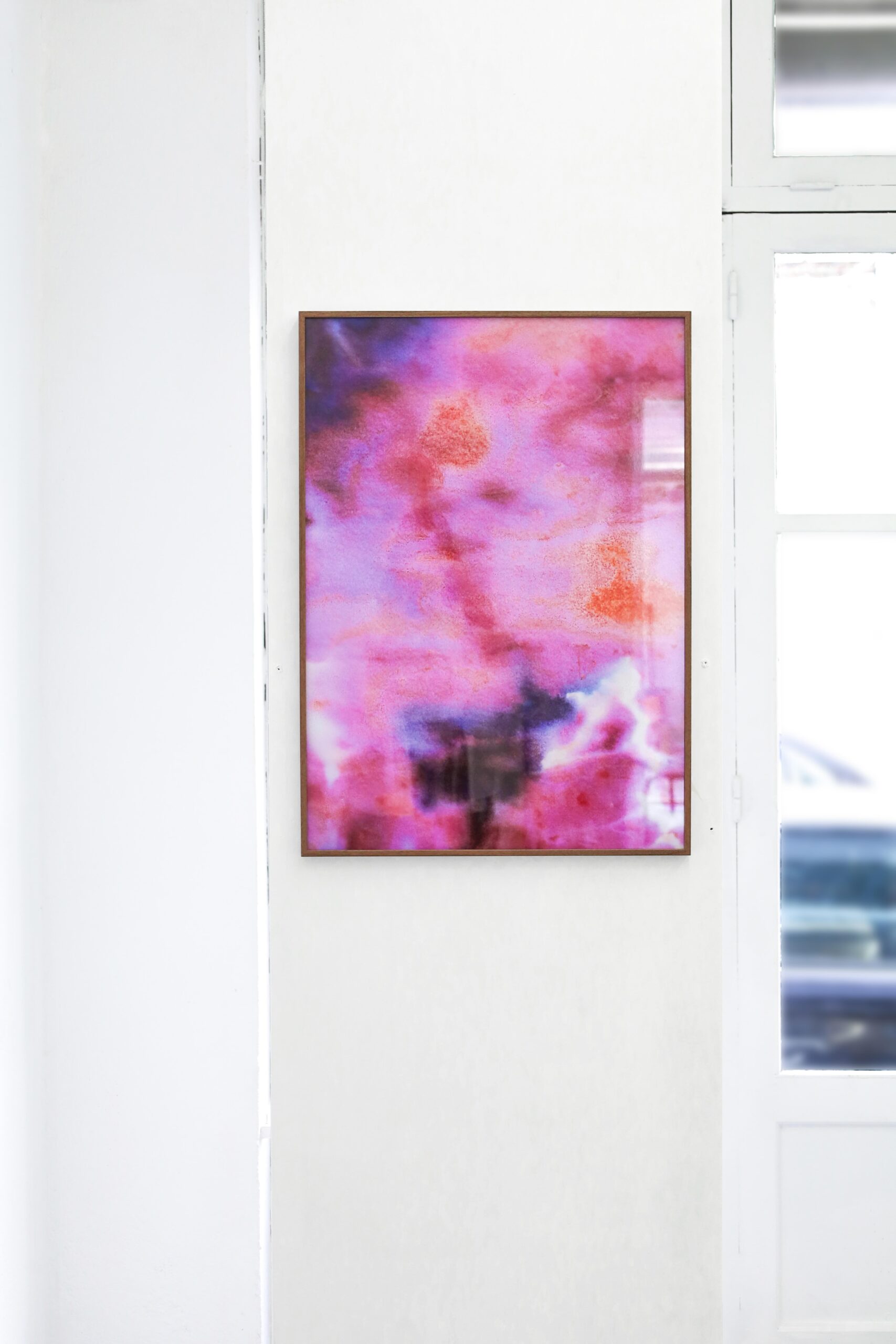
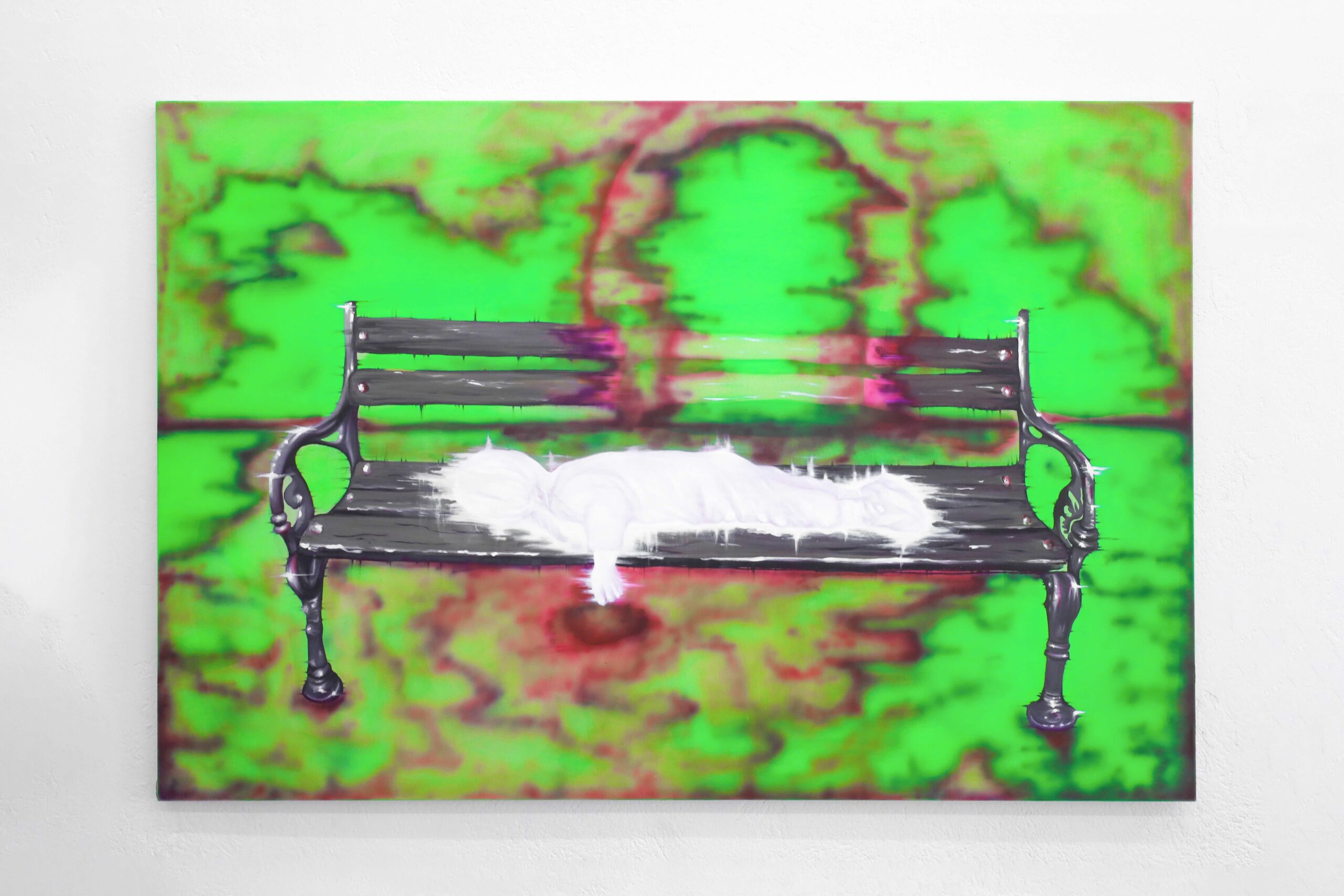
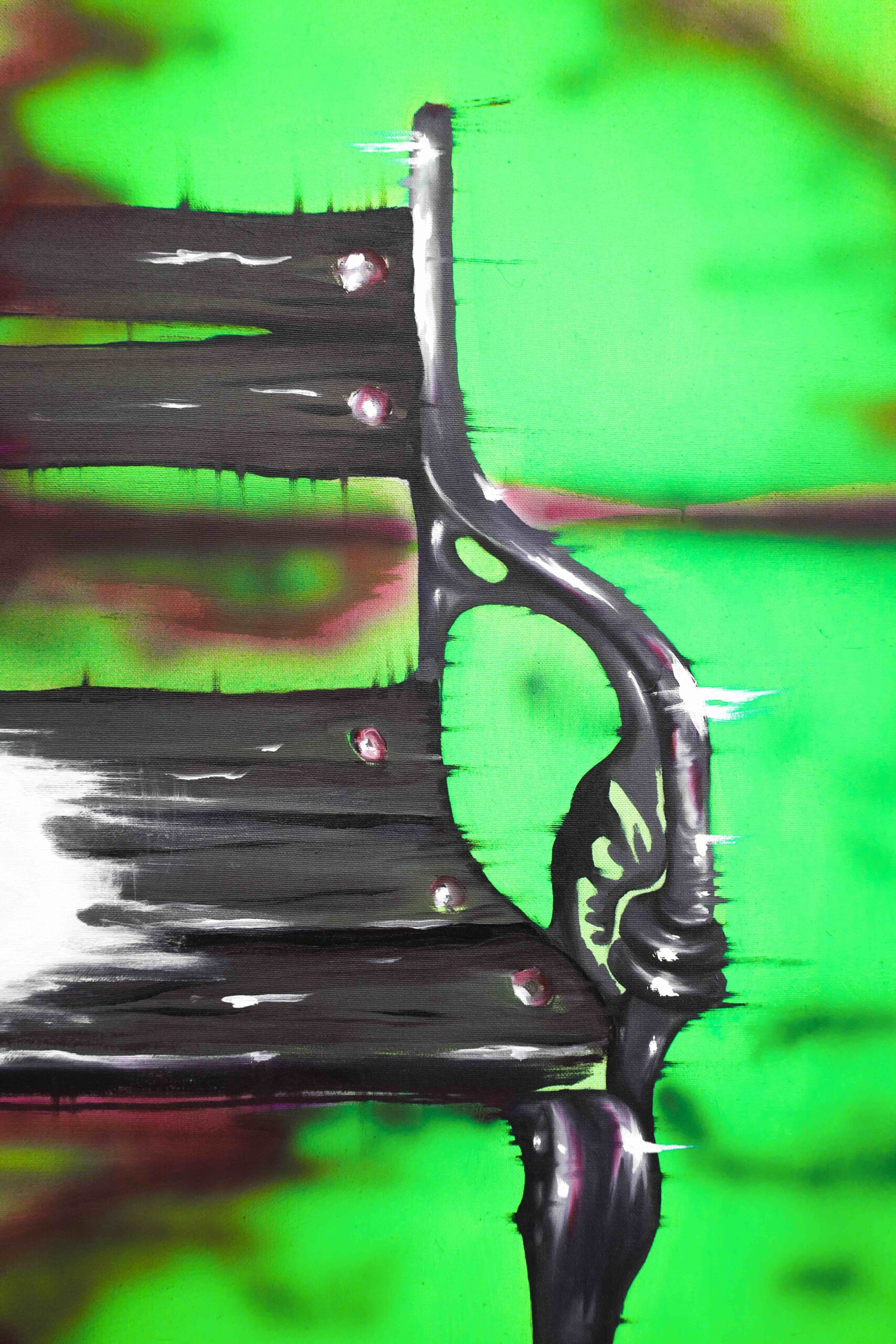
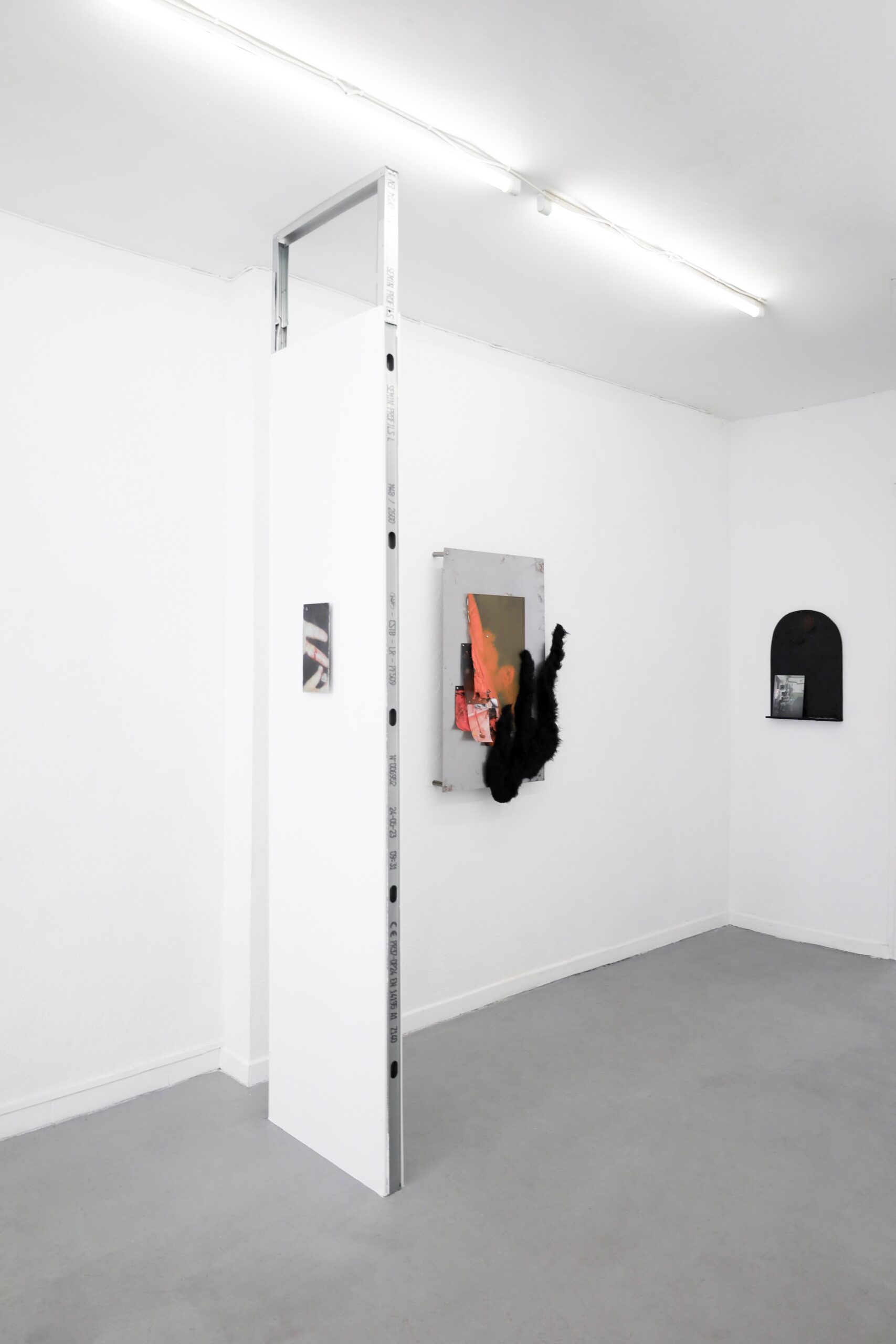
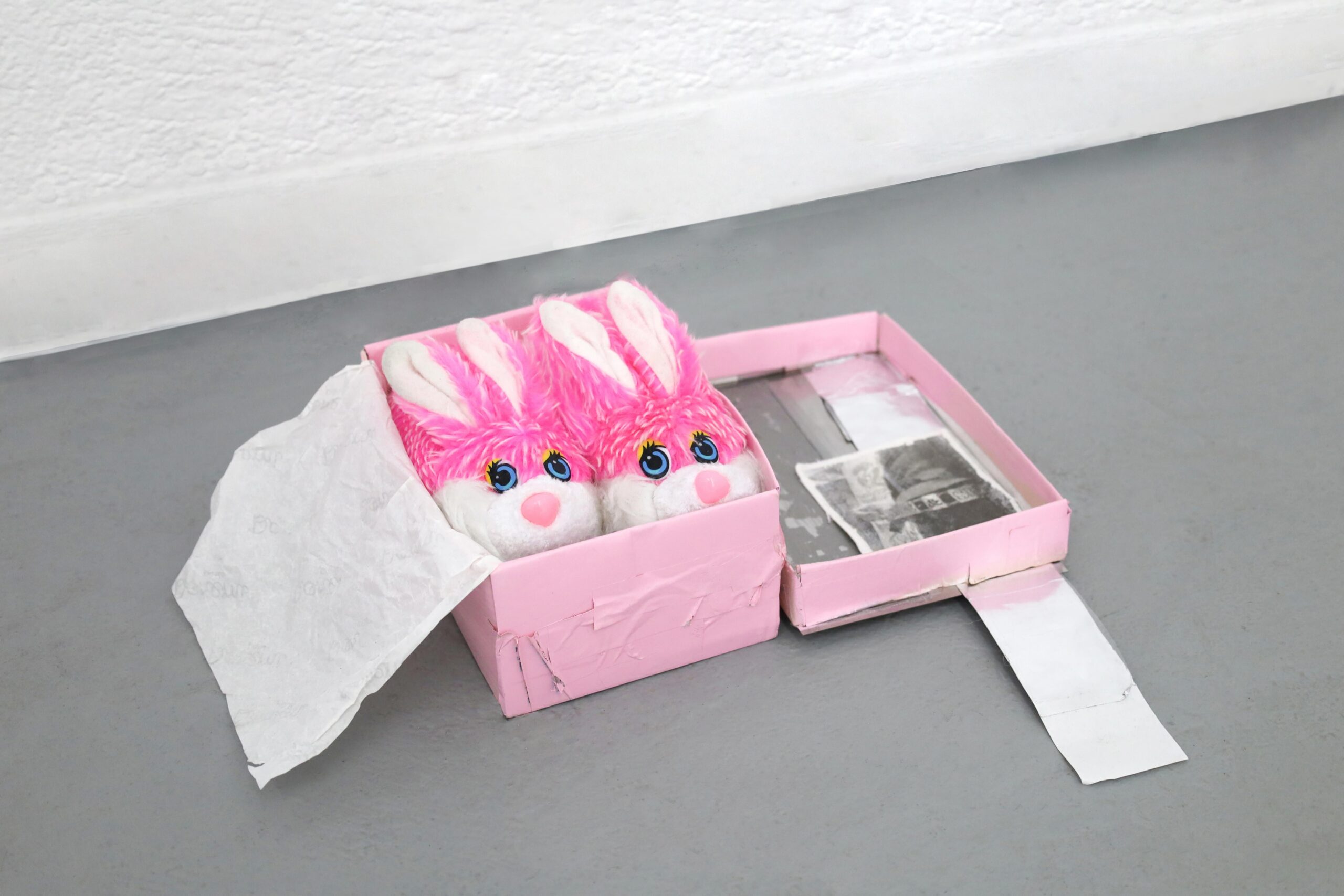
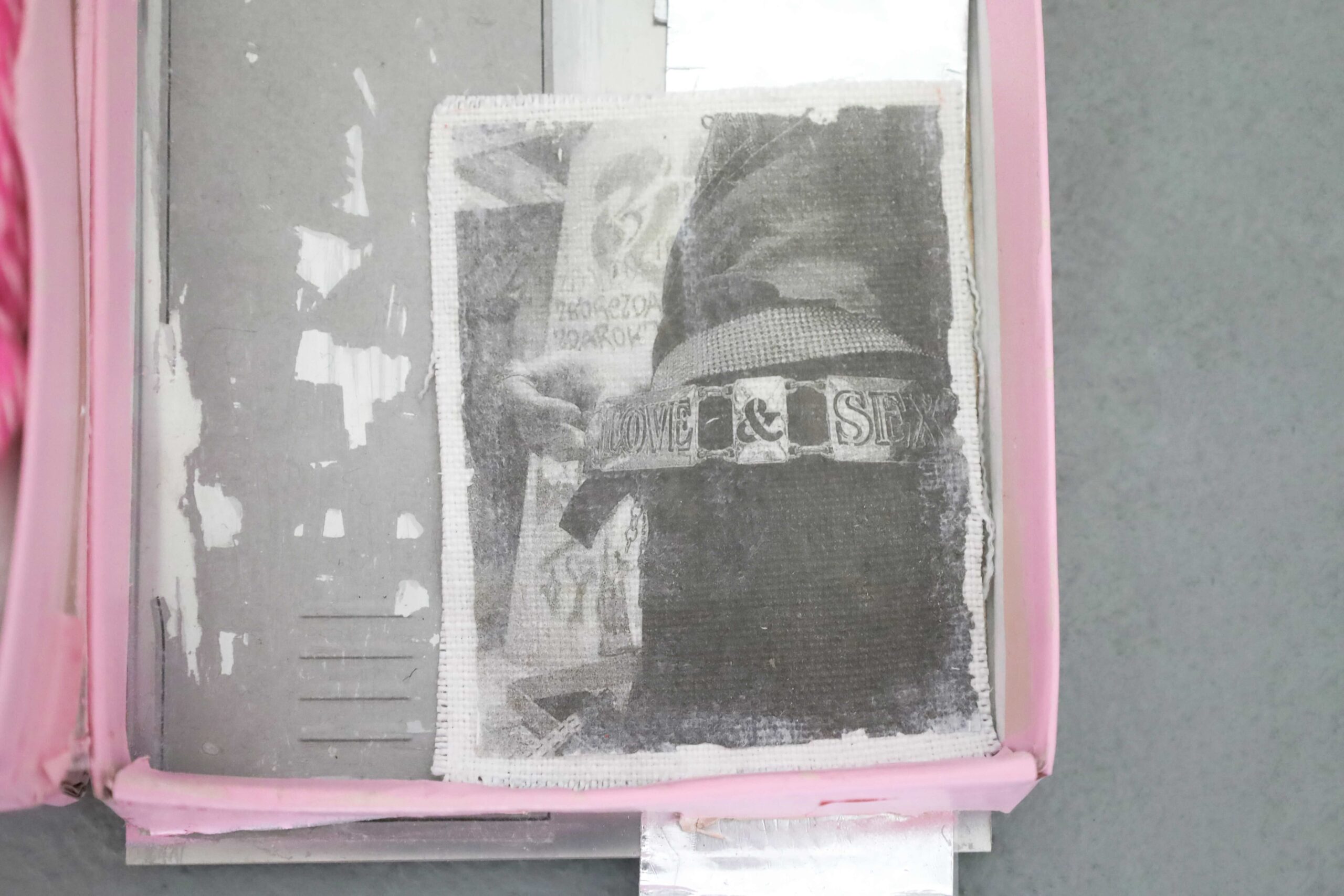
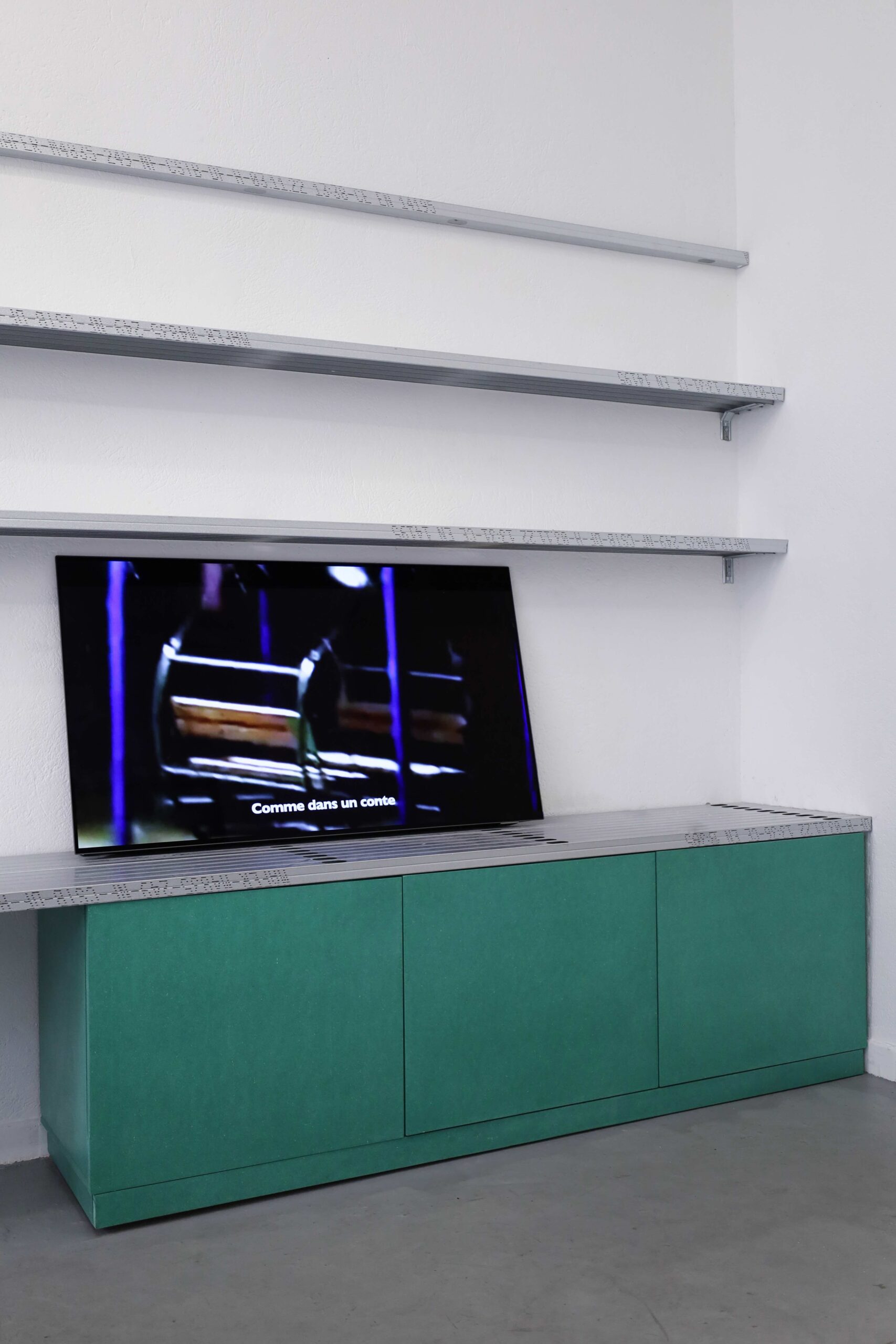
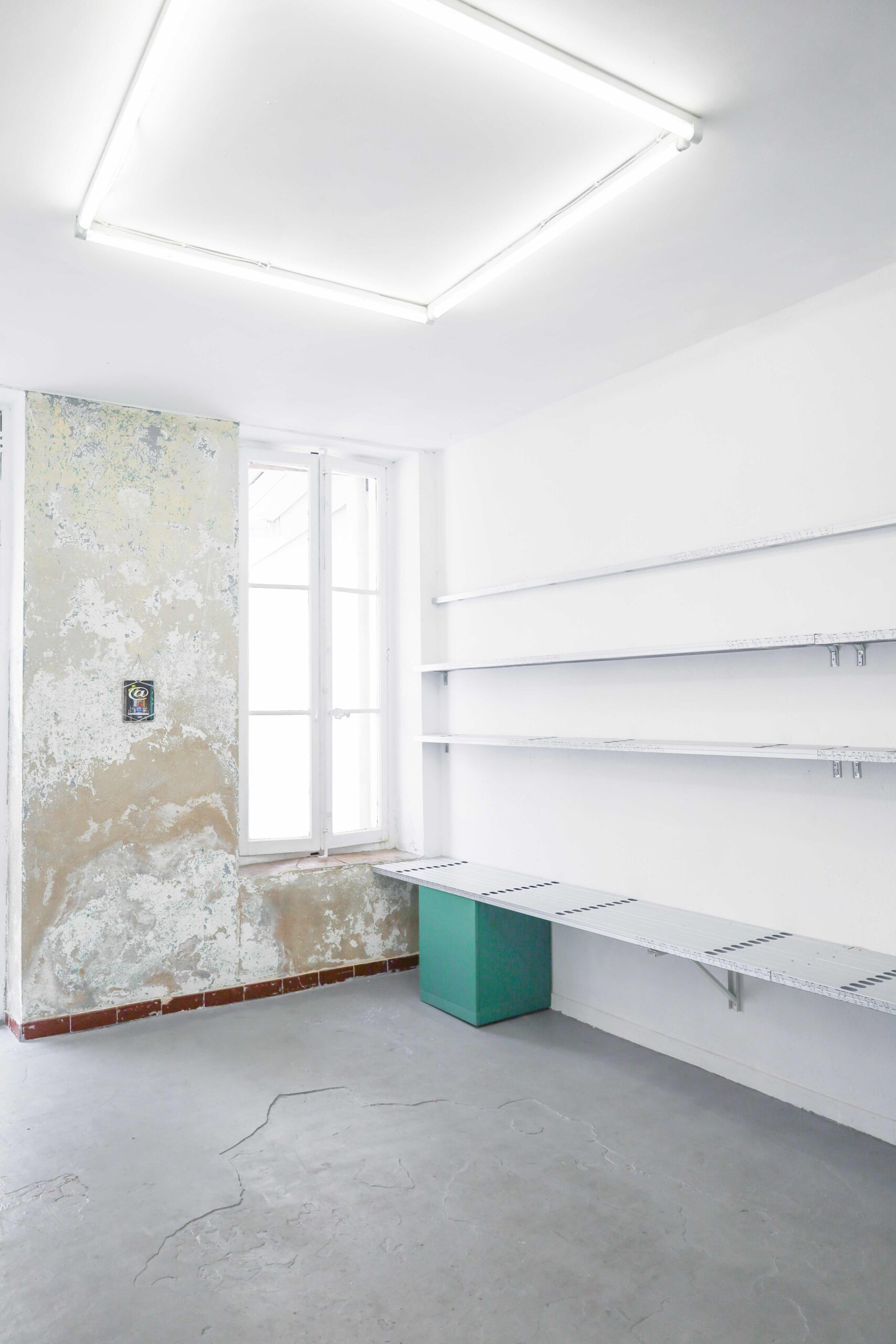
The group exhibition *Long-distance call* brings together the work of Maïlys Moanda, Prune Phi, Quentin Fromont and Zoe Metra. Through its title, the exhibition evokes the act of calling as an address to the other, and to oneself: an invitation to allow dormant feelings, memories and ghosts to resurface.
At the heart of the psyche, in the mist of the mind, the works give form to relationships—be they physical, sensual, ritualistic, mental or even digital. Straddling two worlds, the exhibition seeks to reveal the malleability of memory, its fragility and its crumbling, caught between reality and fiction. Long-distance call conjures up apparitions, little deaths.
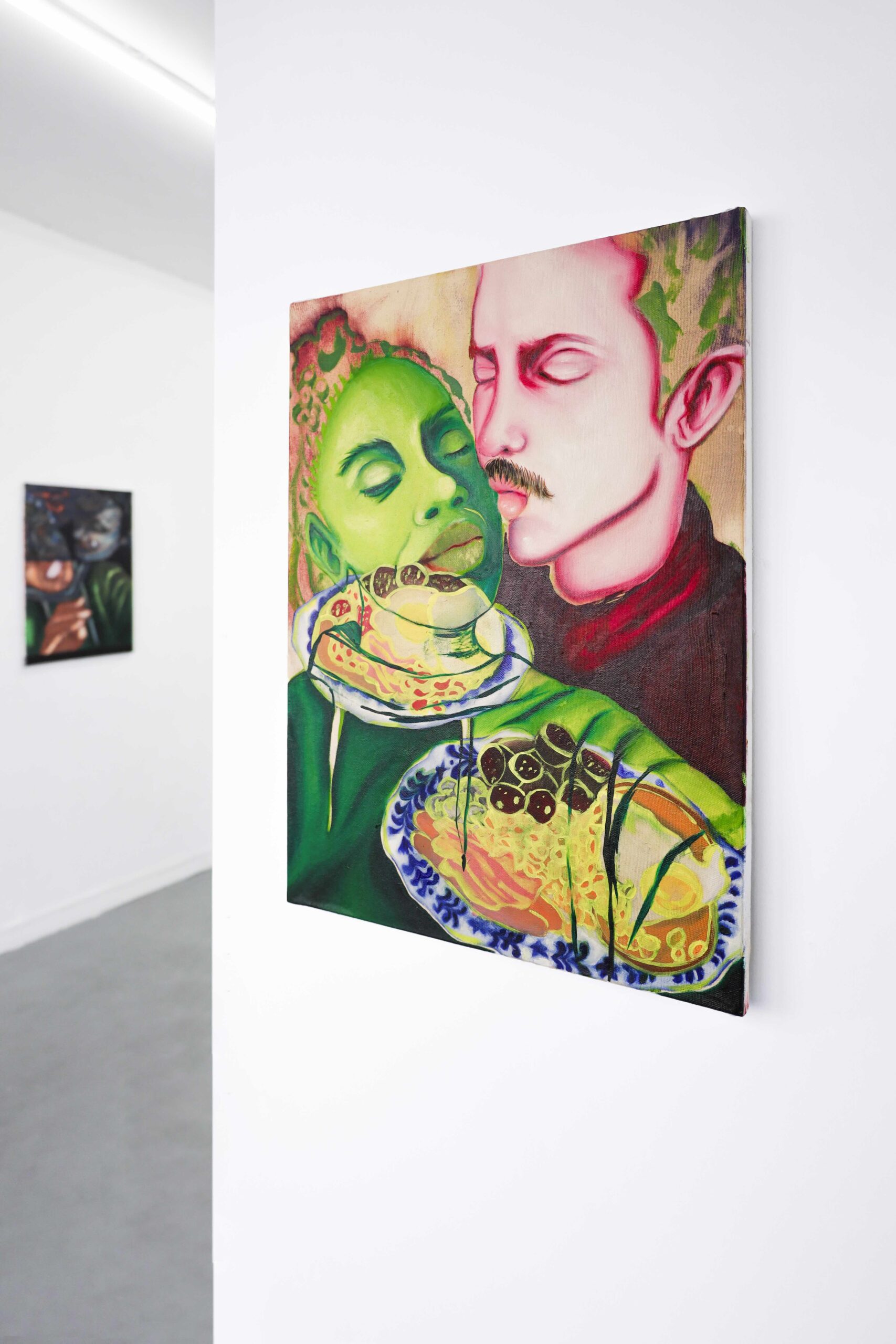
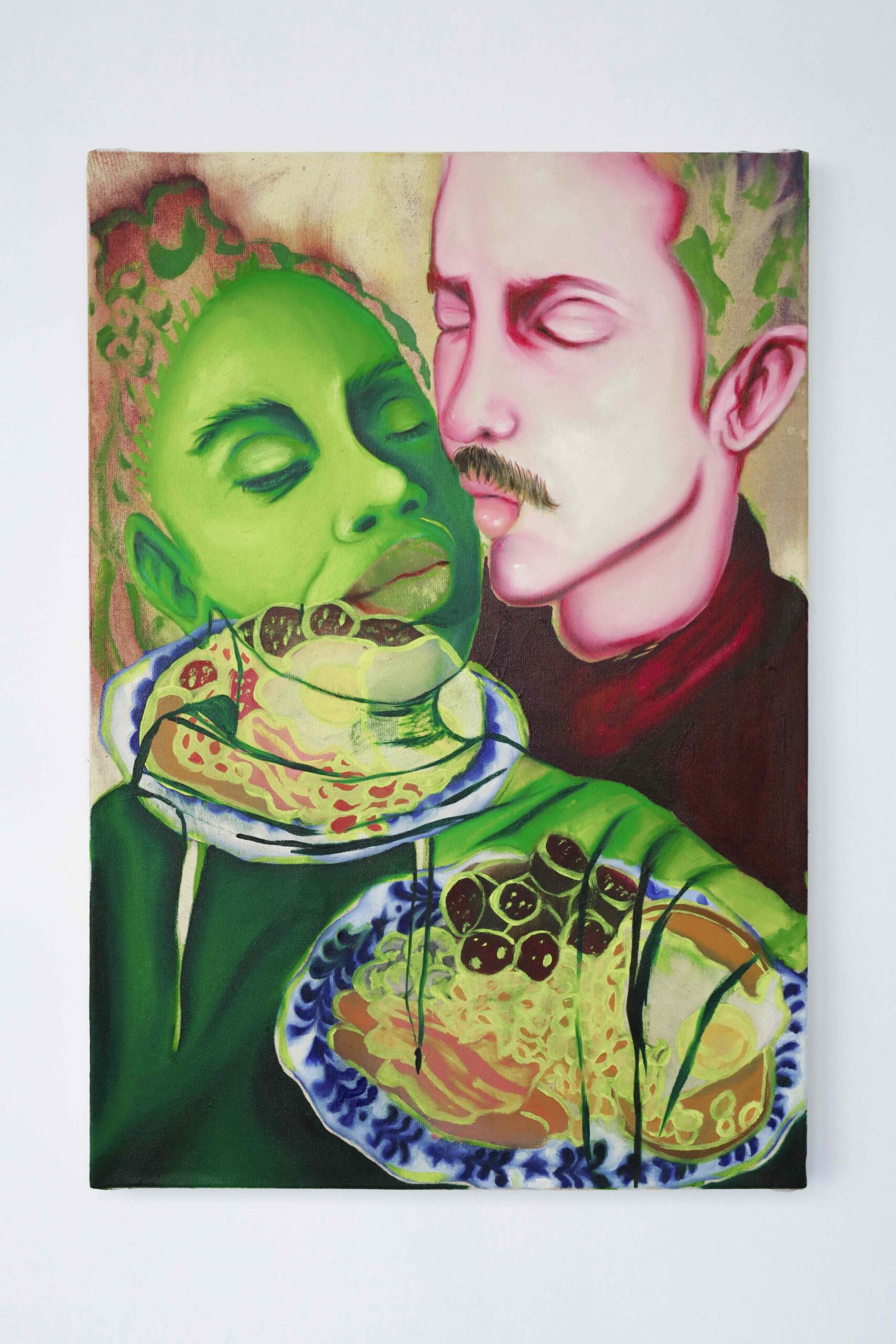
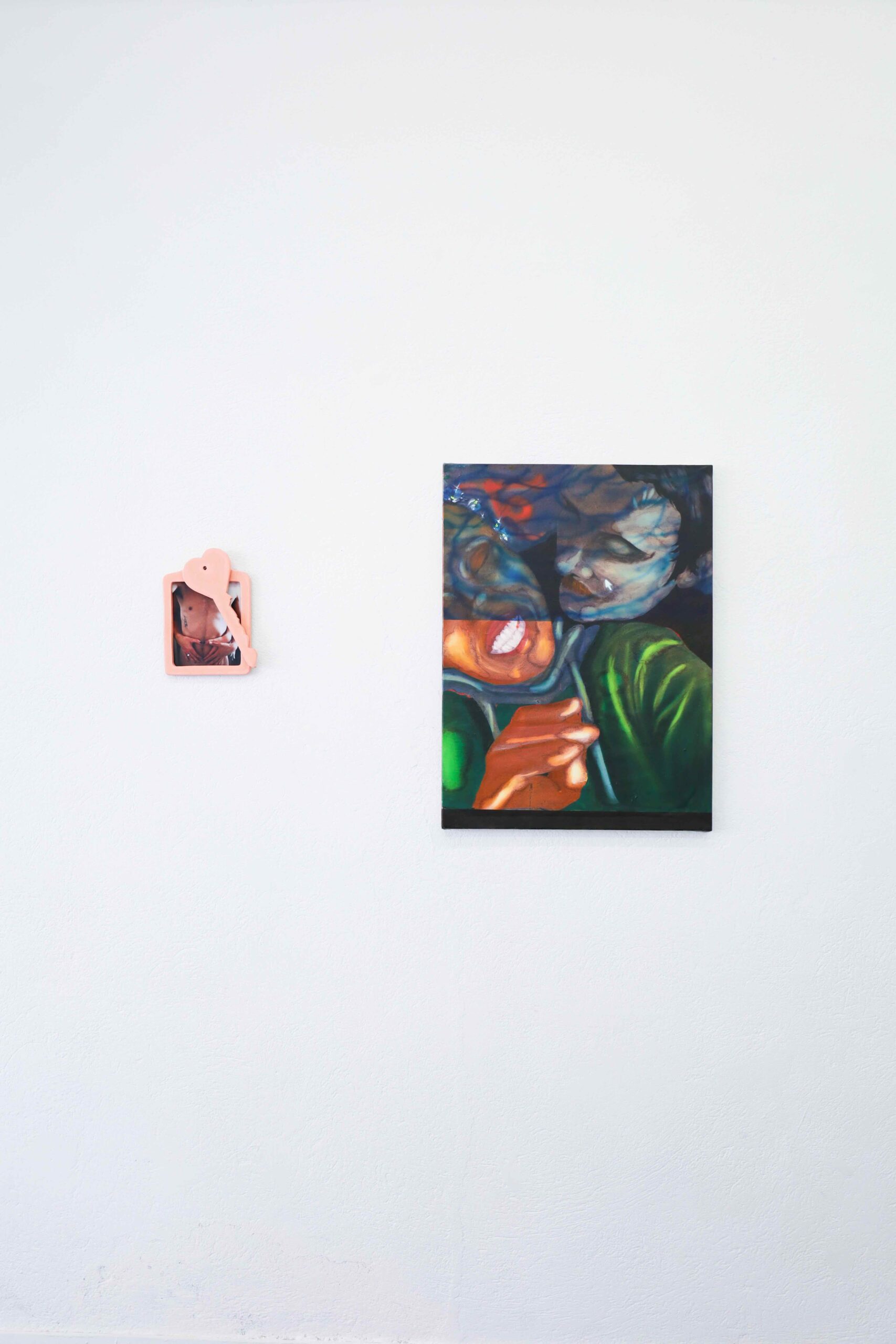
In her painting, Maïlys Moanda renders intimate scenes through fluorescent and hypnotic experiences. ‘Her memories’, to use her own words, draw the gaze in with a vortex-like effect. Like a psychedelic trip, she plays on the vibrancy of fluorescent and glossy contrasts whilst leaving areas untouched, with undefined, unfinished, suspended contours. Here, the artist unveils an introspection in three chapters. Whilst in Fly kisses! and Past fiction, she disrupts the exercise of self-portraiture by superimposing, cheek to cheek, the face of a loved one, No more tears pictorially metaphorises an out-of-body experience.
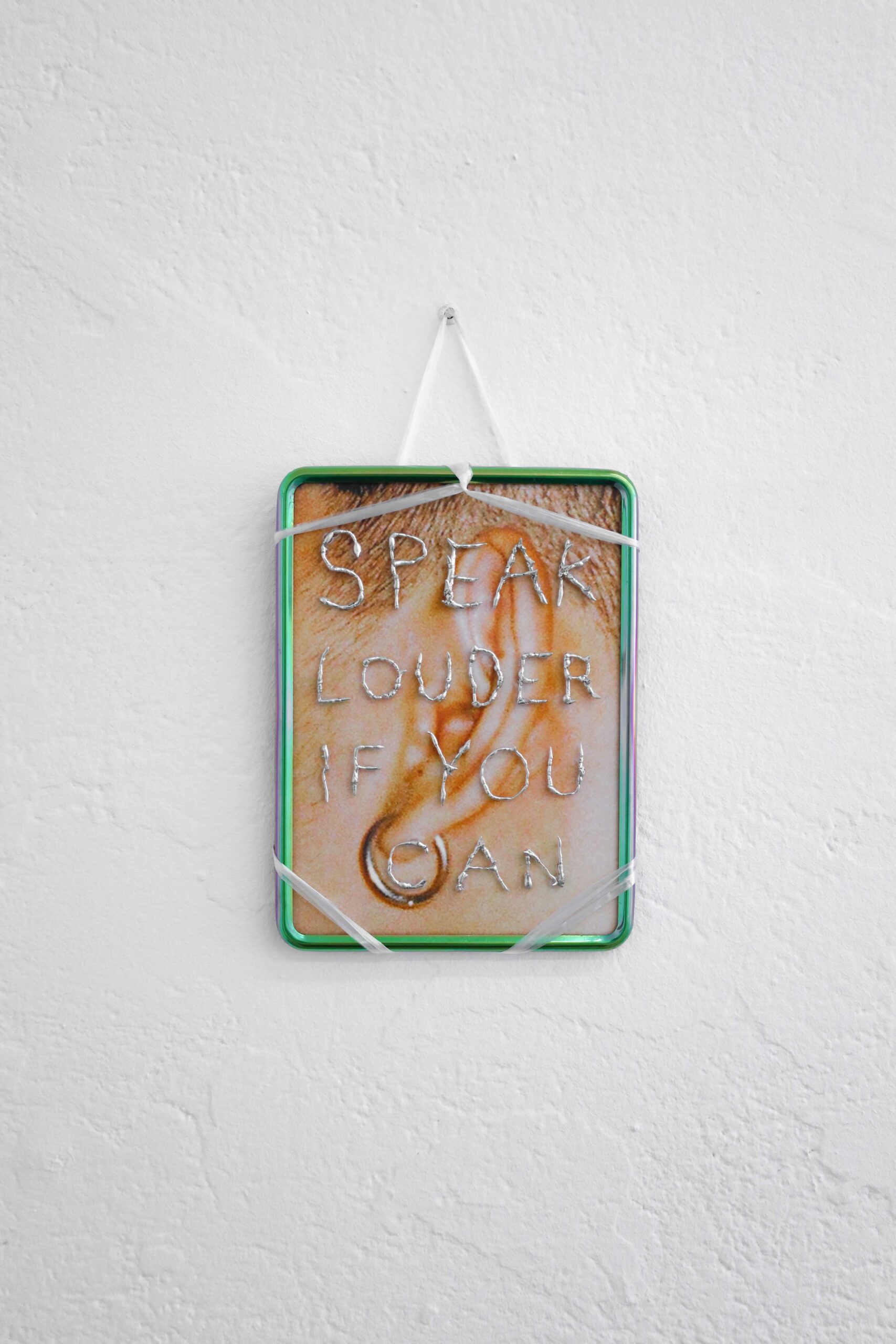
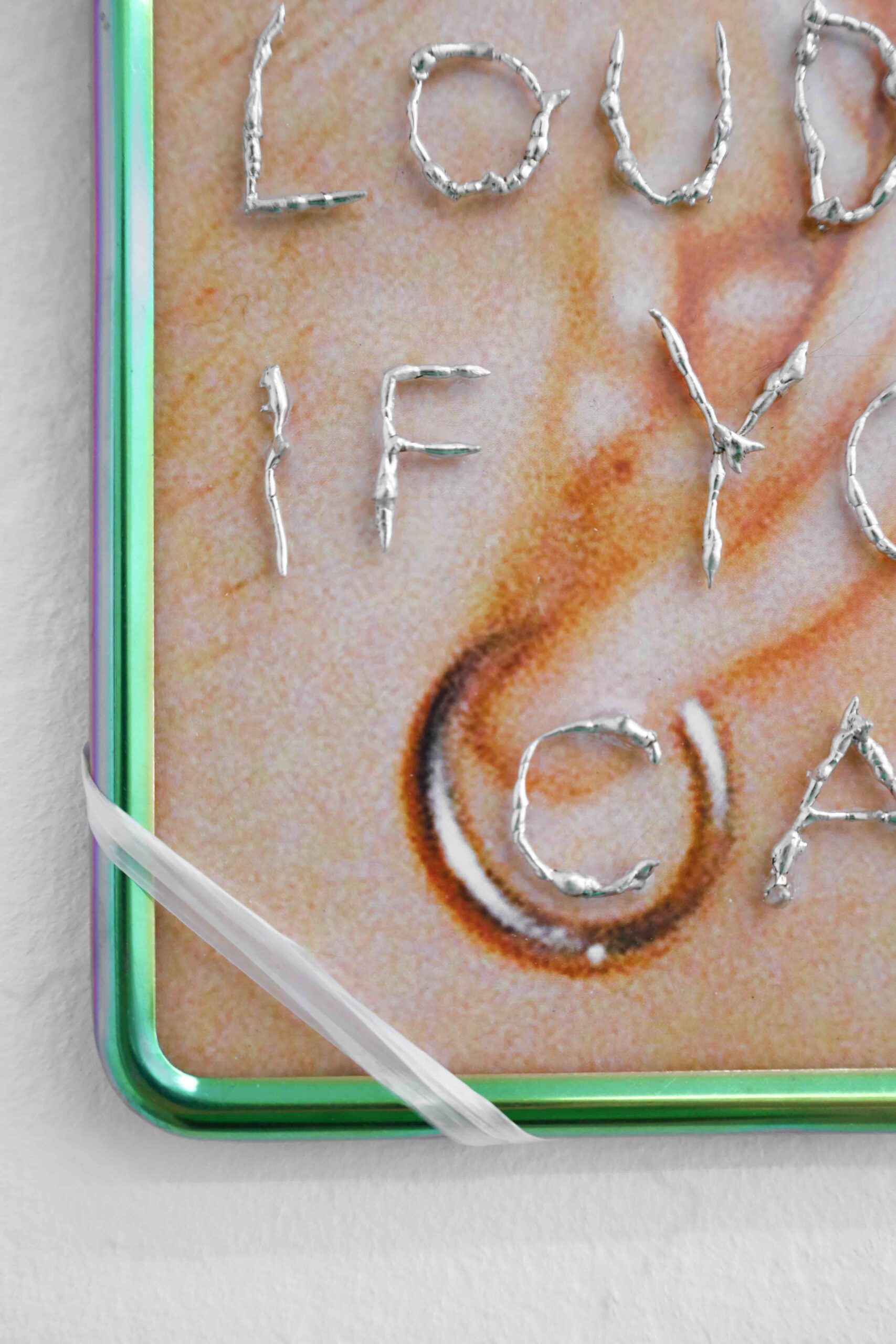
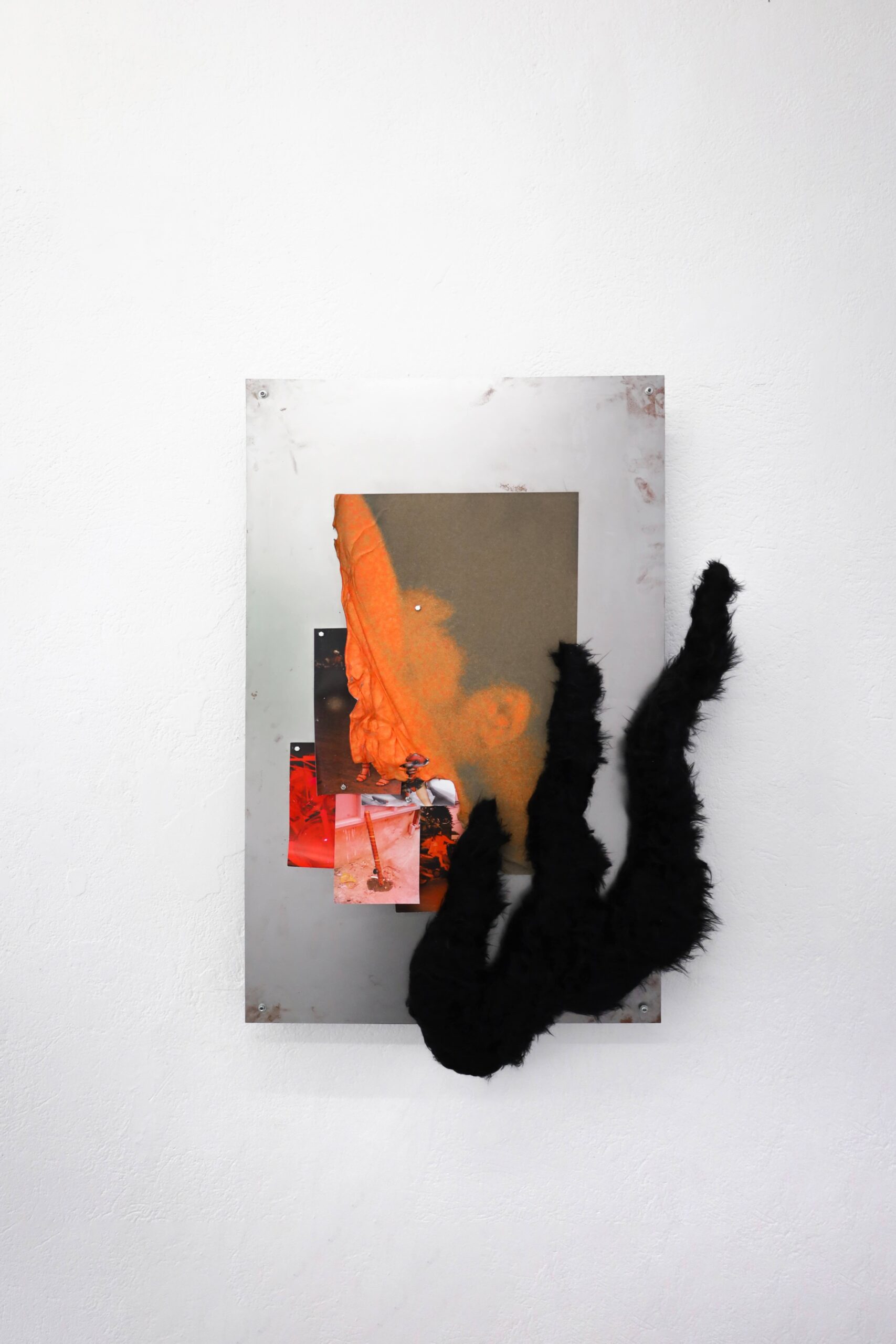
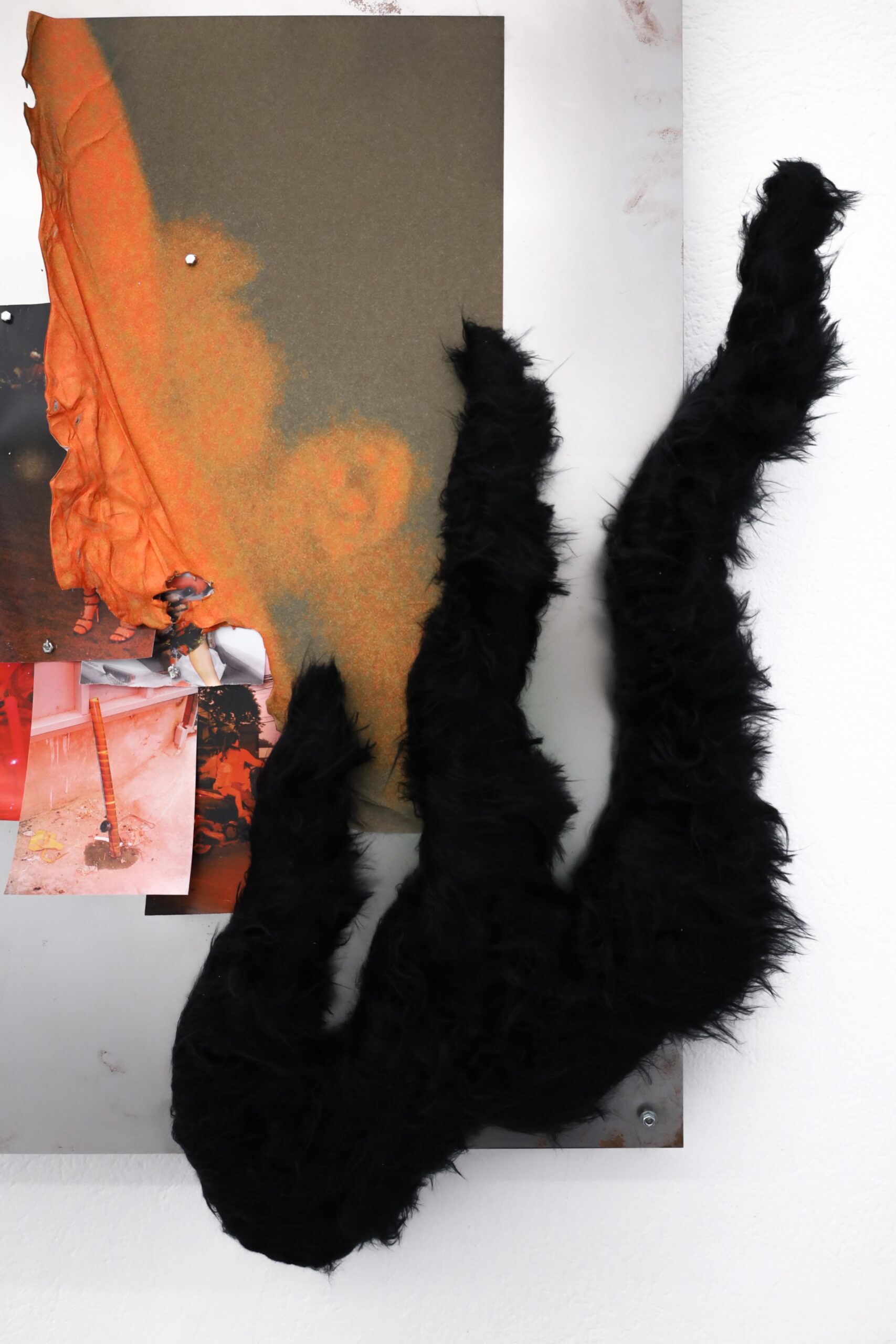
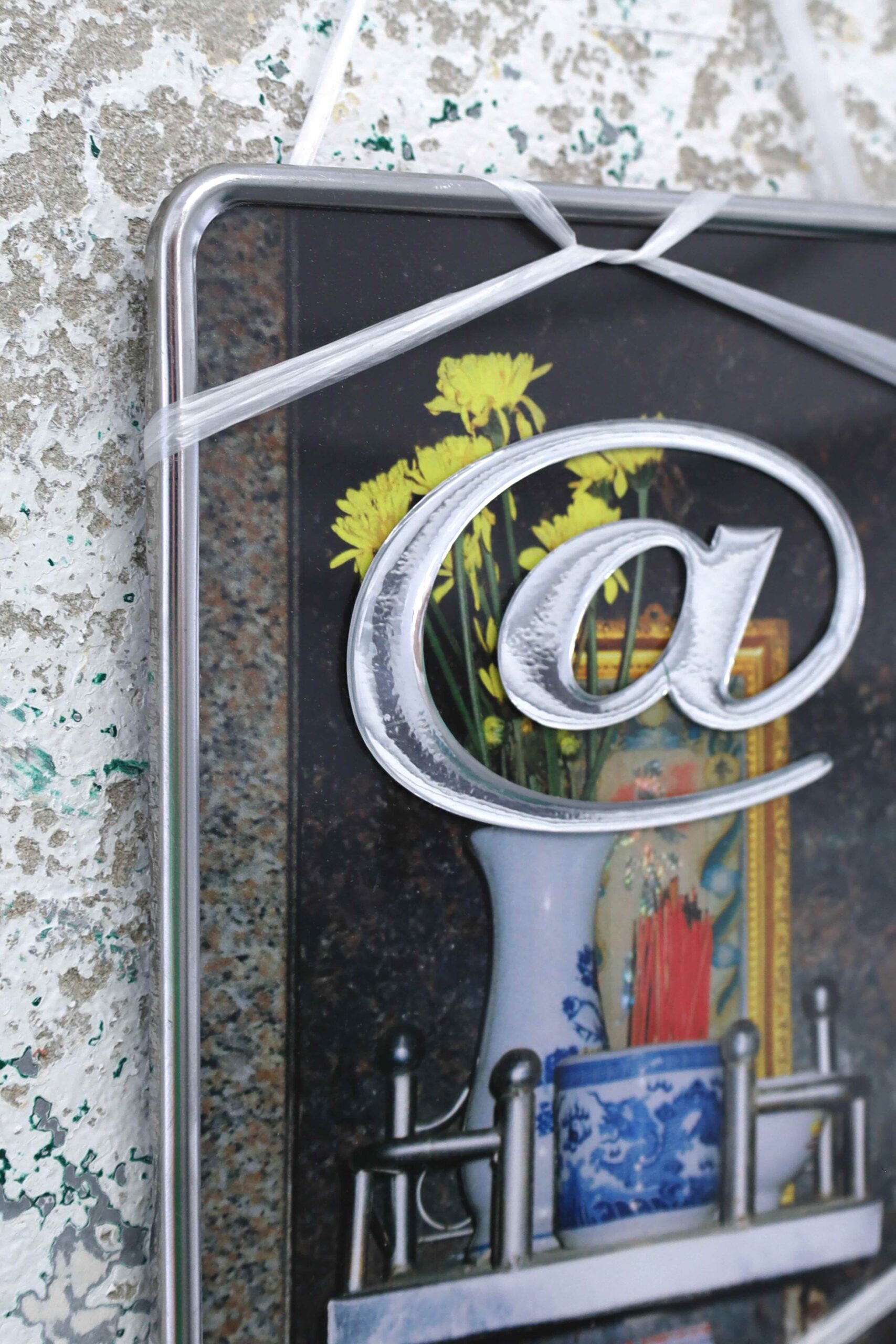
In the Hang Up series, Prune Phi draws on the visual culture of Vietnamese nightlife, particularly the various decorative elements found on motorbikes. Whilst capturing, composing and assembling images, she also destroys, tears and burns them to visually convey the dissolution and reconstitution of memory. Here, through a deconstruction of the very material of the vehicle, she uses steel plates, bolts, or molten metal. The artist draws her inspiration from the lexical field of telephony and the internet — Long-distance call, Speak louder if you can, @ — a metaphor for a transmission that is garbled, faulty, or broken. Through this semantic exploration, the artist shares her experiences in the search for personal, diasporic narratives, scrutinising gaps and oblivion as a passage to a fictional world, a beyond.
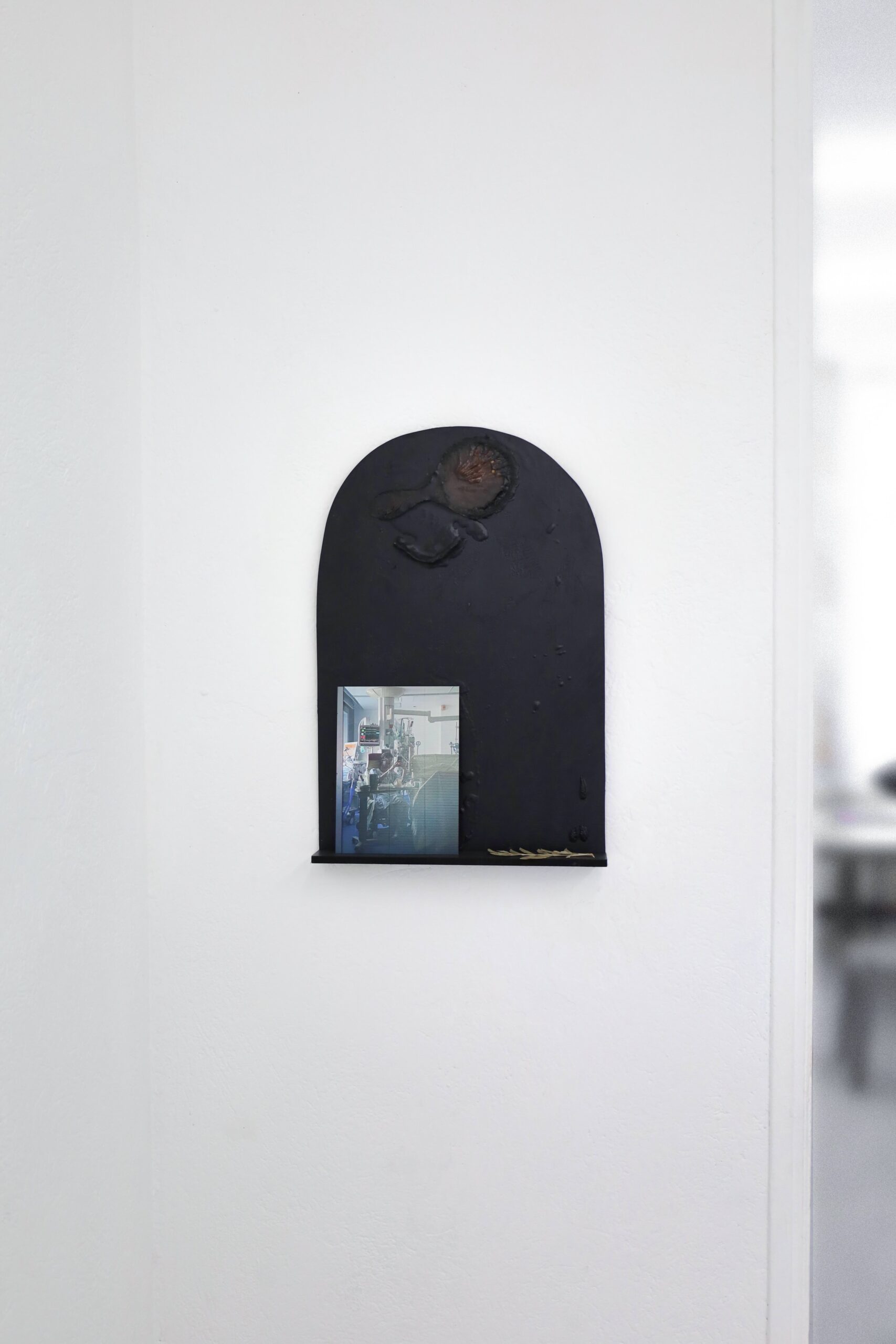
Quentin Fromont is interested in fantasies, and how they enable us to transcend the limits of the body and its limitations. He experiments with the image—its materiality, its fluidity—blending inks using water or saliva, thereby amalgamating images of male bodies drawn from pornographic films or personal archives. Whether idealised or hallucinatory, his altered and hazy photographic representations reveal bodies in tension, entwined and intertwined. Within this floating, erotic temporality, desire, attention, struggle and bodily violence make themselves felt, by contrast, in the interactions of these spectral presences. In contrast, the work *Autel* redefines the photographic work as an object. By drawing on religious forms and presenting the image as an offering, the artist challenges our understanding of illness and healing.
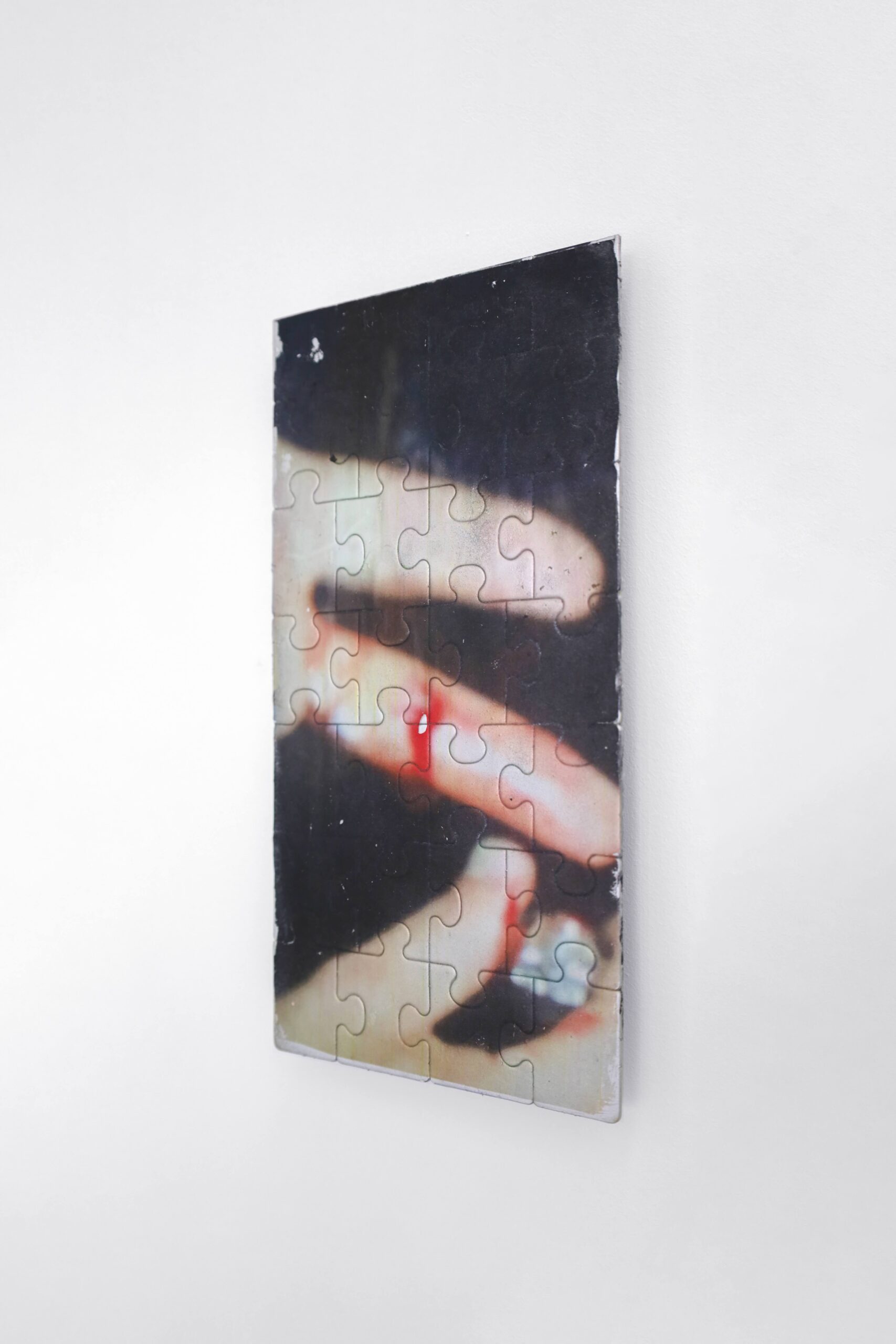
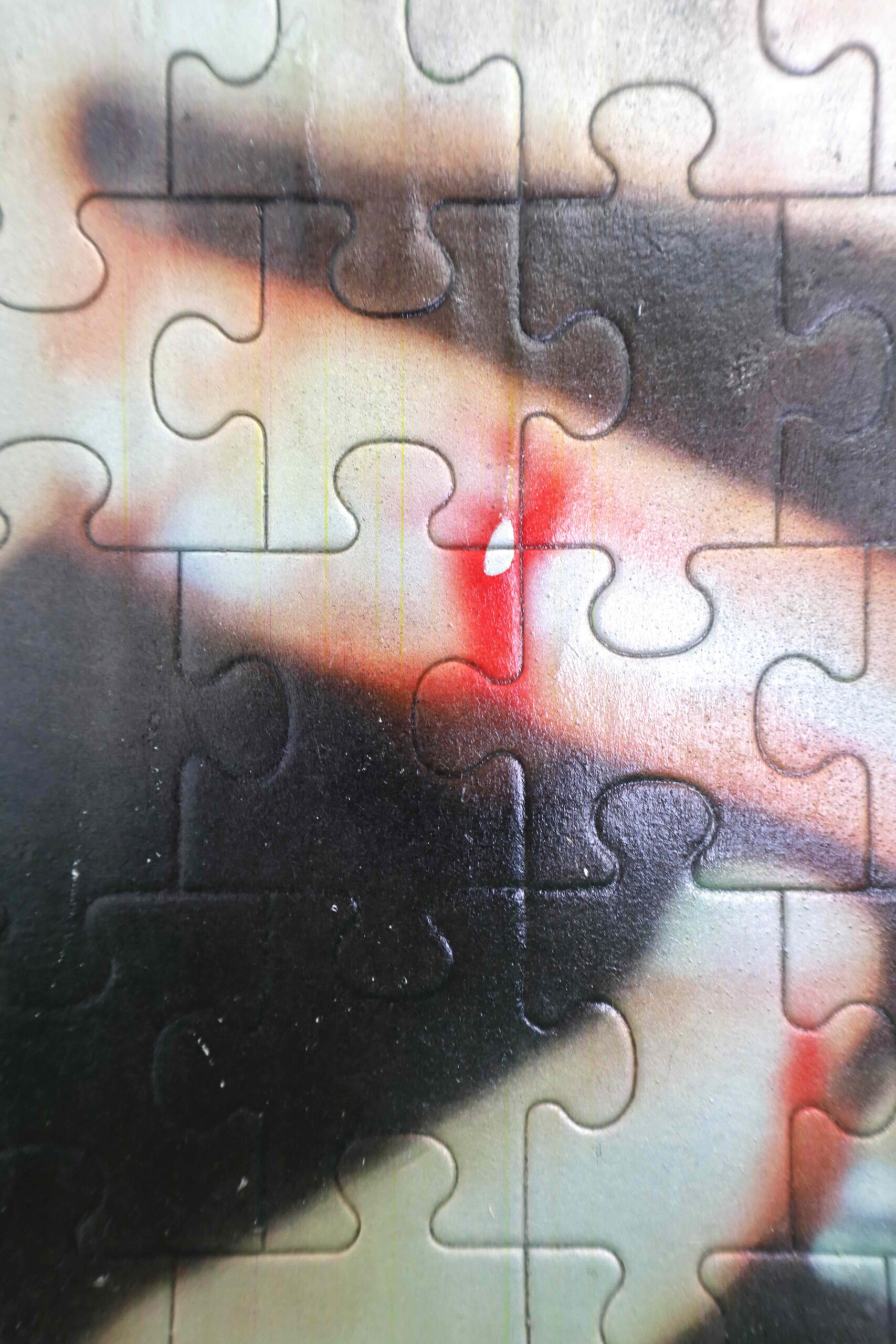
In her practice, Zoe Metra treats childhood and adolescence as mental spaces to be re-explored and traversed. Through films, photographs and installations, she assembles elements emblematic of the visual culture of the 2010s, enabling her to create narrative worlds that diverge from their original interpretations. In Still or 24/777, she uses recognisable objects or spaces such as jigsaw puzzles or playgrounds, which she transports to parallel worlds through voice, the narrative she superimposes upon them, or the images she associates with them. These works are spaces of retreat, rooms for marginalised and strange characters, too sensitive to expose themselves to reality. In them, she says, she gives a voice to those we do not see, those who hide within ourselves. By fictionalising objects and distorting familiar spaces, she creates a sense of unease, a shiver, by confronting the viewer with their own inner turmoil.