
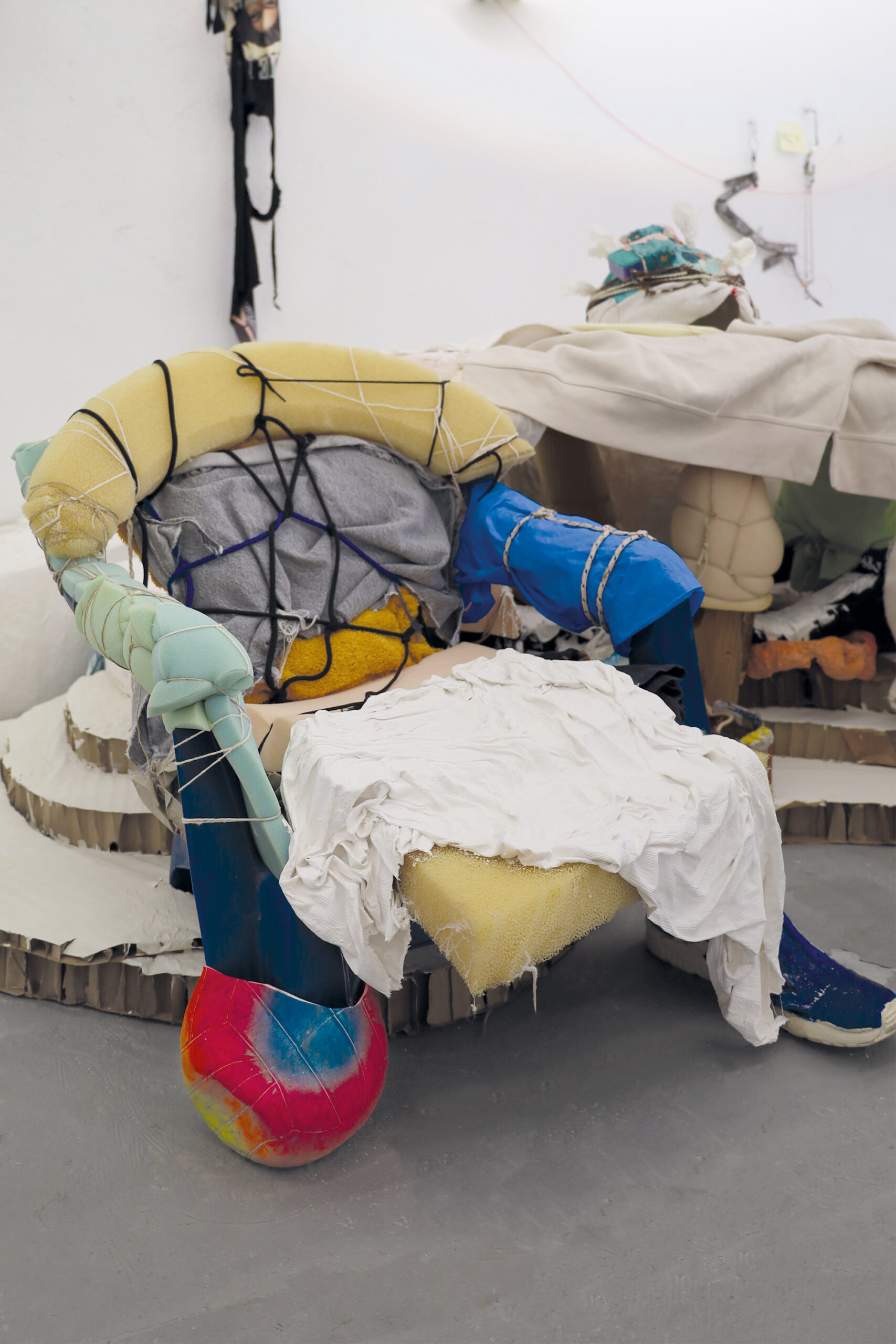
Estel Fonseca, a Franco-Portuguese artist based in Marseille, works across sculpture, audiovisual media, text and performance: an approach to installation that she describes as ‘plastic fragmentation’. For this new project, the artist offers a sensory, visual and theoretical analysis of bodies in gestation, drawing on intimate experiences, and explores:
Birth as a transformation of existing bodies
Motherhood
The metamorphic
The experience of the sick or constrained body
The transition between movement and stillness
Psychic bonds and familial transmissions
Unconscious processes
Volumes as symbolic representation
Chaos taking shape
Symptoms
Conceived during her pregnancy and shaped by her childbirth and experience of motherhood, this exhibition explores the process of gestation from an organic and inclusive perspective. Pregnancy is approached here as a physical phase, a source of creativity, and a shift in biological and organisational behaviour – much as illness might be viewed if it were freed from its negative connotations within the Western medical system.
Divided into two spaces, EN GESTATION, FUMAR MAMAR, JE DIGÈRE unfolds within the uterine matrix and the warmth space, playing on the duality between entropy and negentropy.
Entropy is a physical measure describing the degree of increase in disorder – or the weakening of order – within a system or a material. Its opposite, negentropy, corresponds to the organising factors of physical, biological, ecological, social and human systems that counteract the natural tendency towards disorganisation in living organisms.
Through these principles, Estel Fonseca seeks to make visible the processes involved in the development of her forms and her sculptural vocabulary: collection, accumulation, agglomeration, contamination.
UTERINE MOULD
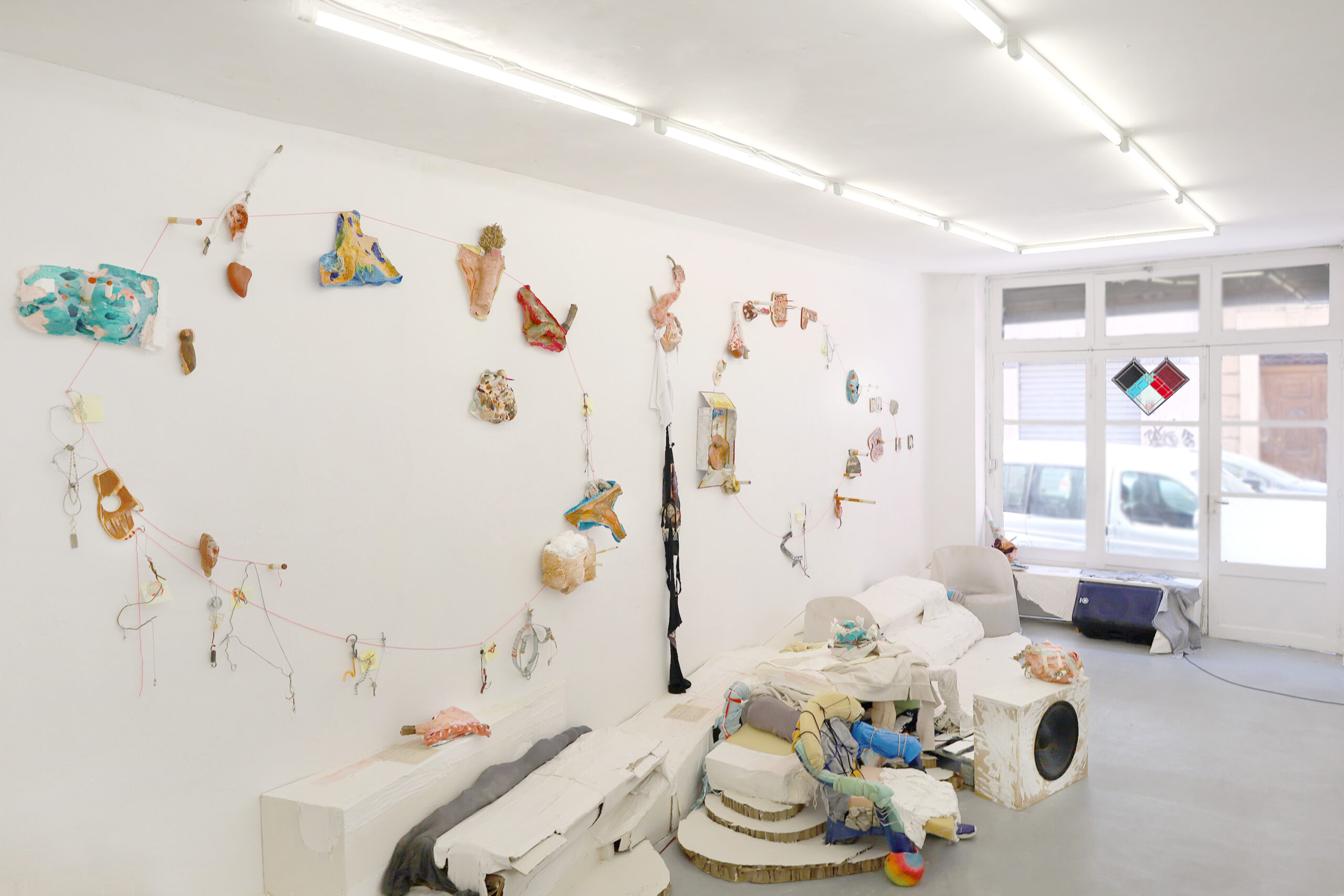
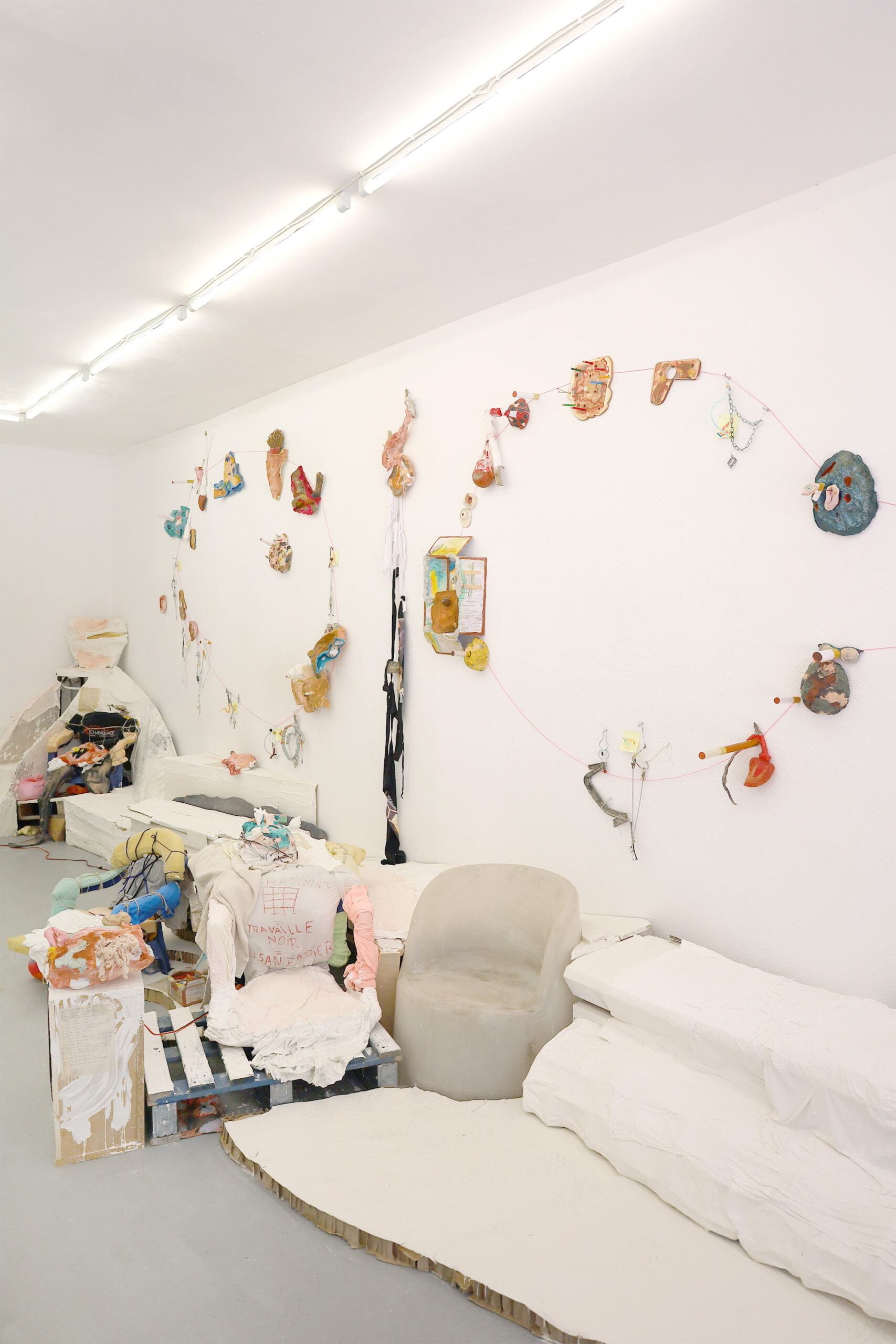
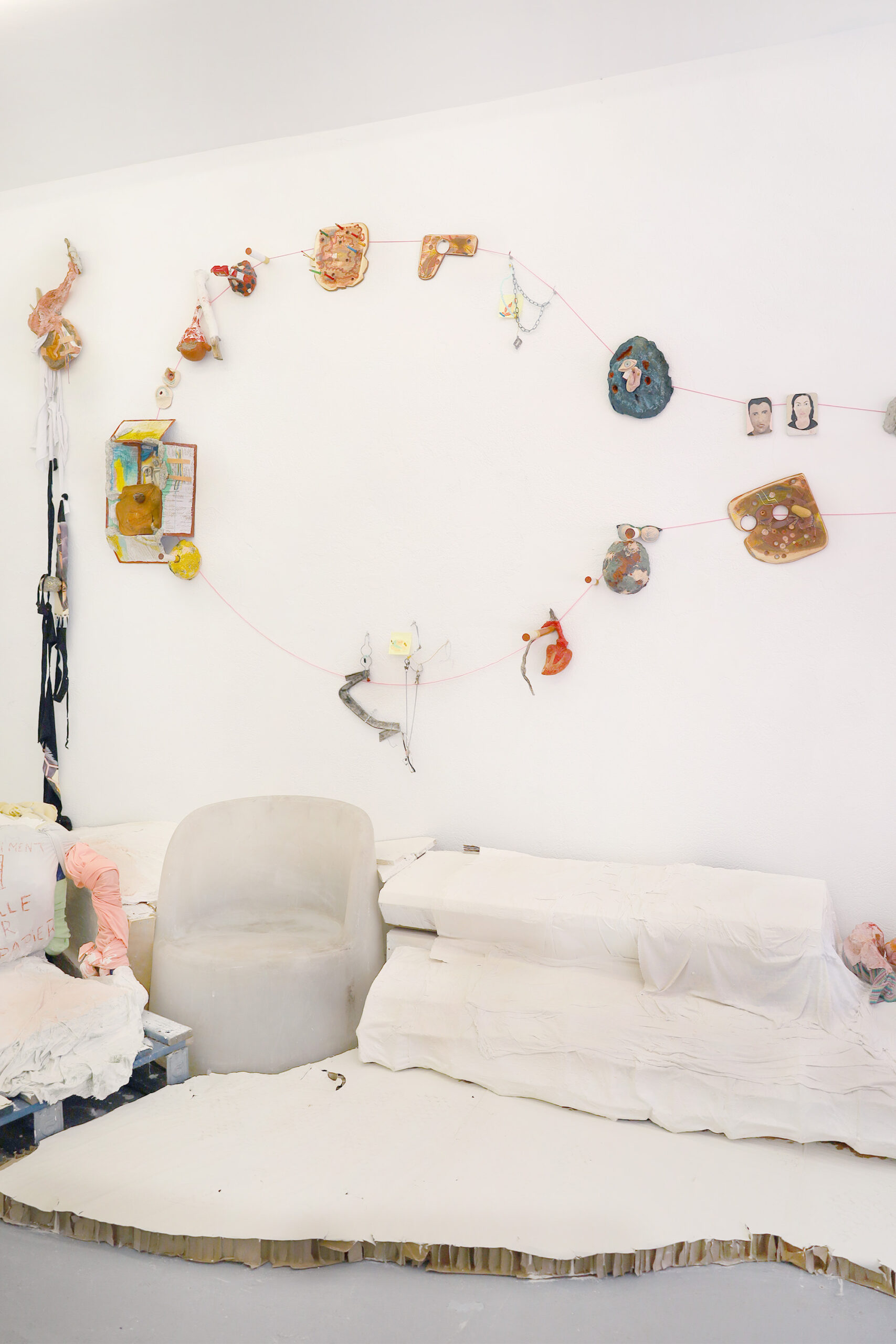
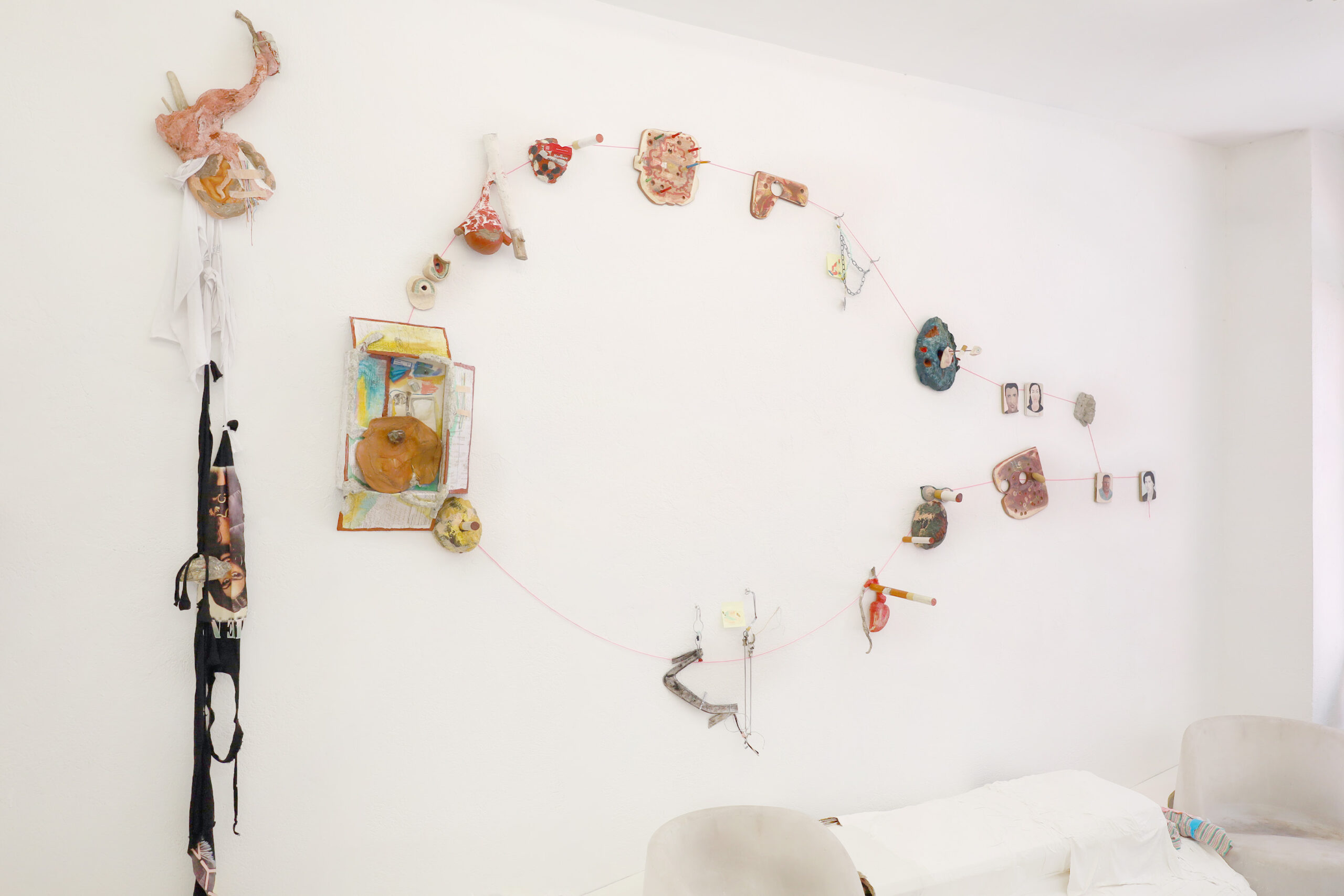
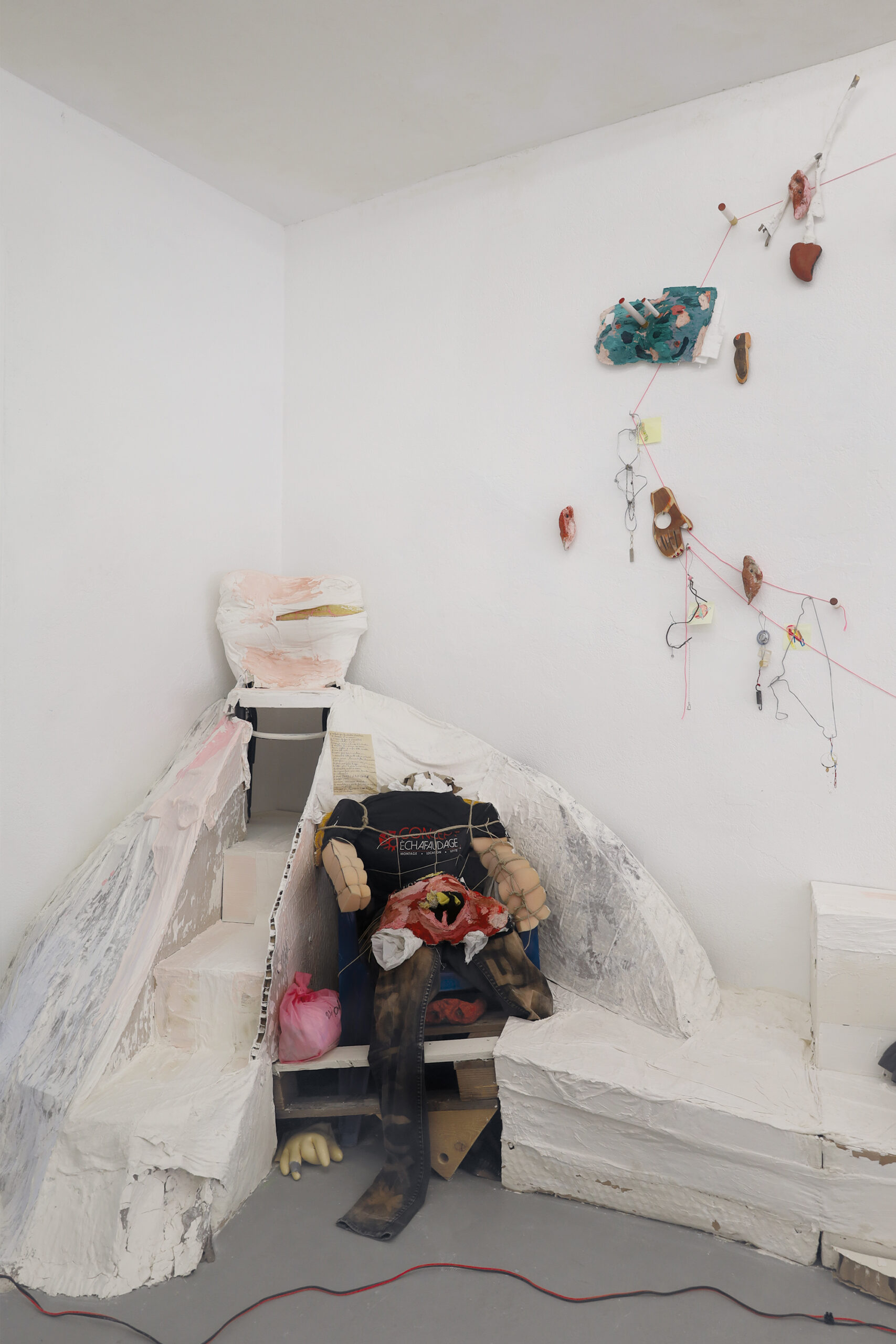
Estel Fonseca creates a site-specific sculptural installation that transforms the space into a metaphor for the womb’s capacity for nurturing, transformation and inheritance. In it, she explores themes of psychogenealogy, her mother’s illness, polarities and balance, and creative sexuality.
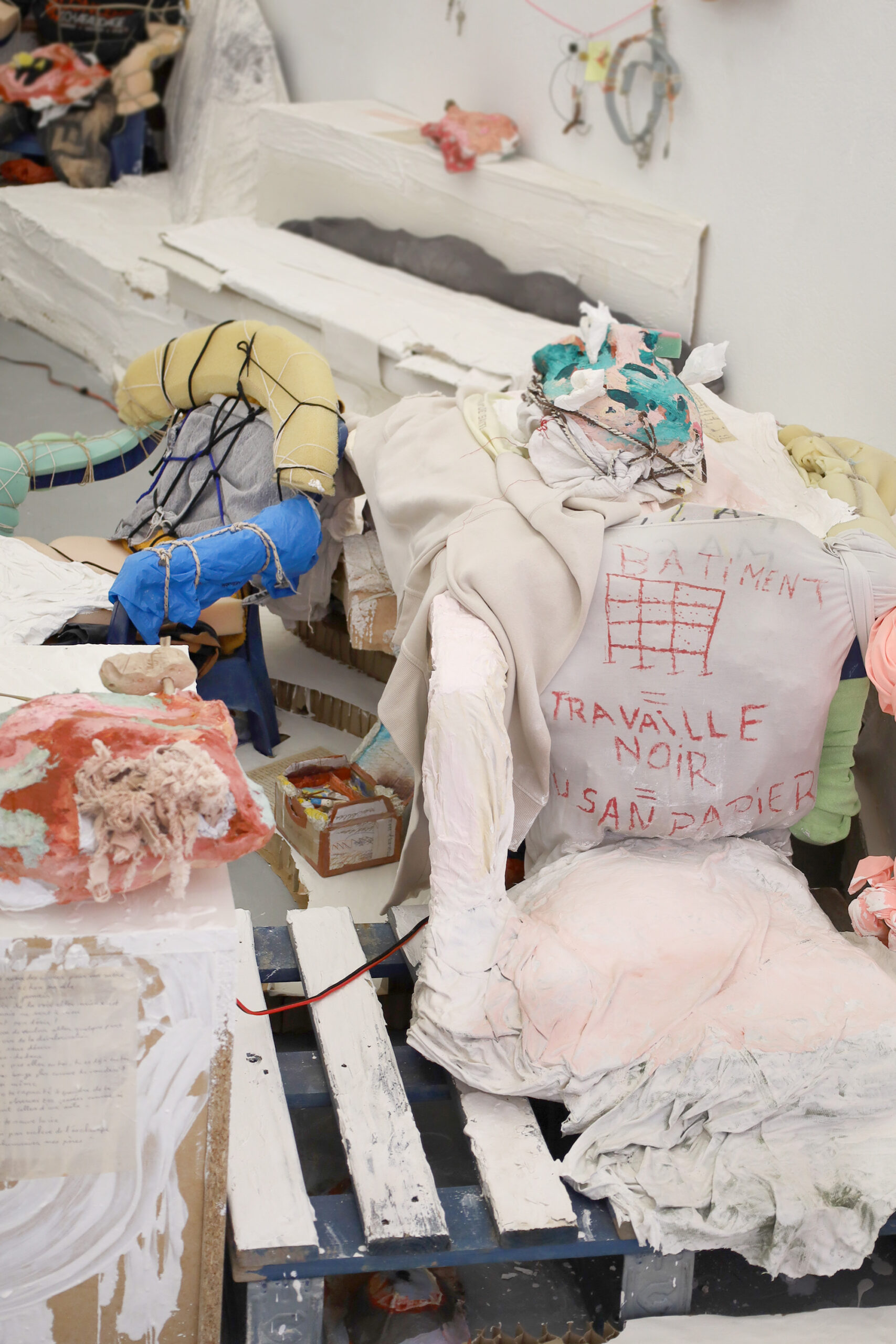
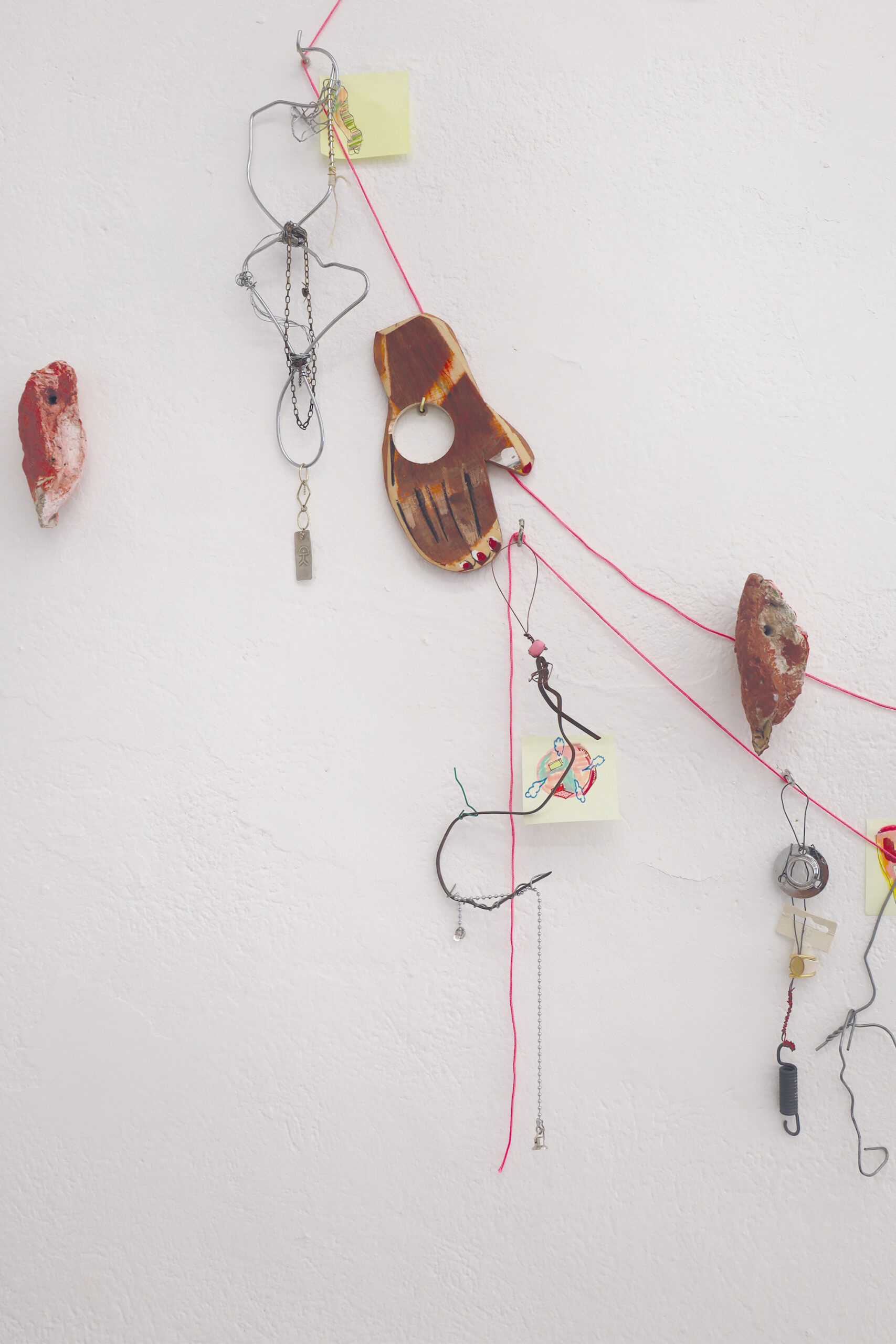
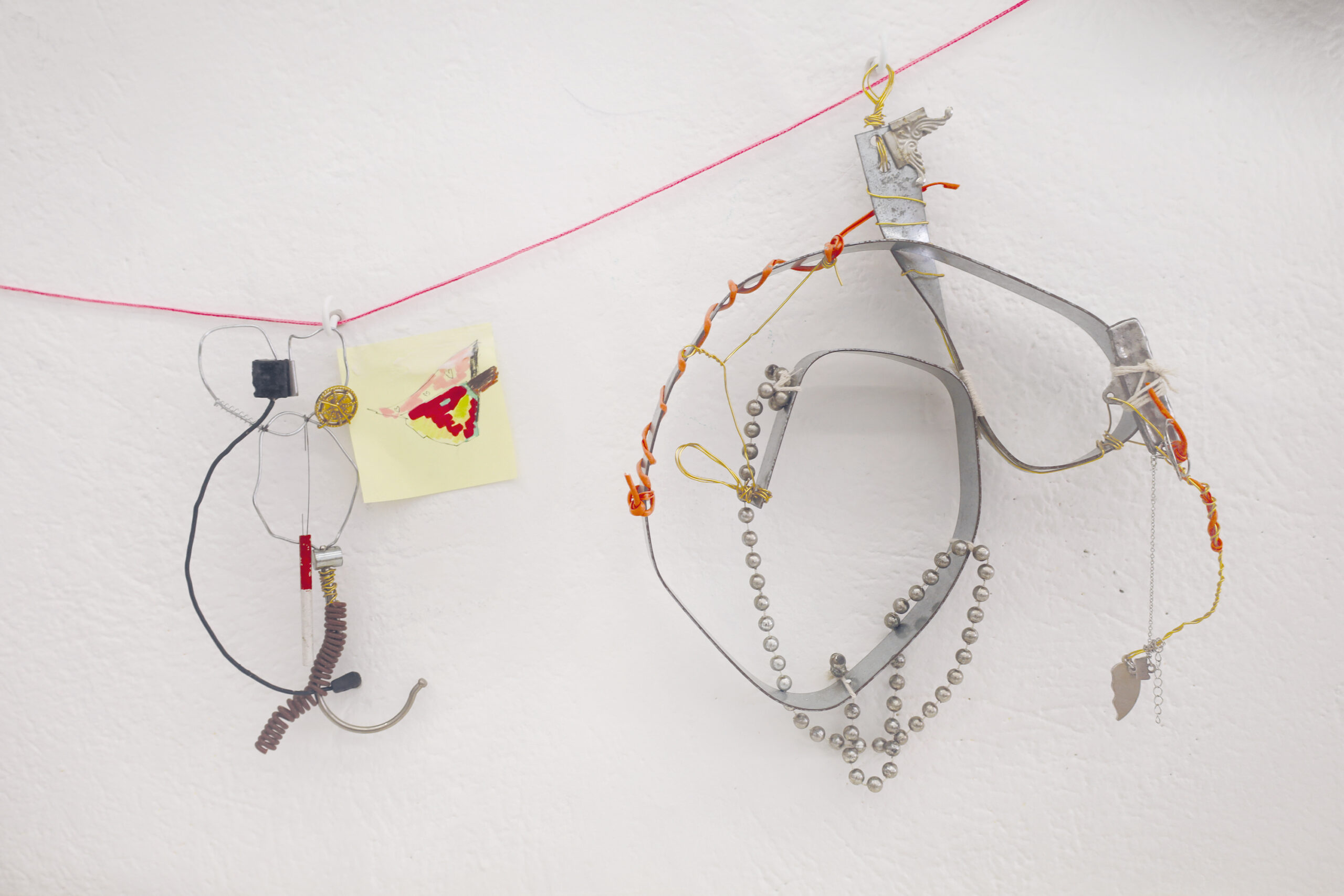
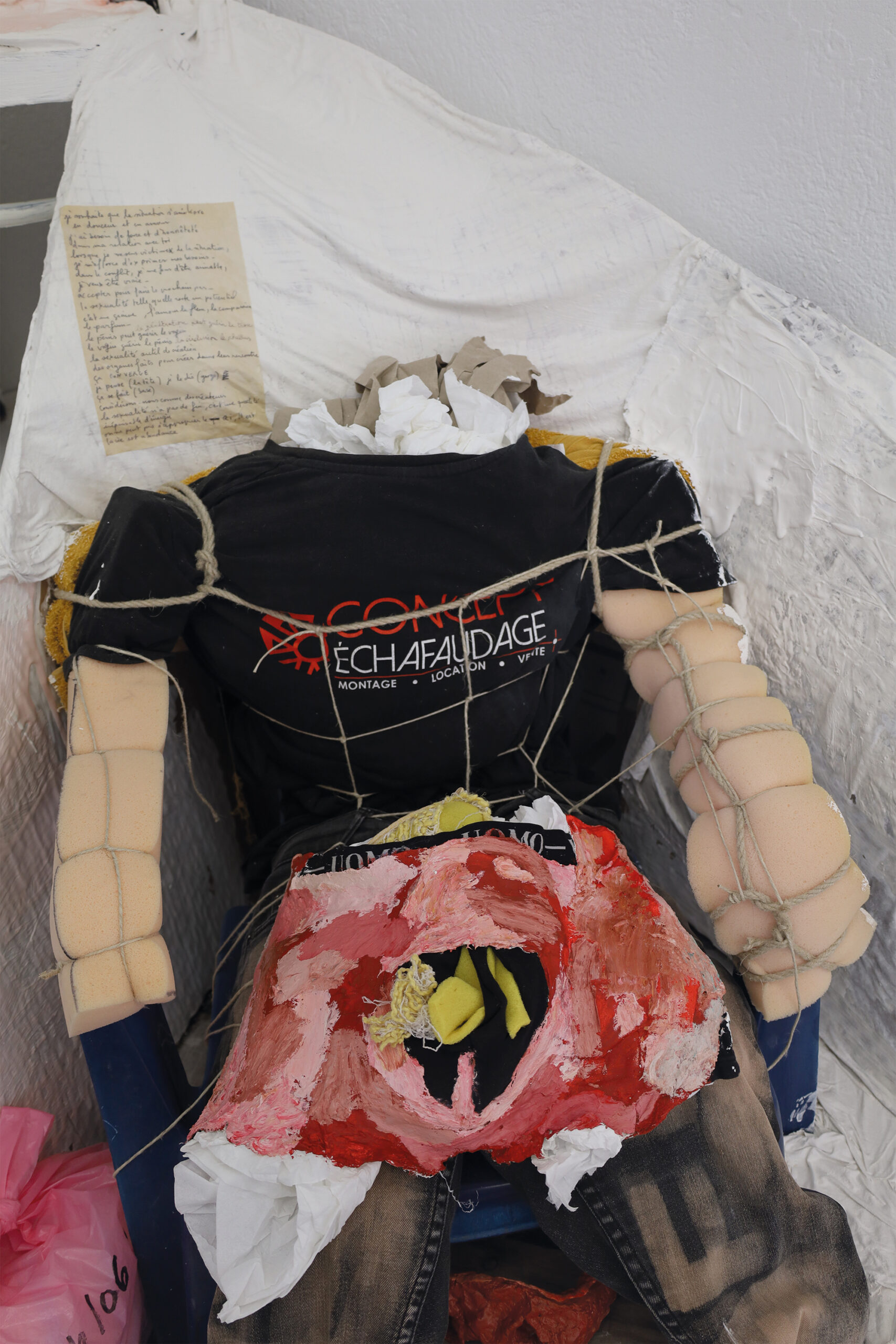
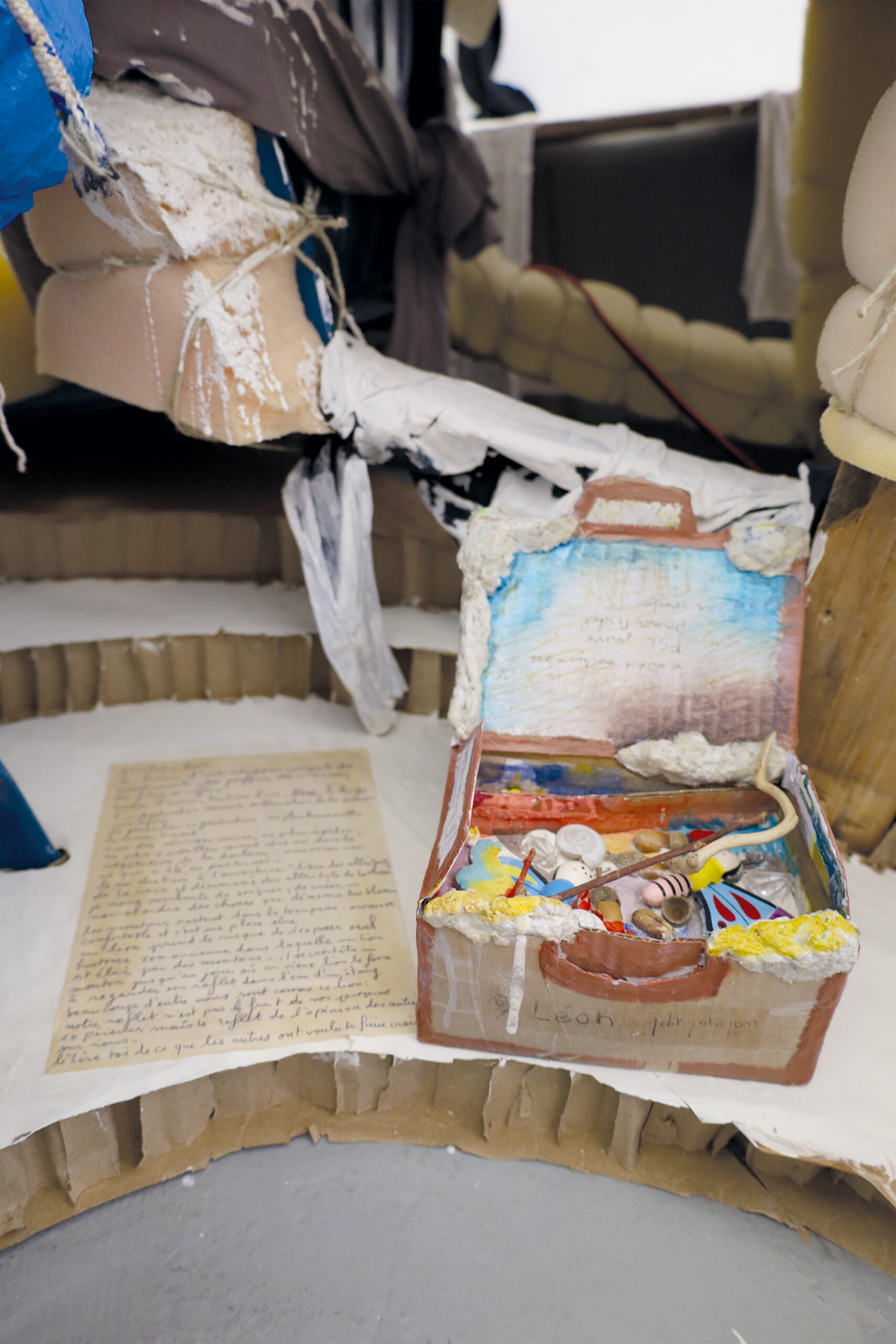
On a fluorescent pink construction tape – simultaneously representing an egg, a circular vision of time and a moving display system – the artist places a series of ‘VOLUMES’ drawn from works created between 2008 and 2024. These evolving compositions are inspired by morphogenesis, that is, the process of the birth of forms. Within these, the “VOTOS” are imbued with the question of contact and aura. These objects are remnants, representative of trials and lived experiences, objects touched by an event, by a symptom. The “ASSISES”, created using collected elements encased in plaster—a metaphor for a placenta as a cushion—are ultimately intended to accommodate the bodies of an audience for a performative activation.
HEAT
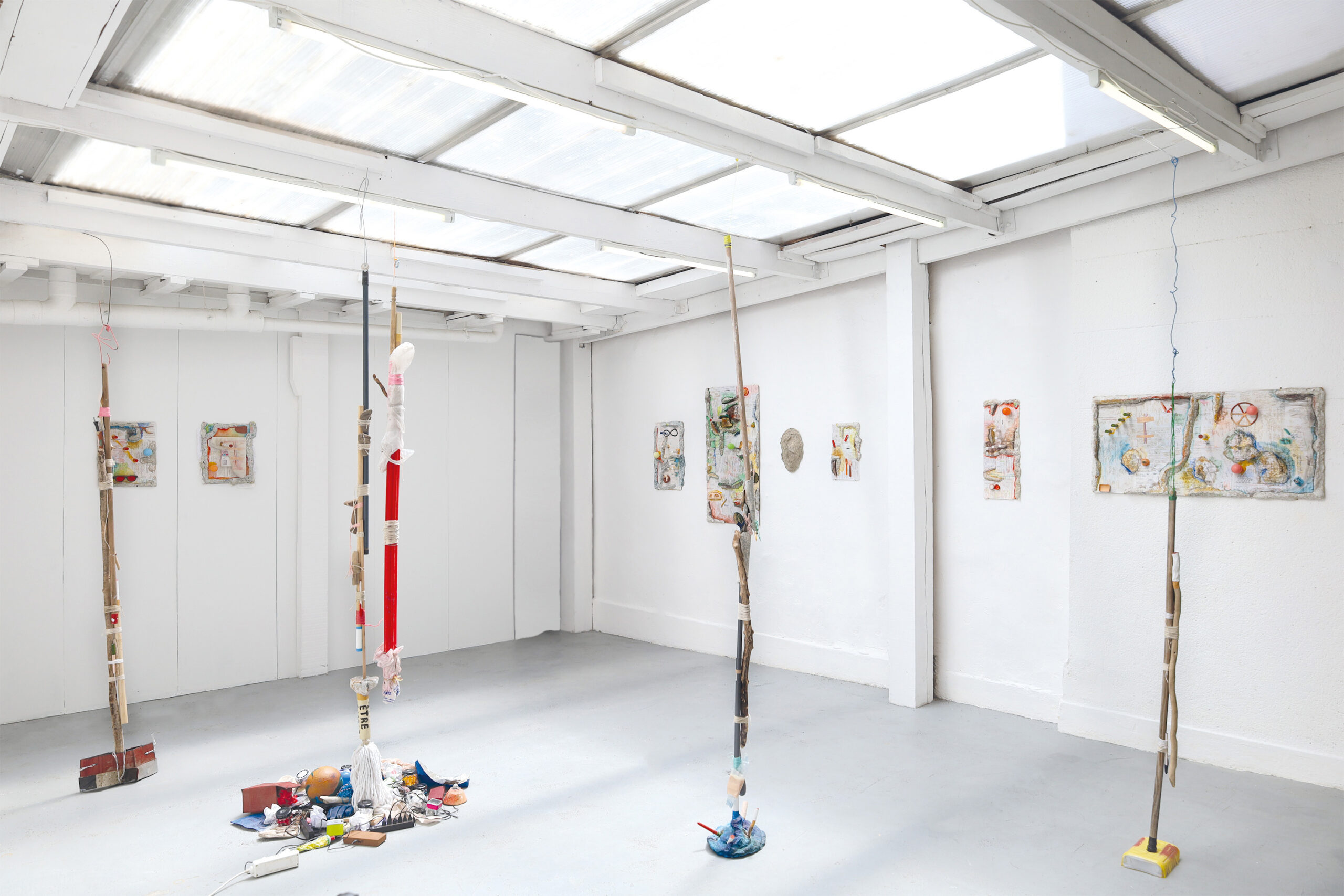
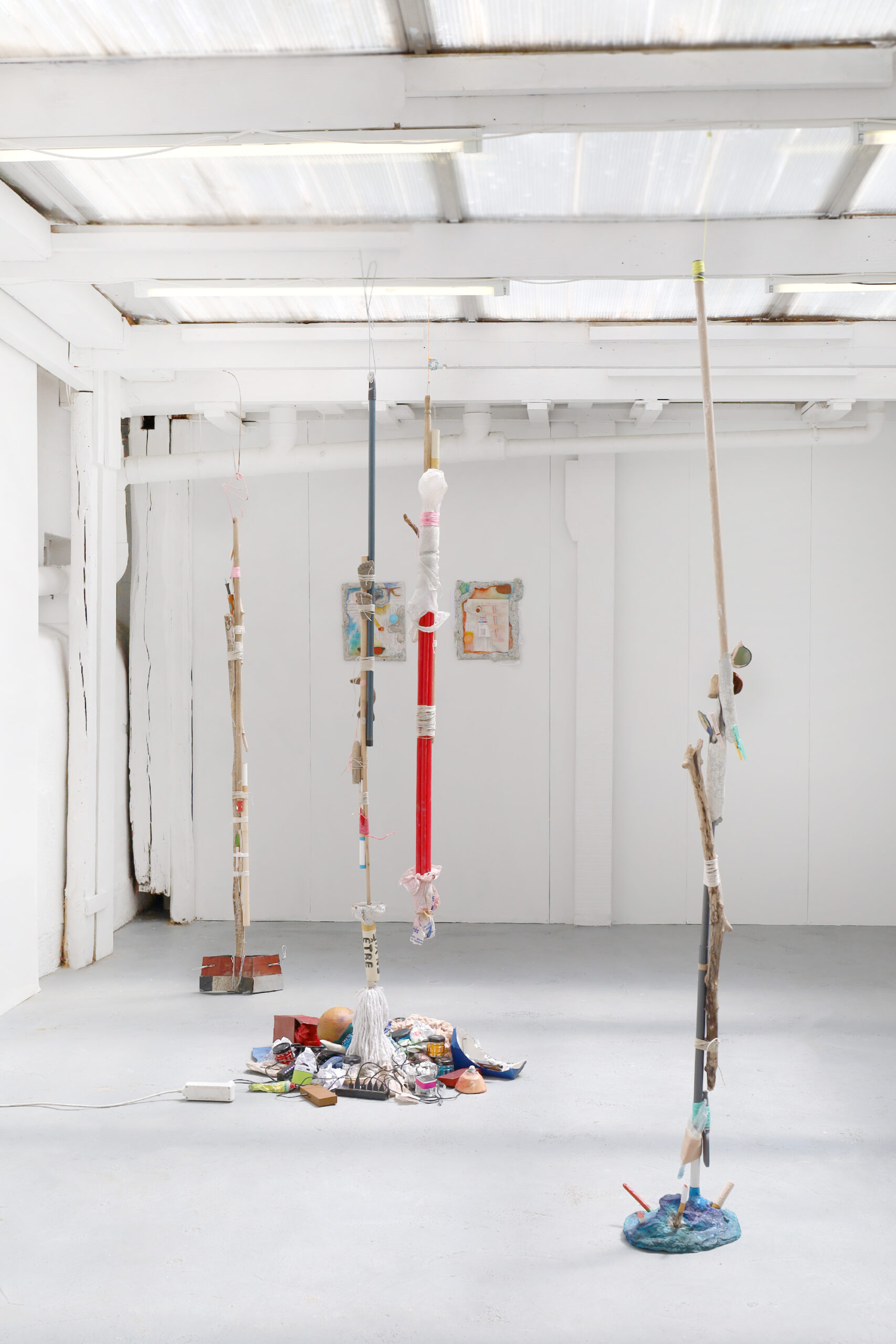
In this second installation, Estel Fonseca draws on the characteristics of the exhibition space (glass roof, sunlight, greenhouse) to explore ‘informational overheating’ as one of the triggers of global warming, ‘which is damaging Mother Earth as well as our bodies and minds’. The artist presents three new works, symbols of a negentropic force that organises objects to counter chaos and give it meaning.
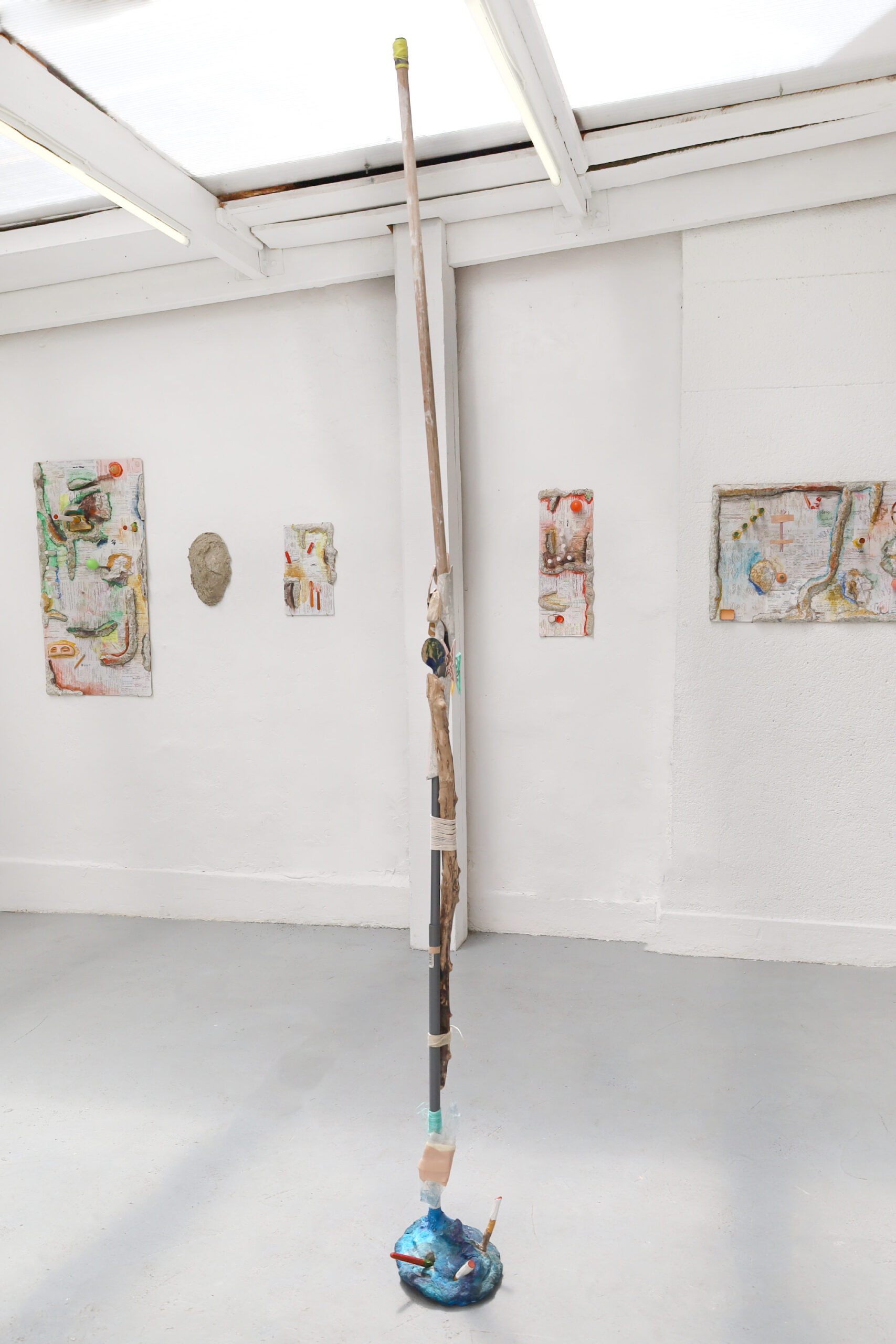
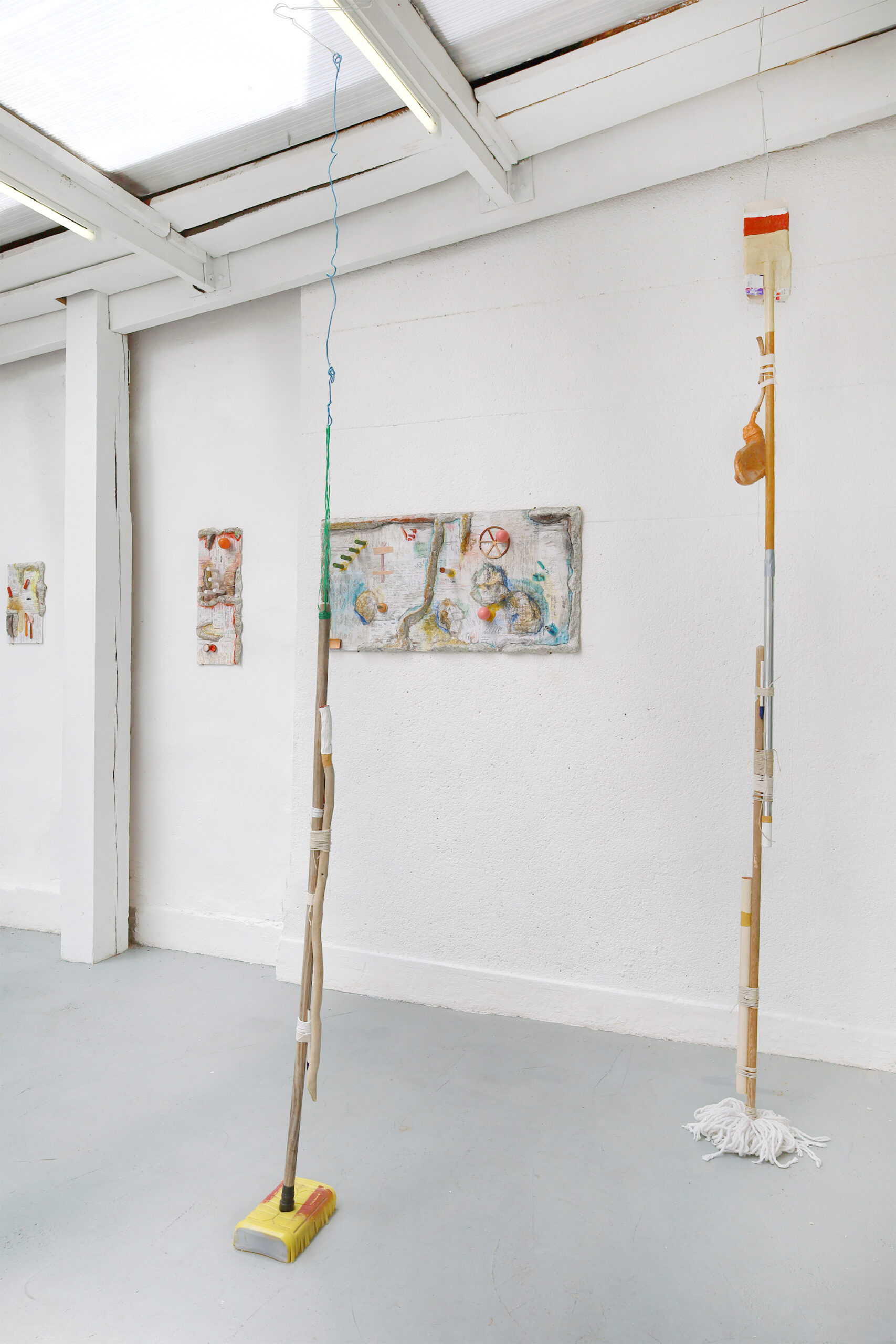
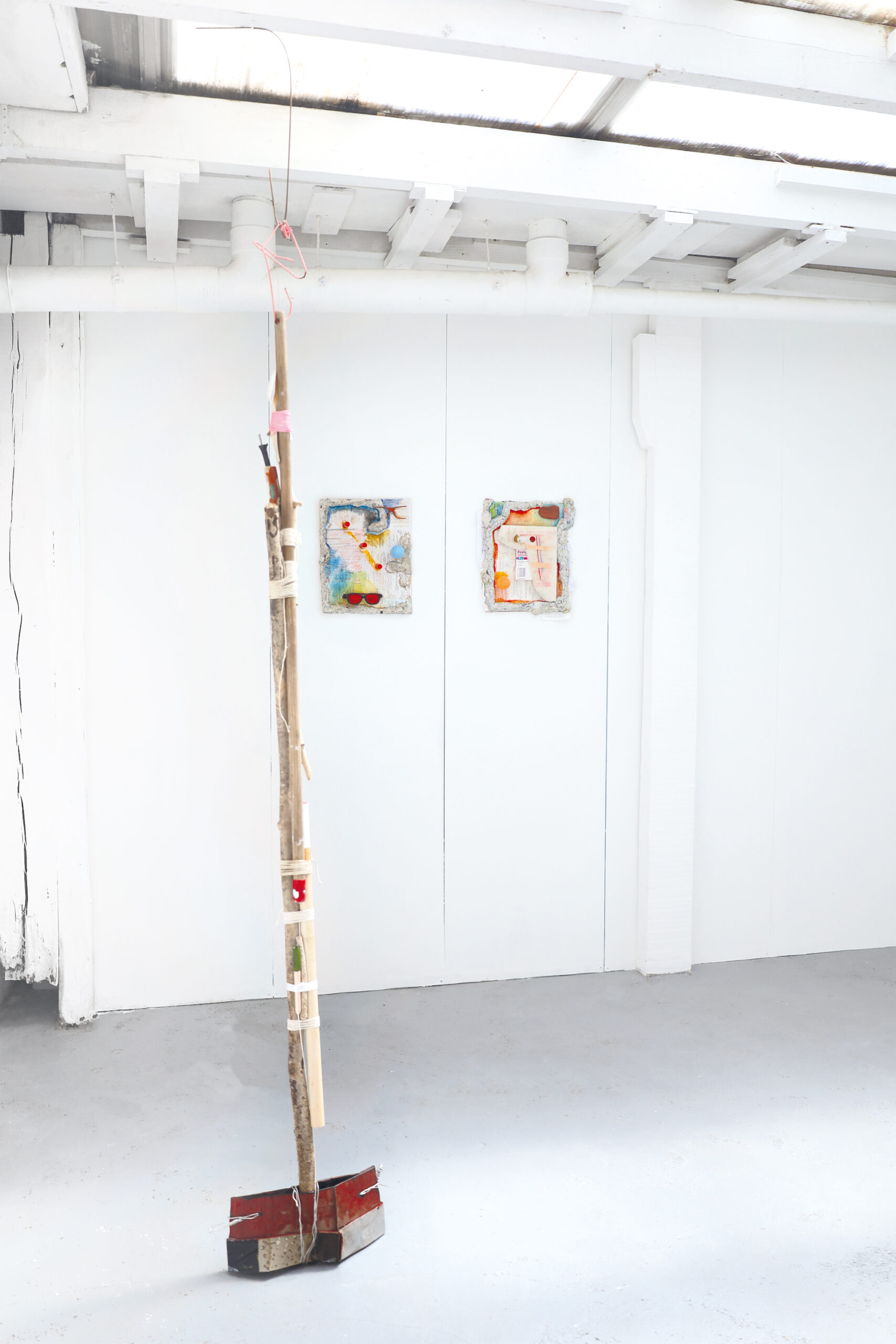
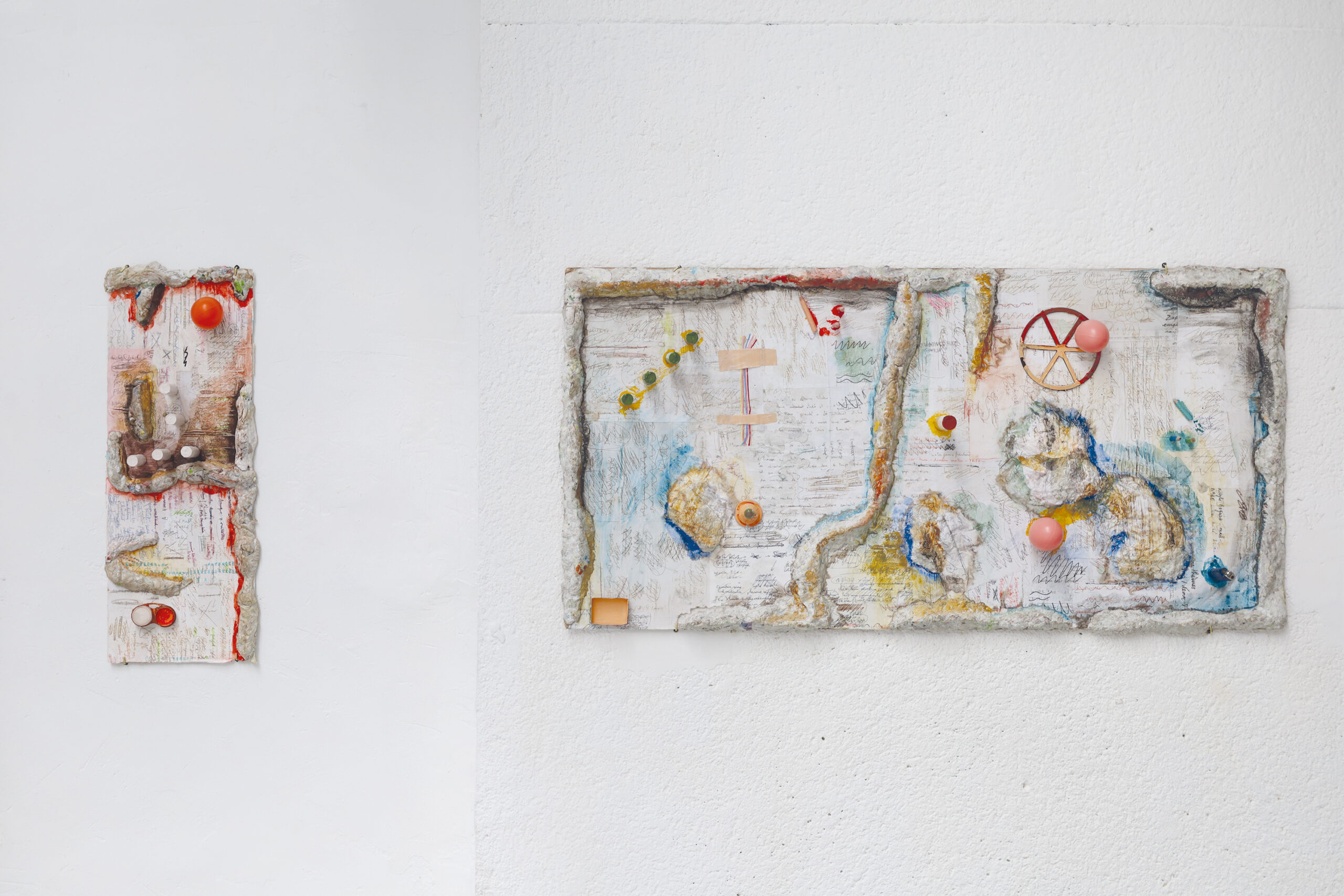
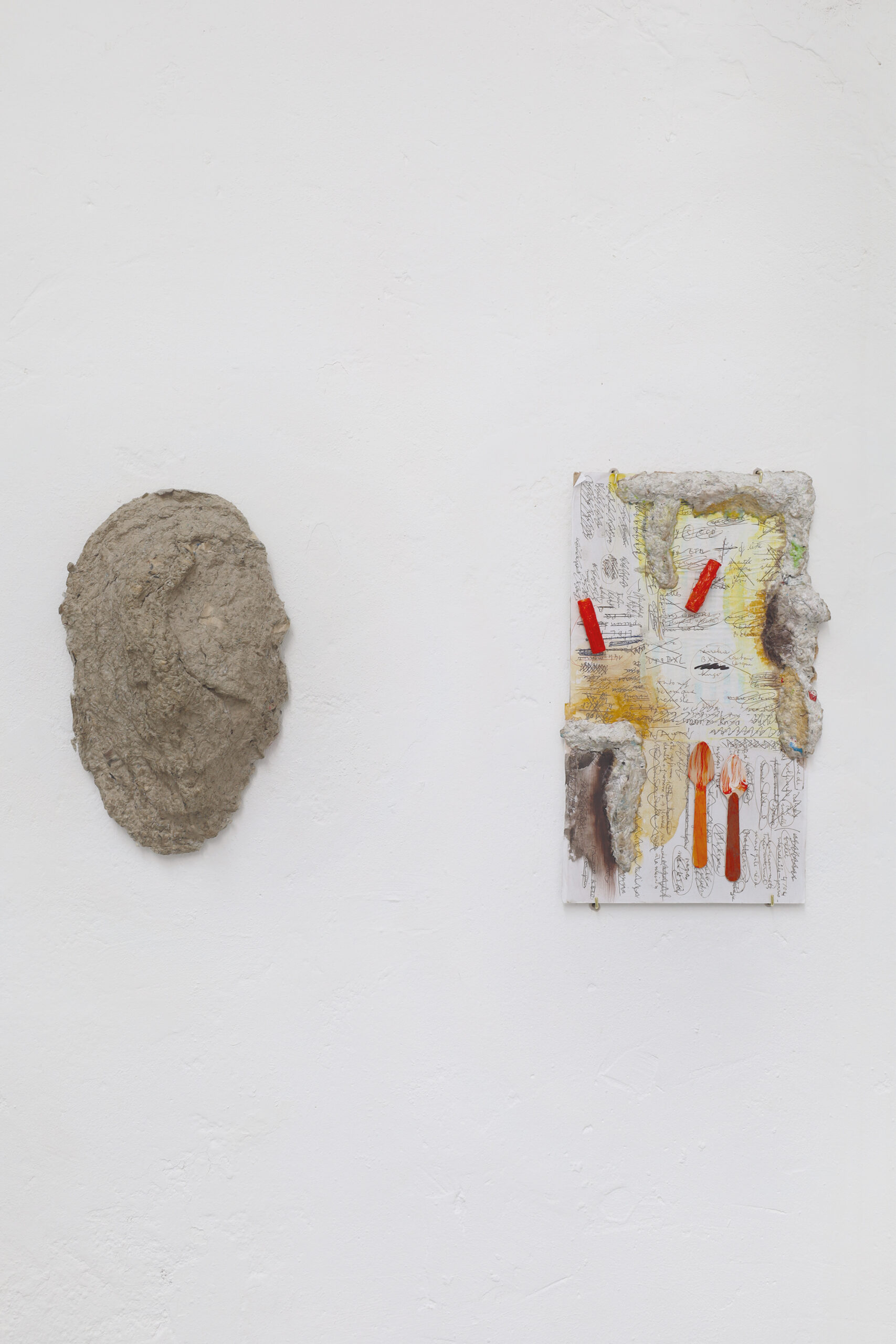
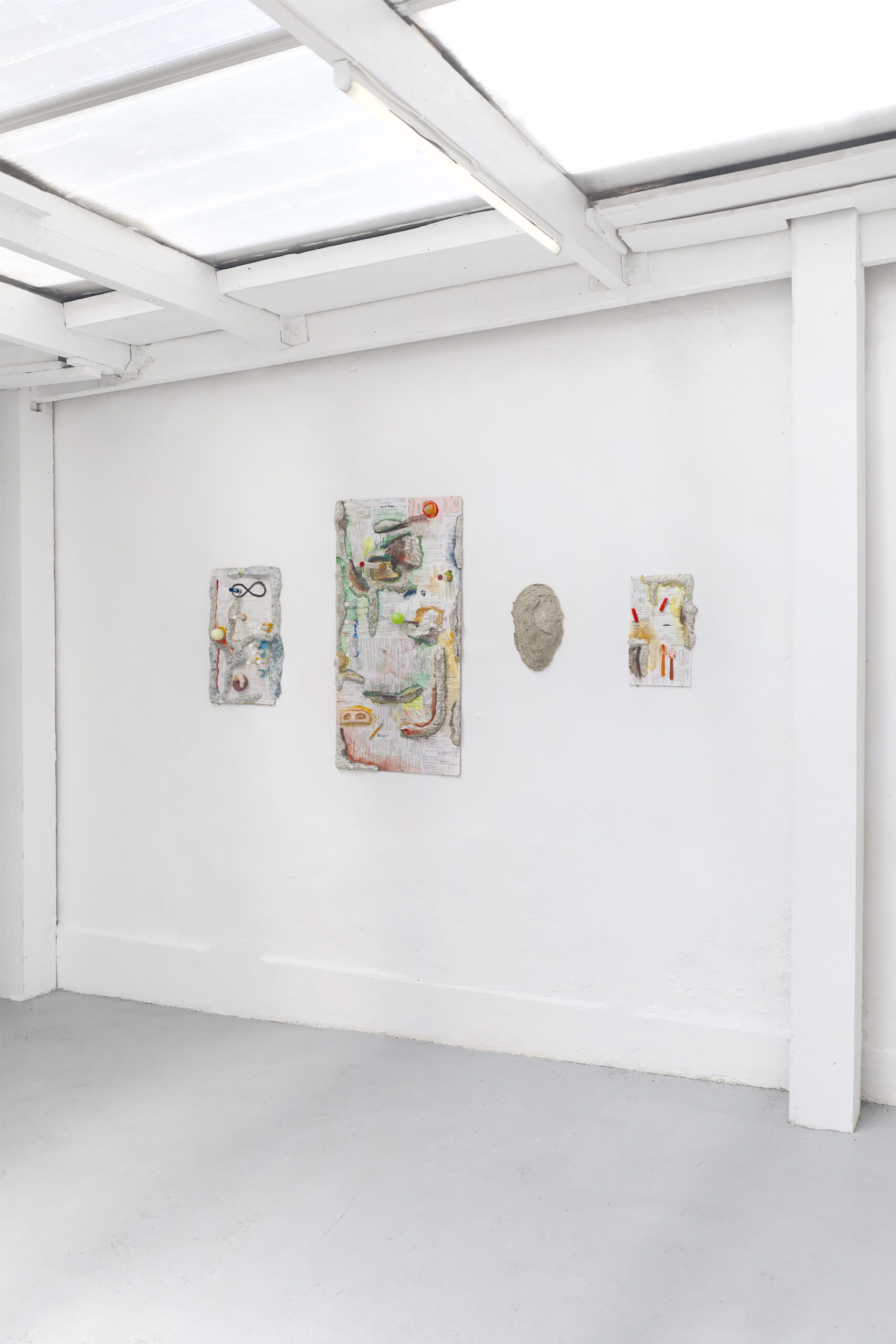
The wall sculptures, titled “TERRAINS”, bring together the artist’s to-do lists from 2020 to 2024 alongside waste materials (plasters, contact lens cases, homeopathic vials, etc.). But contrary to the notion of cartography, a technique or a field of study, the “TERRAINS” are the materialisation of an accumulation of mental, psychoanalytical and visceral landscapes.
The “GRAVITATIONAL FORMS”, as the substance of an entropy to be negated, conceal within them a sound composition titled ENTROPIA,SURCHAUFFE. Comprising eight Bluetooth speakers, they broadcast Estel’s personal archives, reworked and transformed by Caetano.
The ‘EPIGENETIC AXES’ are recurring sculptures in the artist’s practice. Functioning like a sentence – metal is generated by the earth, which nourishes water, which gives rise to wood – the materials interlock and take shape. Through polysemic and somatic combinations, Estel Fonseca seeks to dissect the components of life, and demonstrates the intertwining of systems through the expression of a buried emotion, here laid bare.
The series of six brooms thus forms expressions of acceptance and atonement: I sweep away my sense of powerlessness: I accept; I sweep away fixity; we are a flow; I sweep away bitterness: the opening of the sea, possible sublimation; I sweep away informational overload: silencing the mind; I sweep away ‘to overflow is to die’: lascia perdere.