
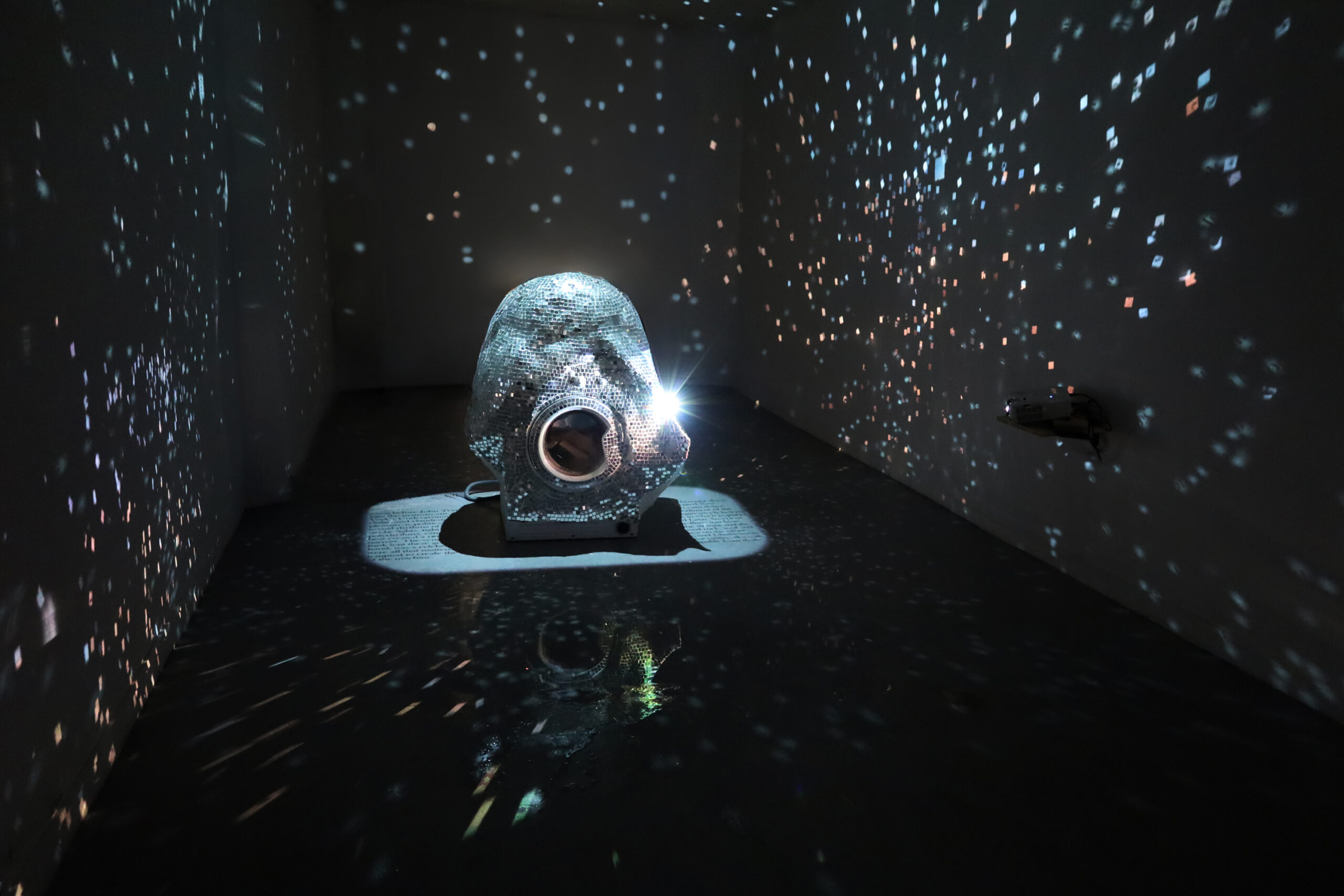
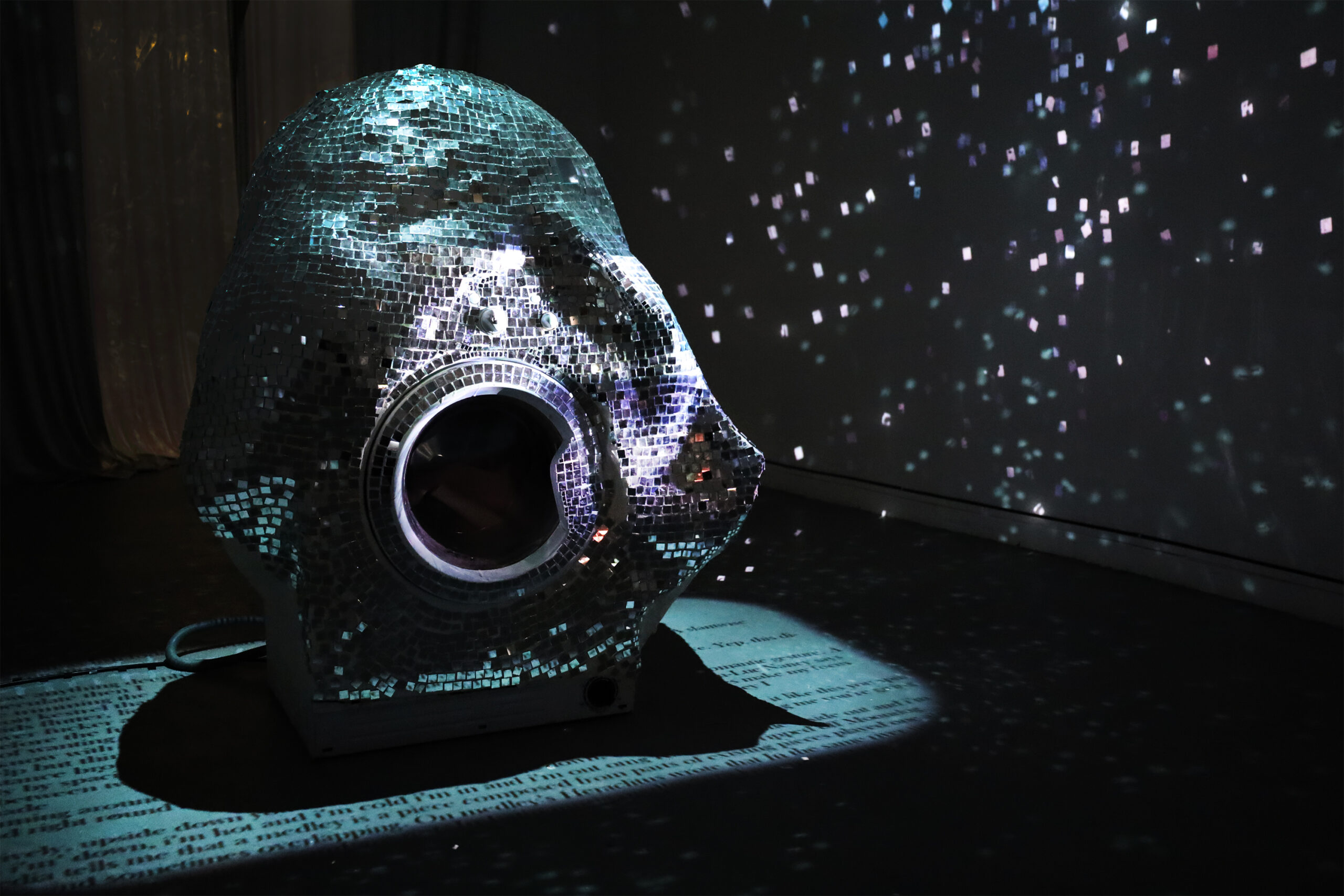
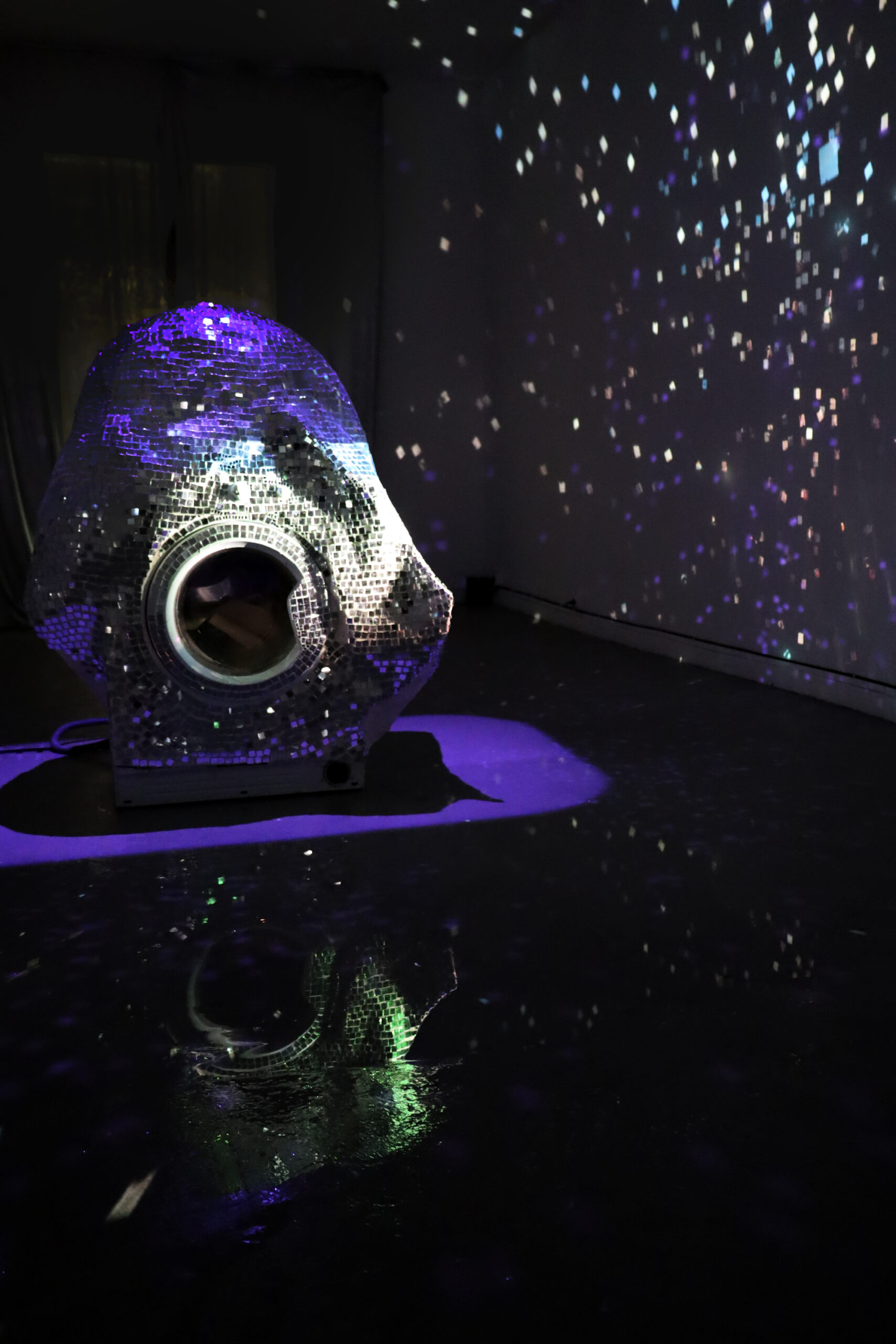
The spin cycle begins. Covered in broken mirrors, the washing machine — at once an ancient mosaic and a contemporary disco ball— becomes a receptacle for projected images. Like the surface of water, it absorbs, diffracts, and redistributes the film into micro-particles. Shattered into a thousand pieces, the narratives flicker and ripple across the wall. Within these fragments, Madison Bycroft reveals an interweaving of images: previously unseen footage from their film *Waterlogue* (5) alongside a bank of googled images—superimposed, inverted, themselves diffracted and mirrored. Articulated together, film and text — conceived as an uninterrupted flow — endlessly bounce off one another. Like the movements of the washing machine drum, images return, melodies linger in the mind, like a refrain.
~~~ ~ ~
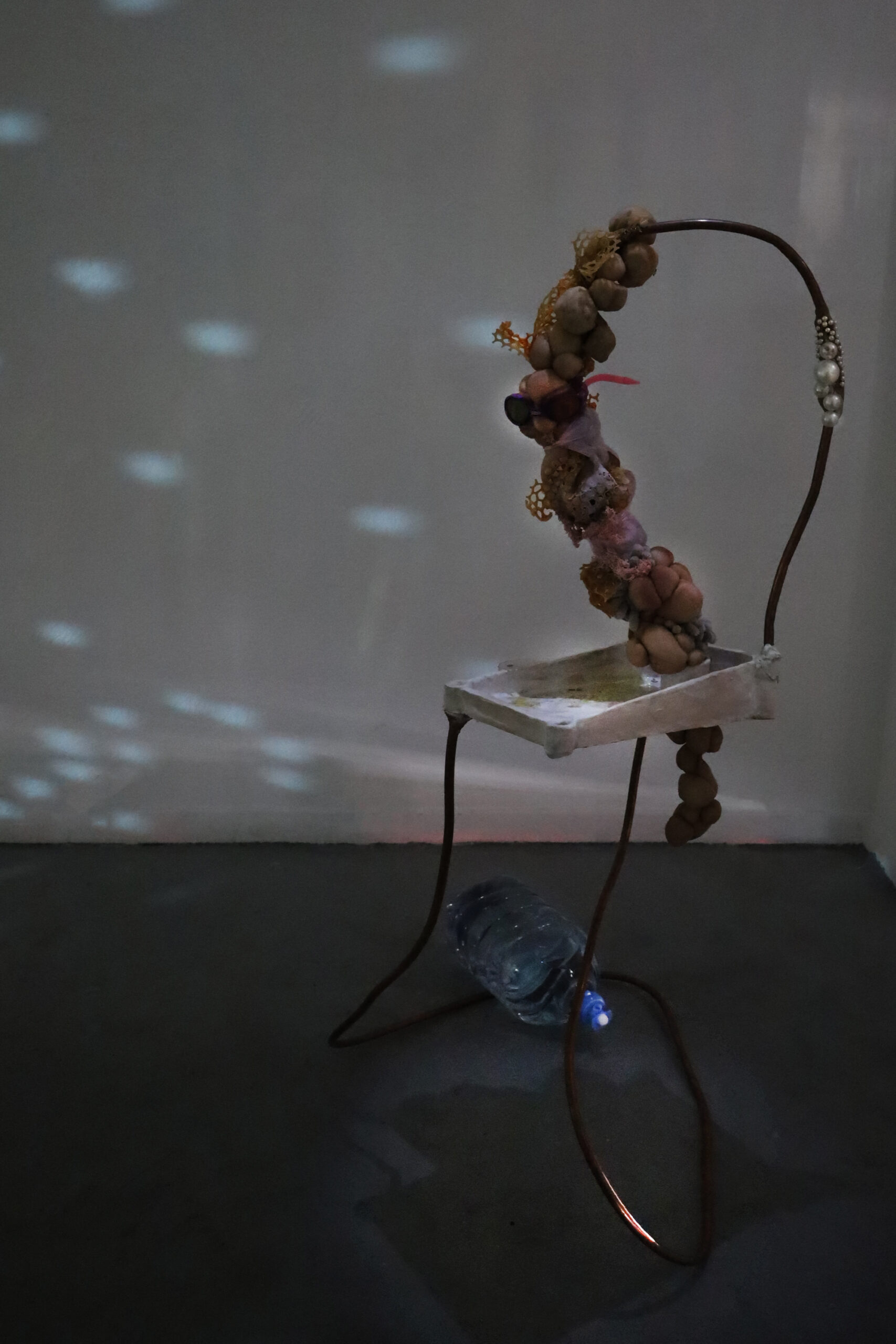
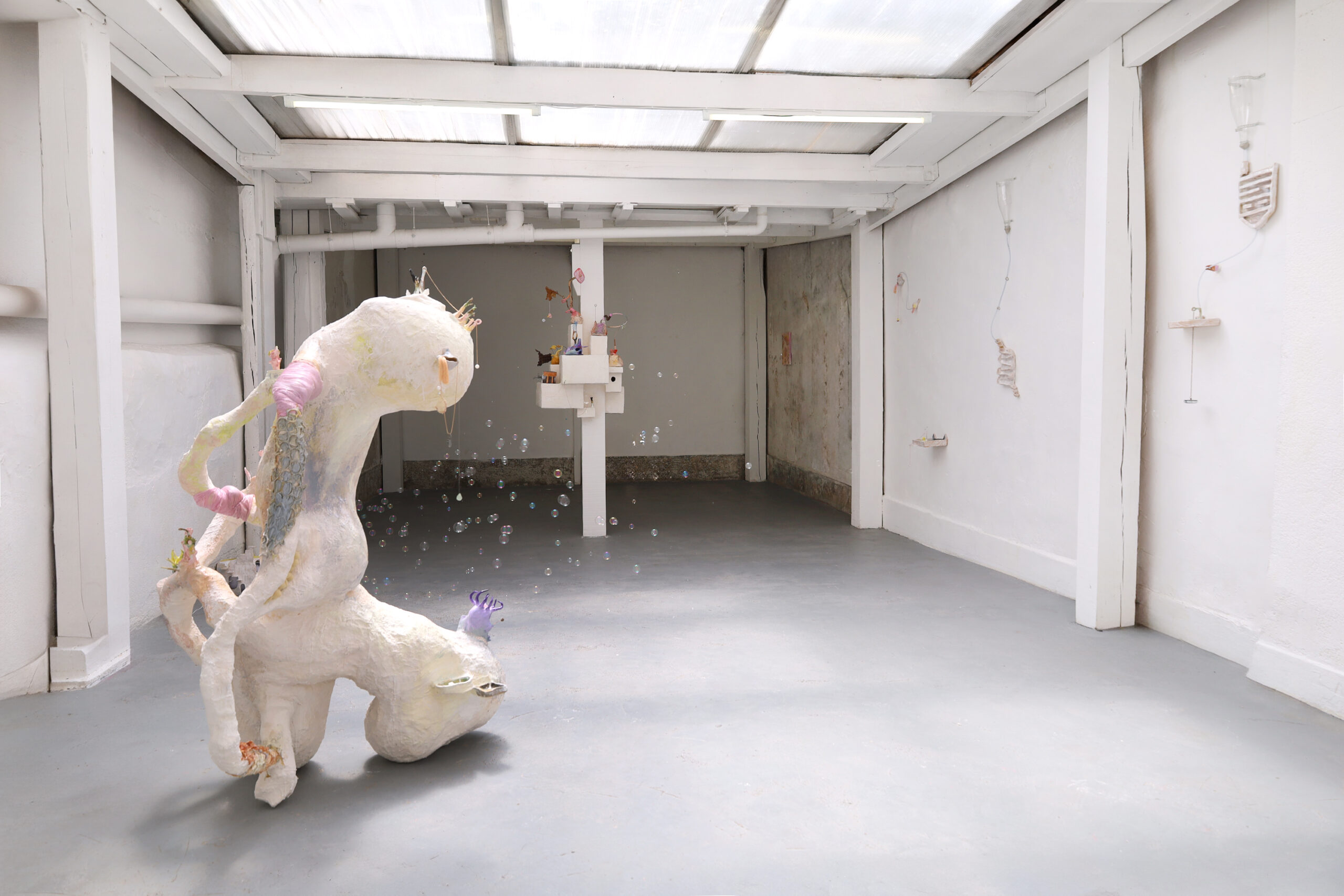
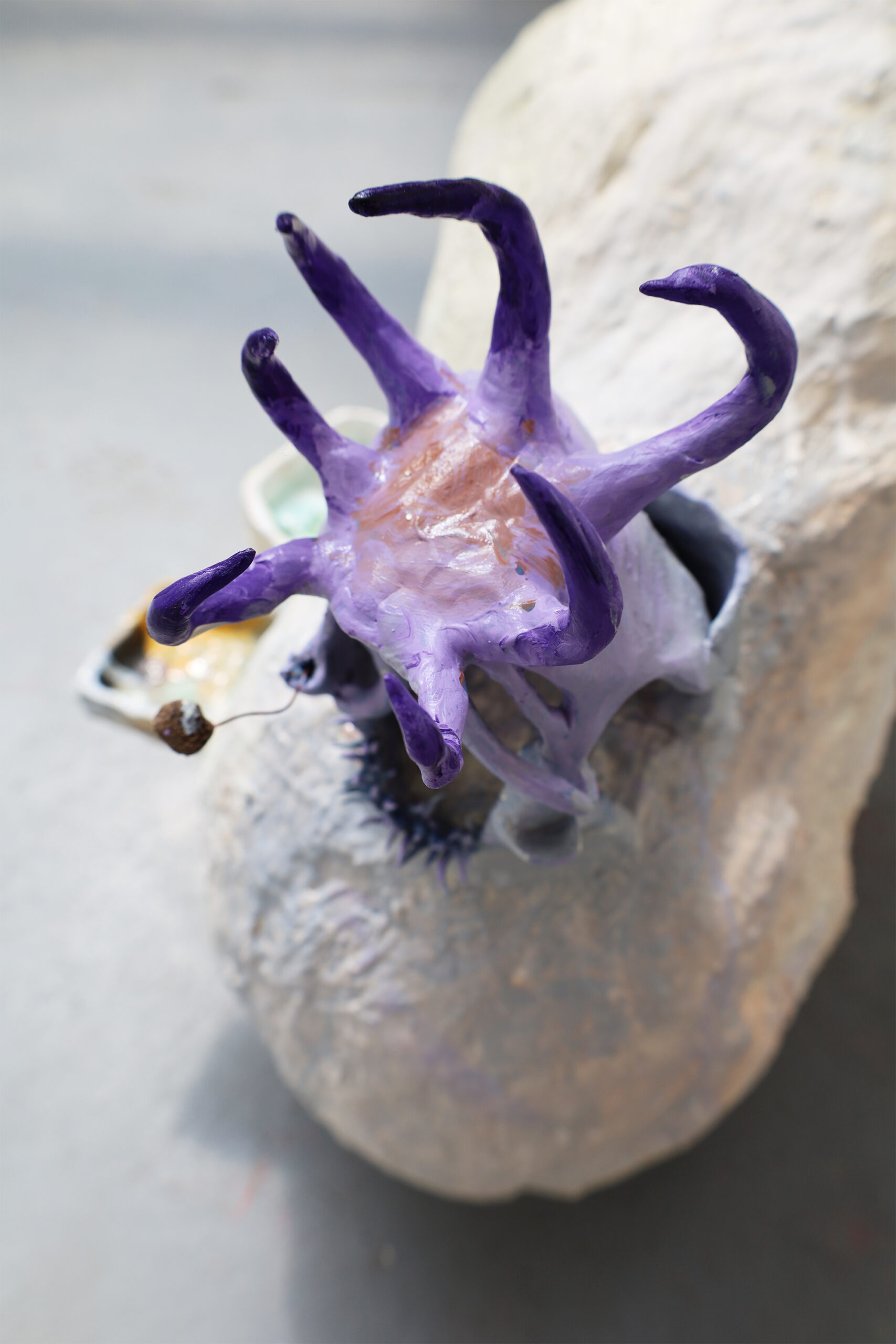
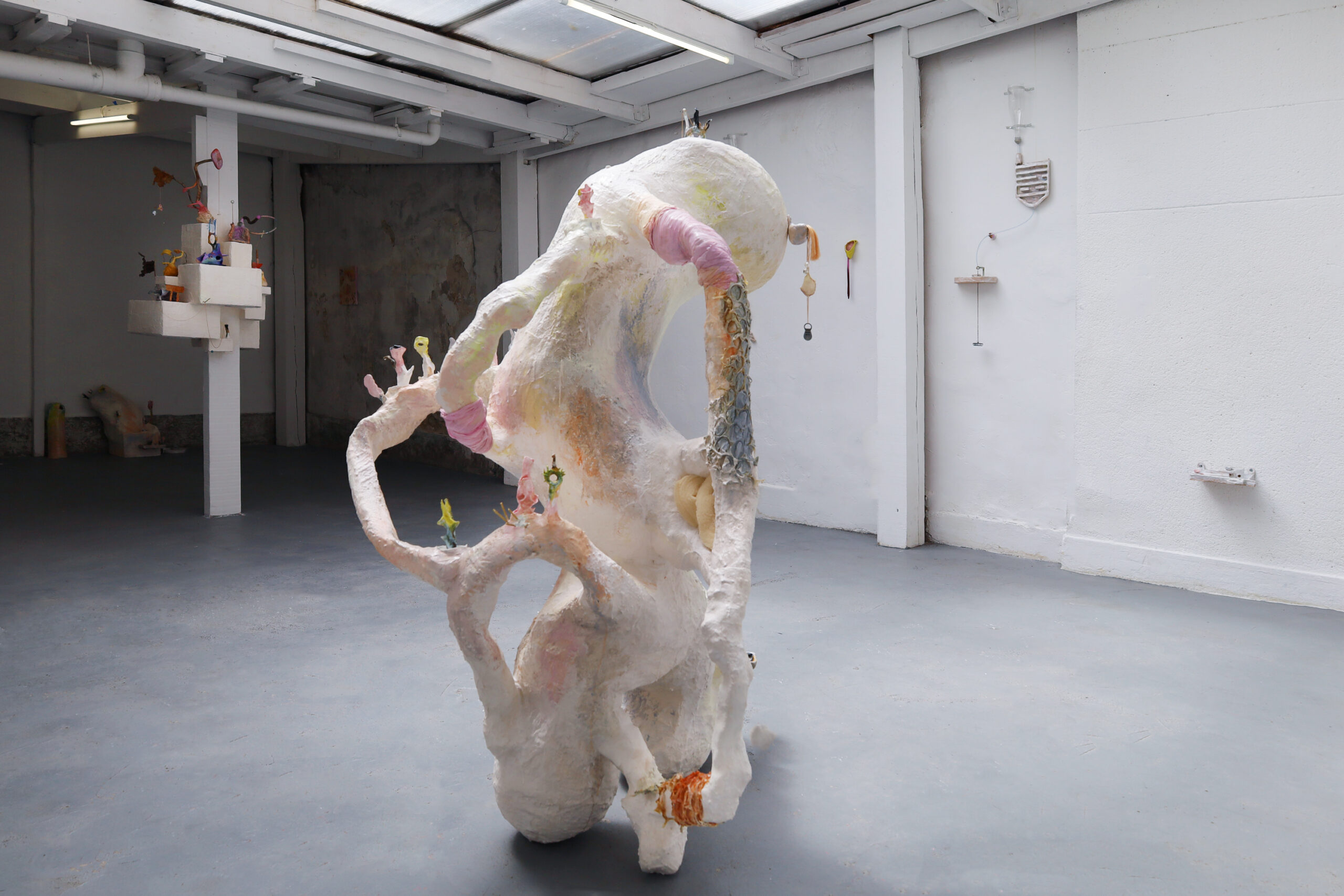
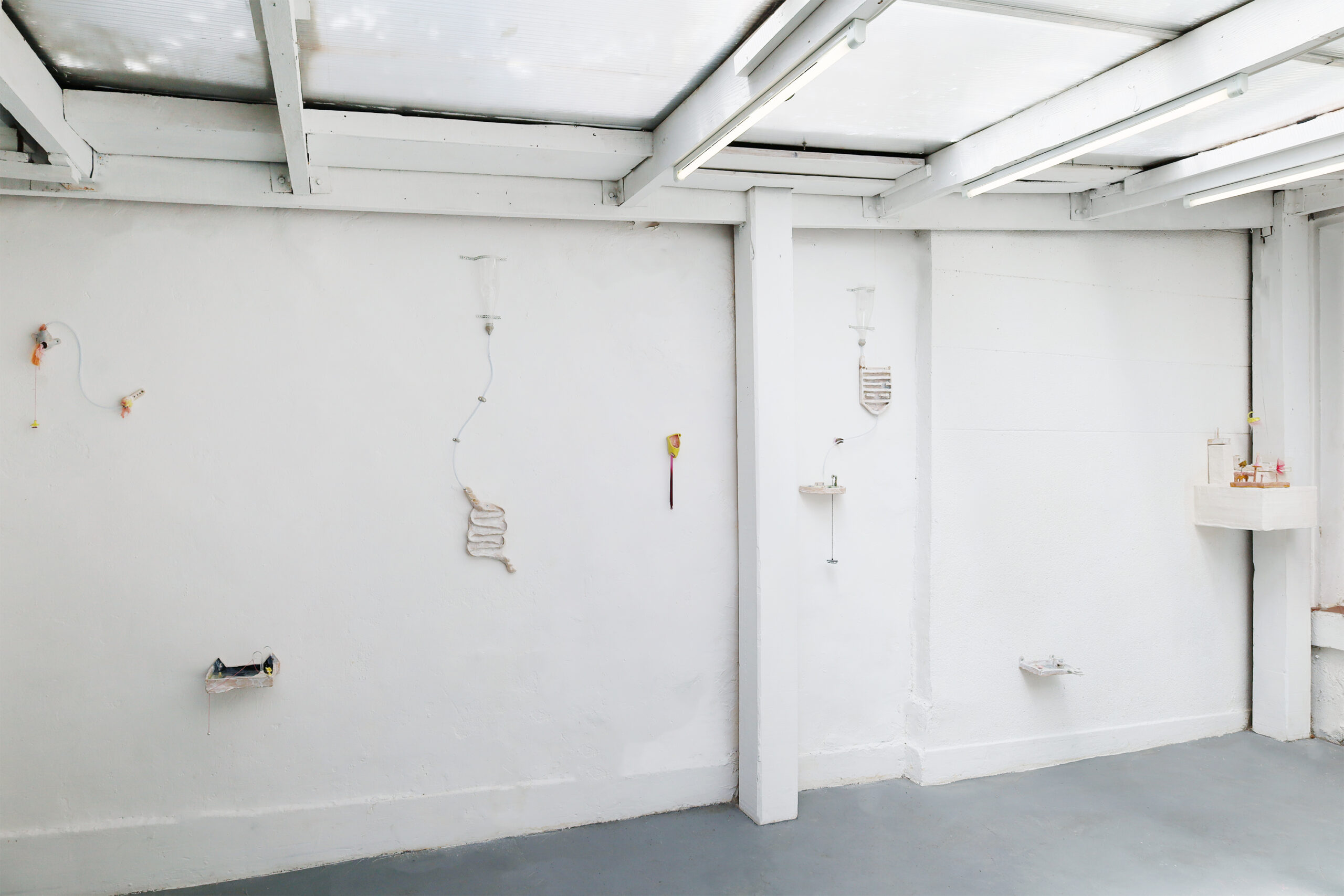
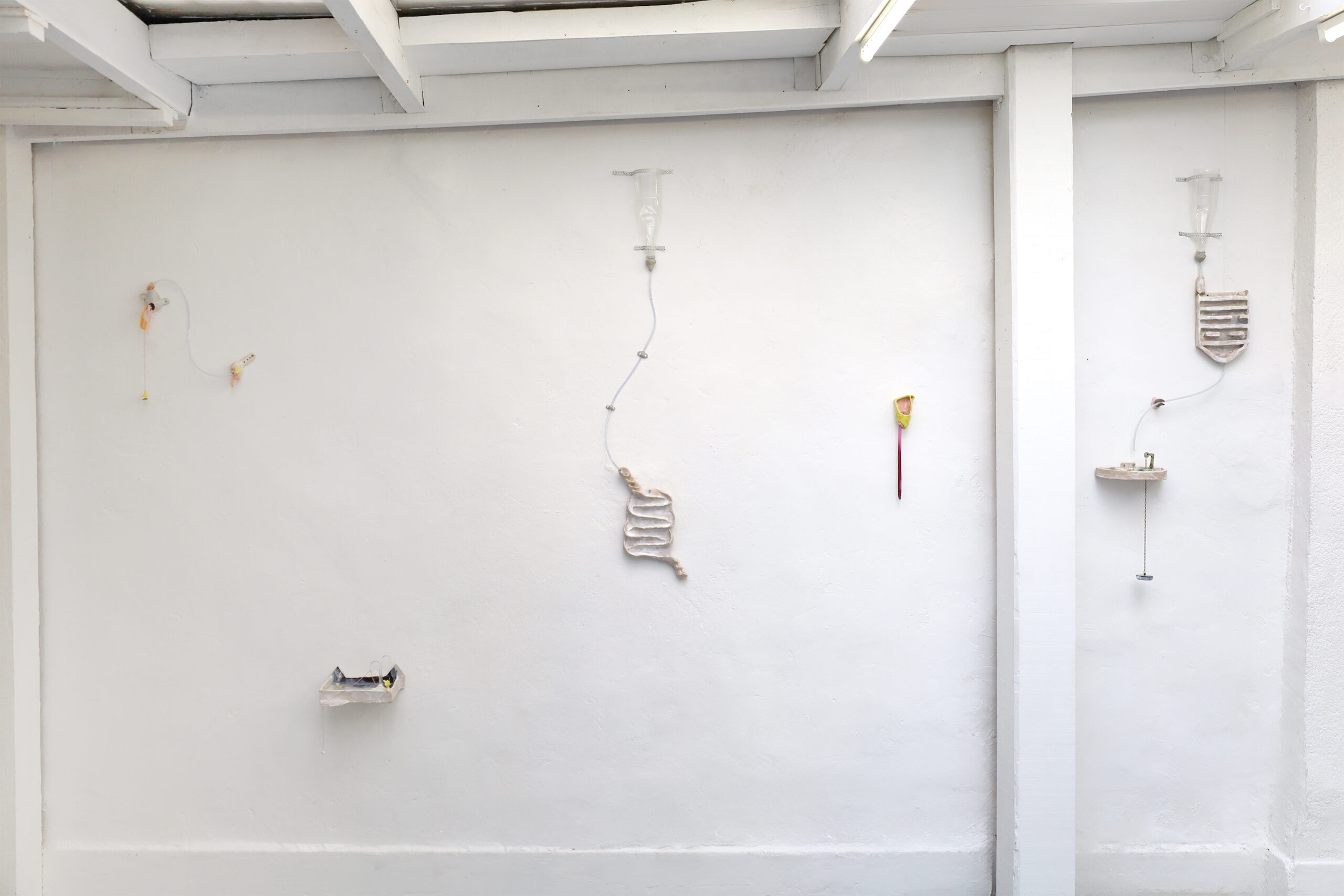
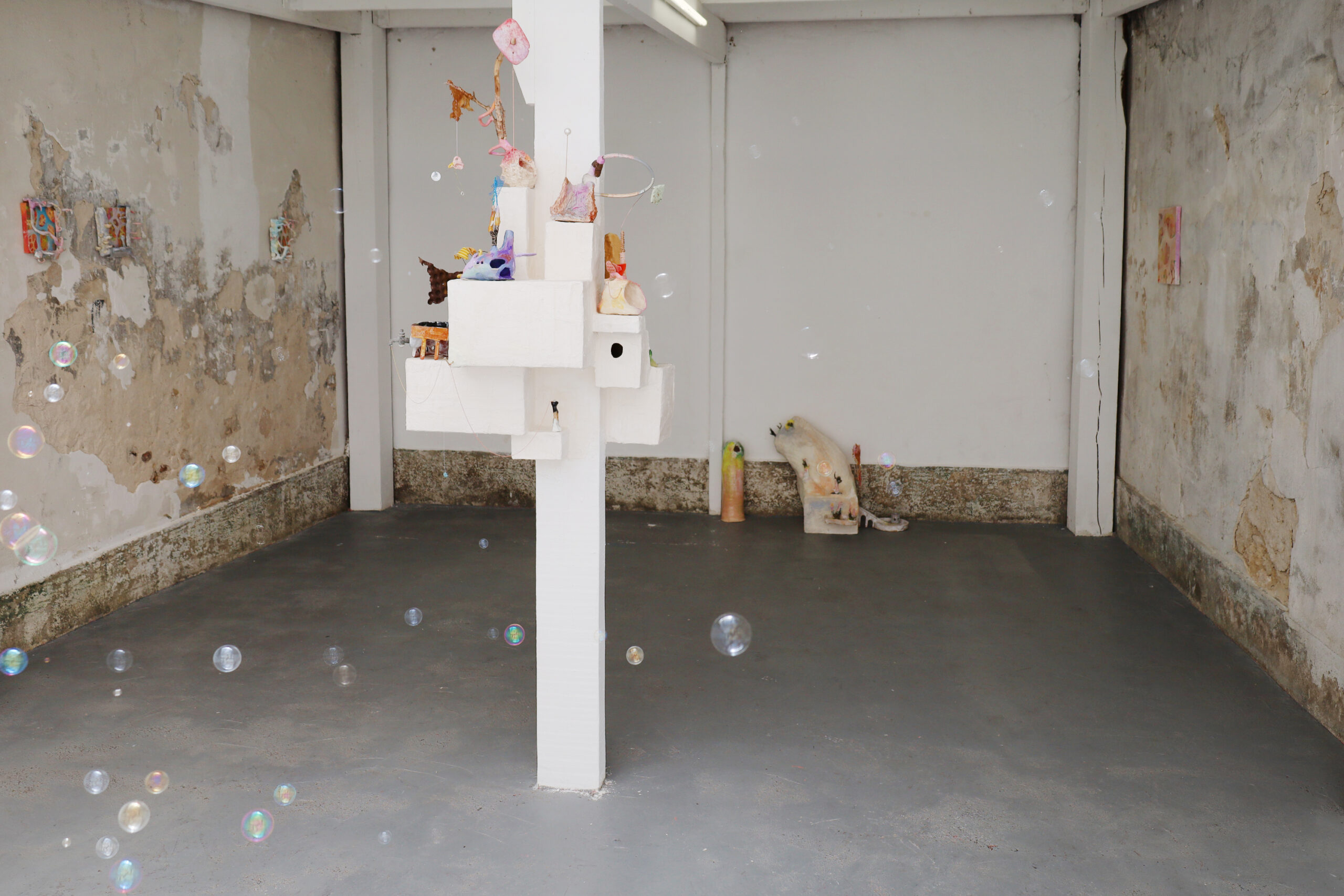
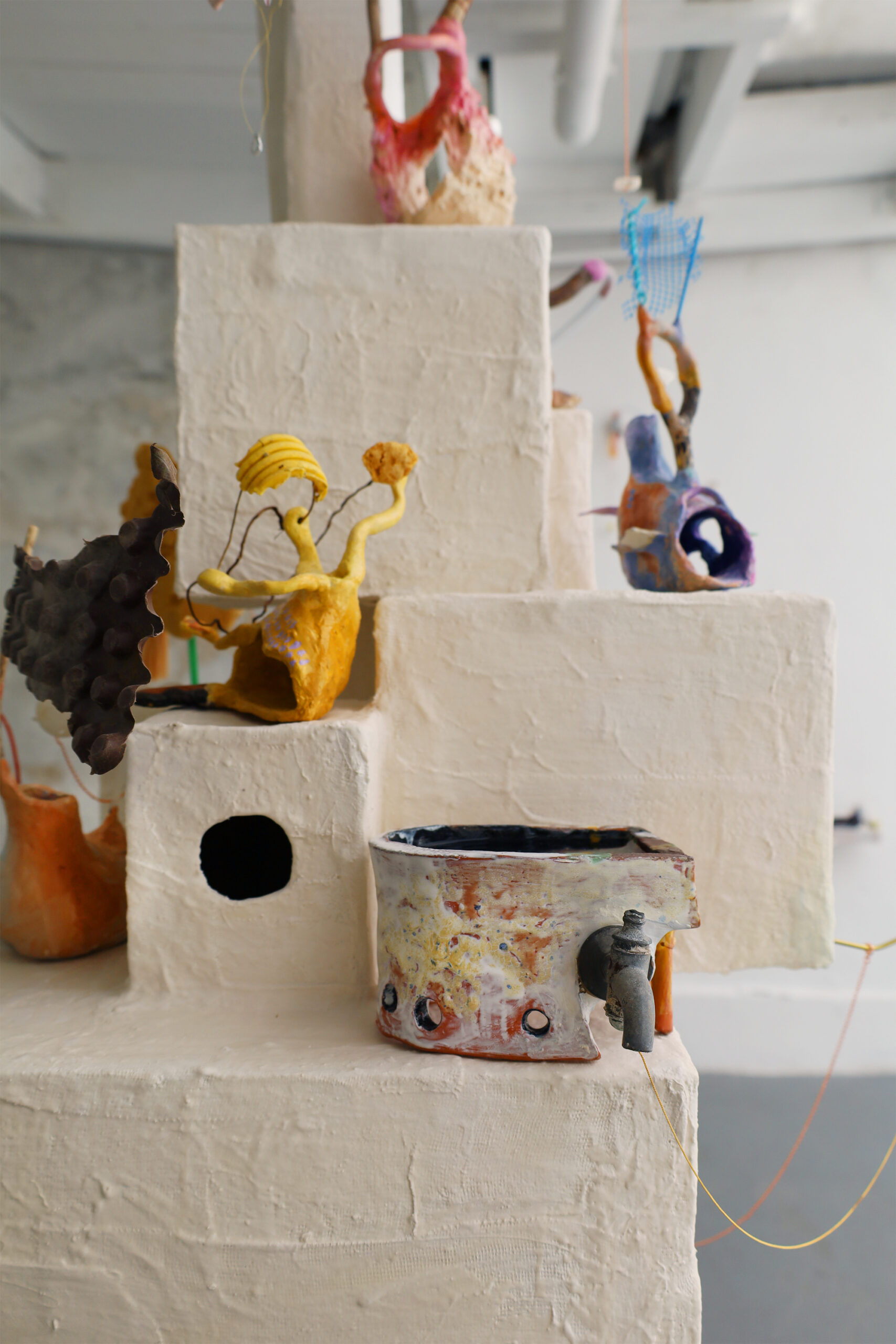
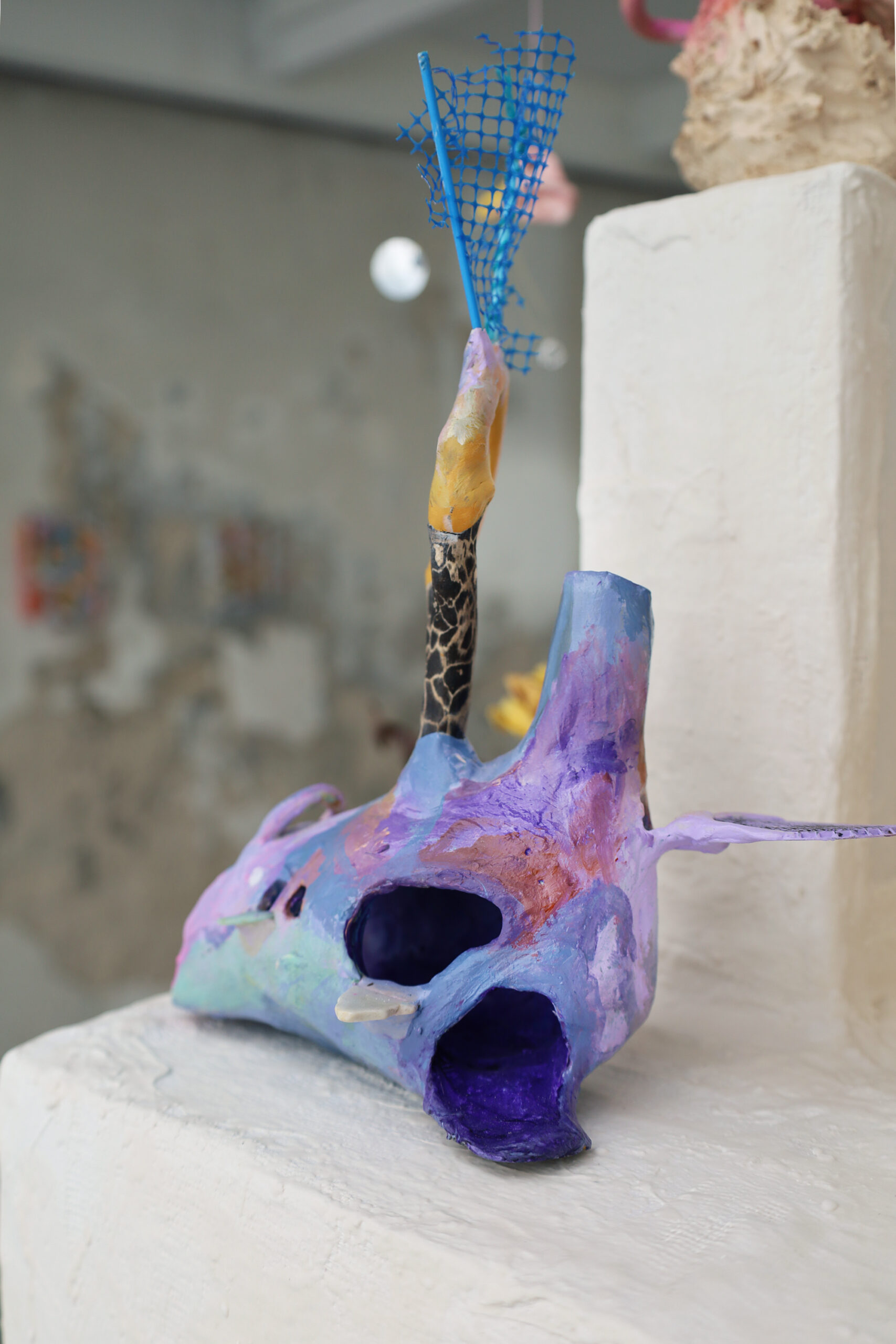
Madison Bycroft reinvents dispositifs from prosaic mechanics and visually materializes Édouard Glissant’s theory of “trembling thought.” He describes a “seismic thought of a world that trembles within us and around us,” better suited to grasp the upheavals of what he calls the “chaos-world” (6). Thus, as if the sea had dried up, miniature cities populated by marine creatures —made of coral and conglomerates of heterogeneous objects— form a camp, sparkling yet creaking world. Perched on the gallery beams, the ceramic series *Unplumbed* (2023) and *Exit Door* (2023) float like “valleys of the wind” (7), clustering and rising in the interstices.
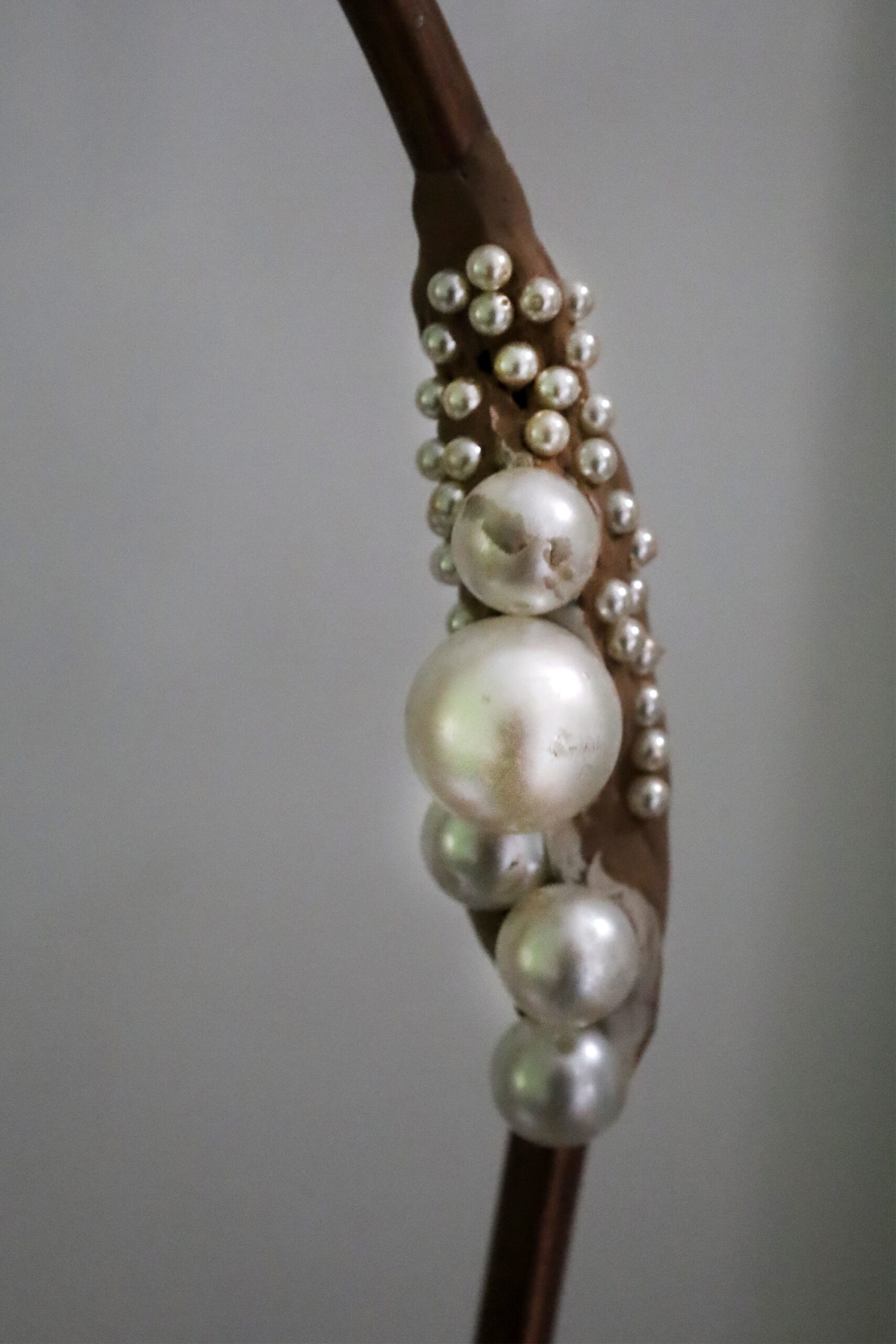
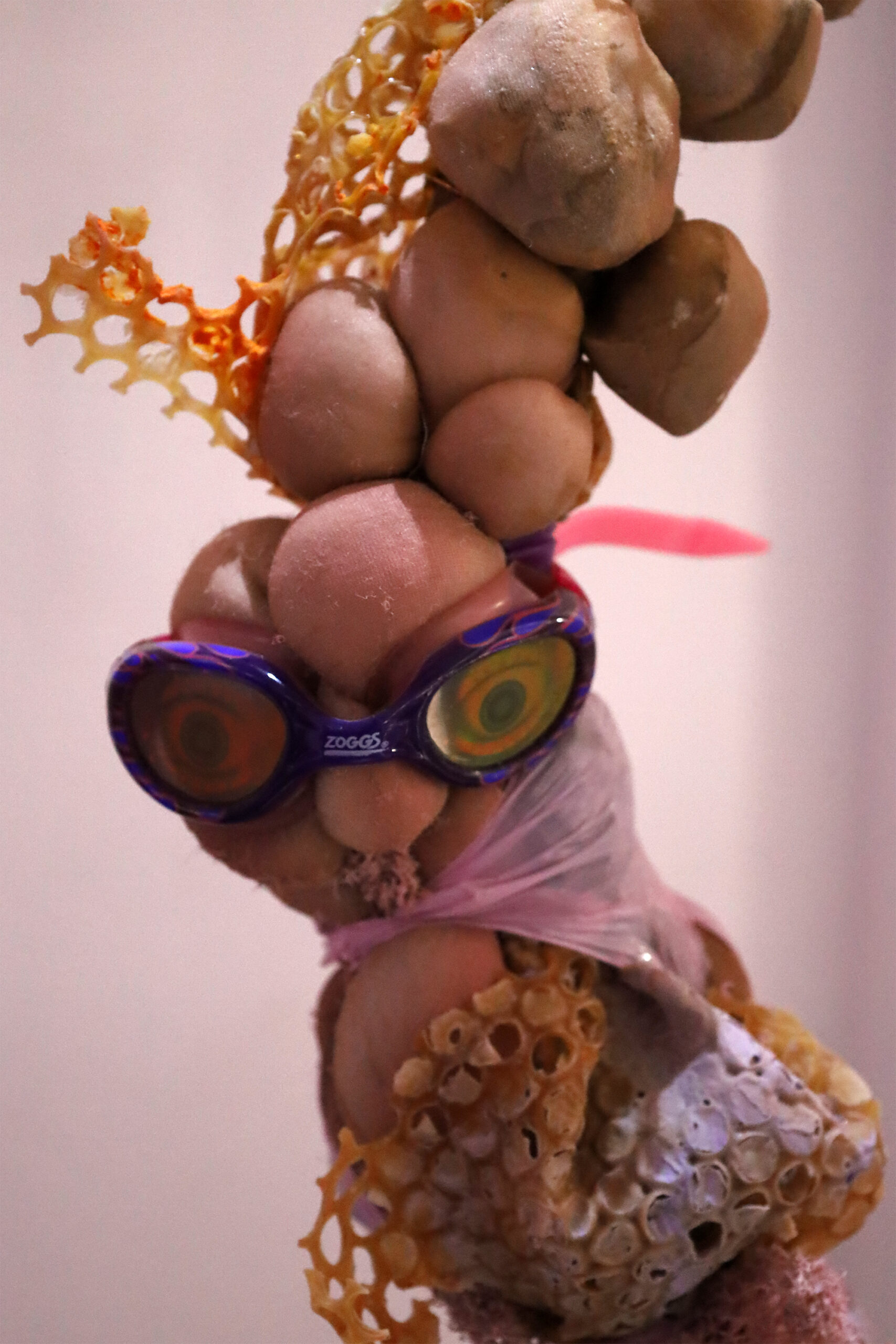
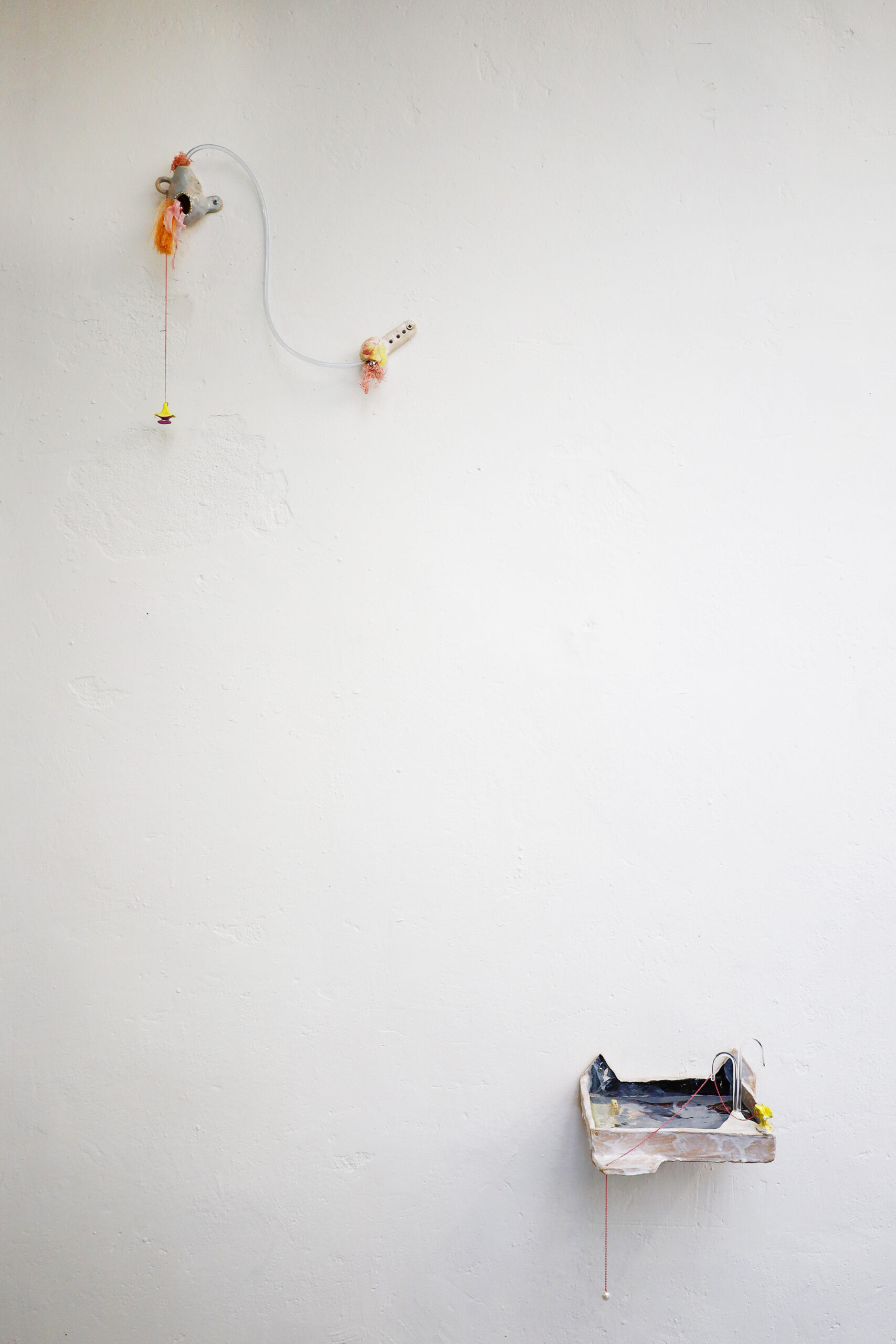
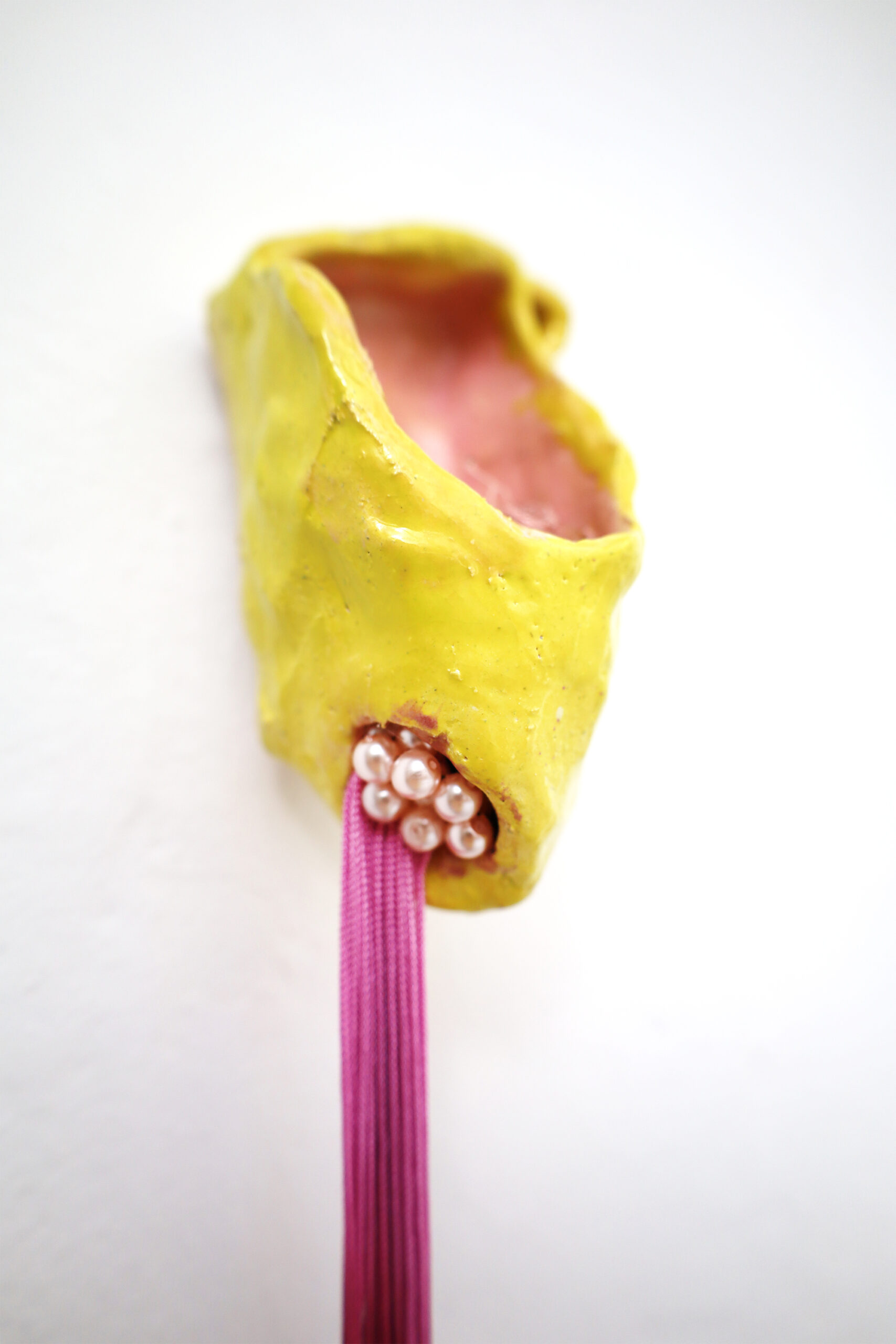
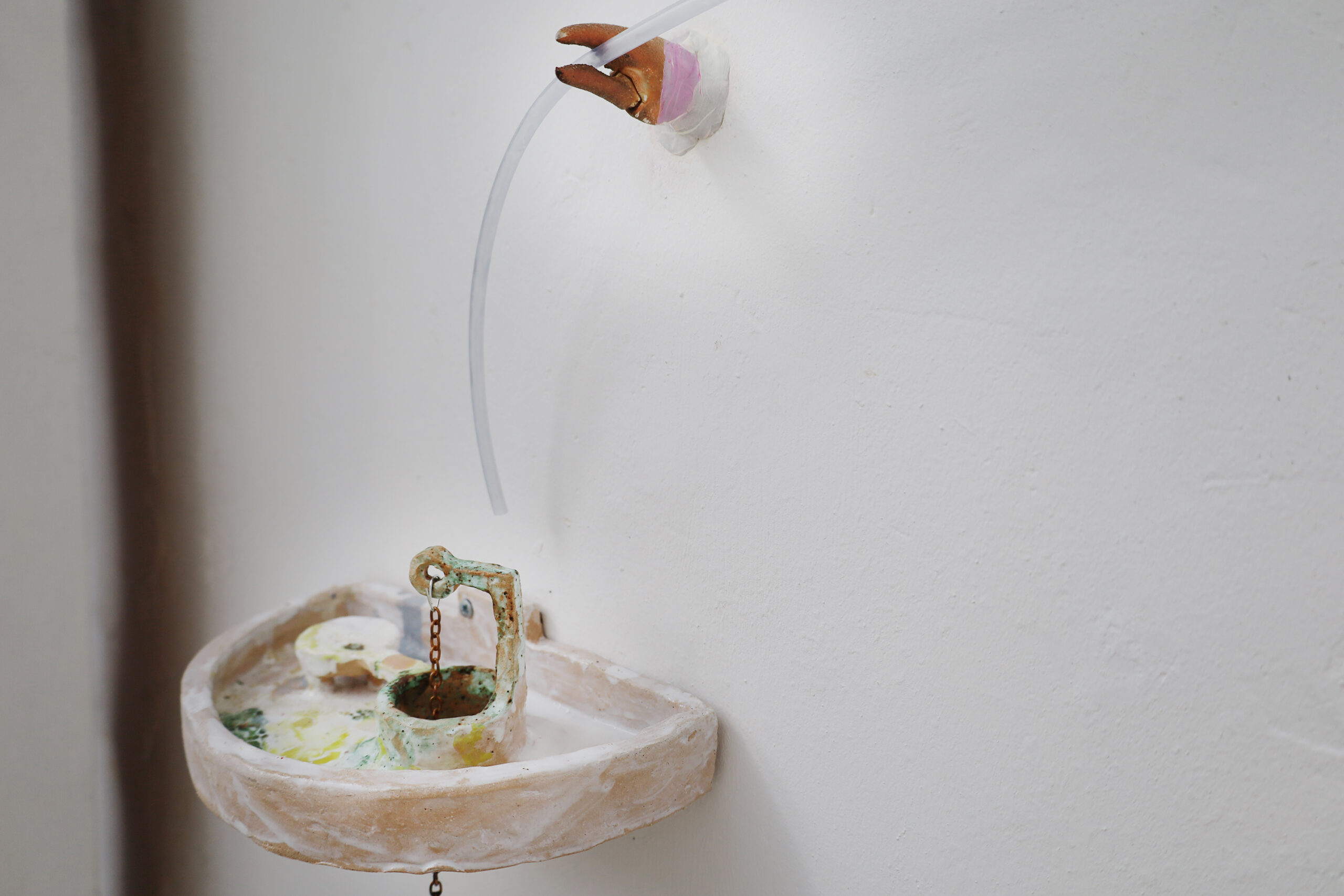
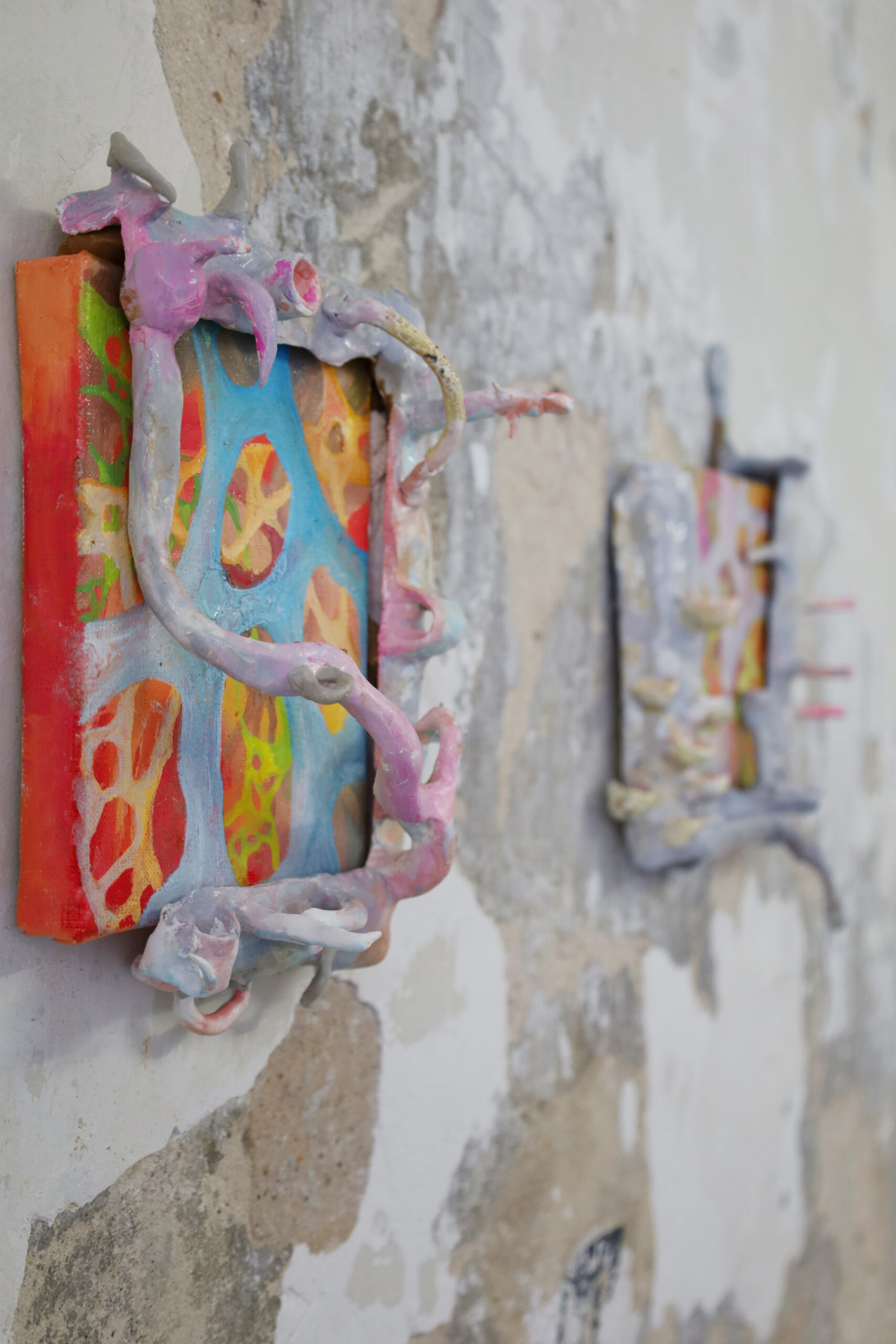
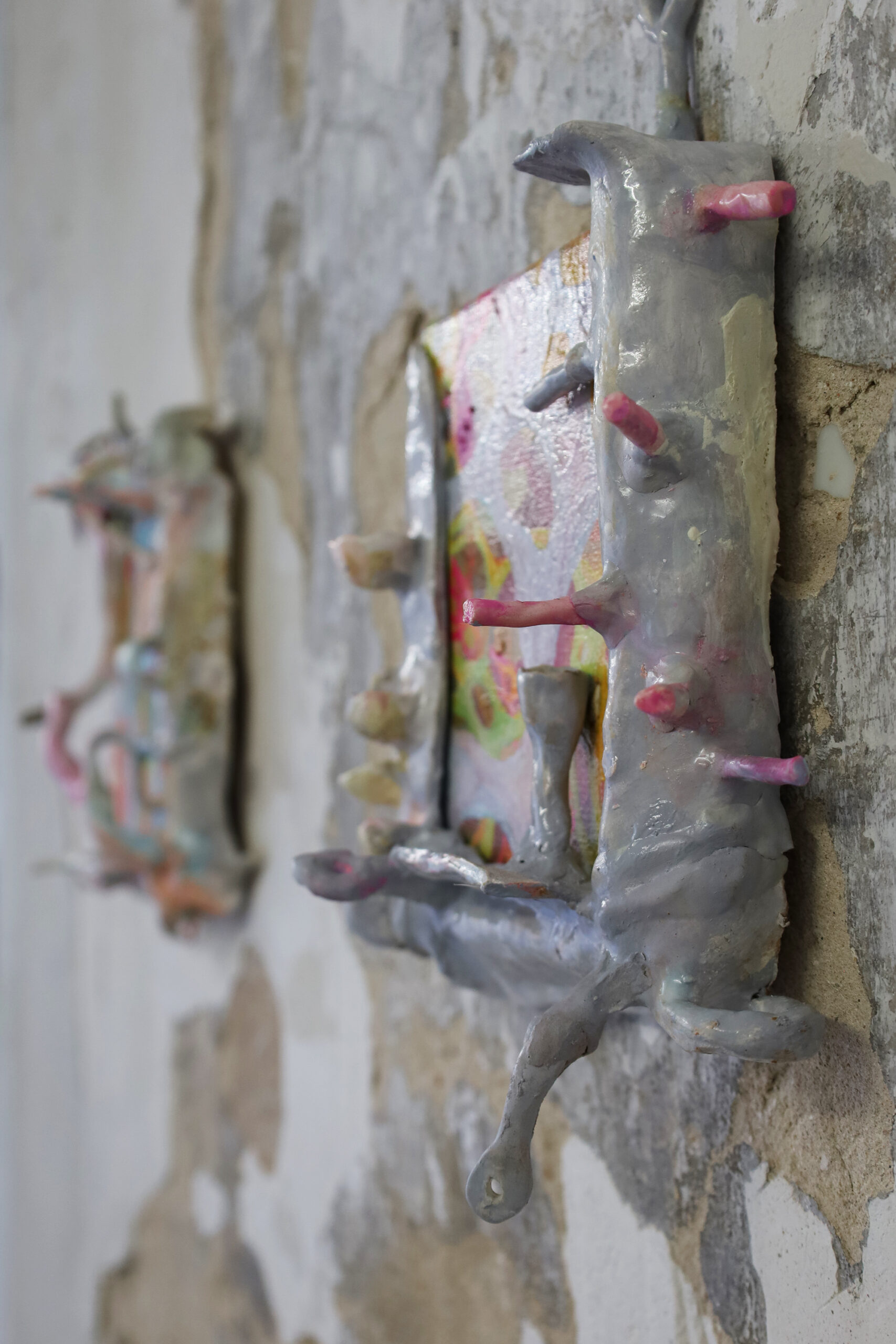
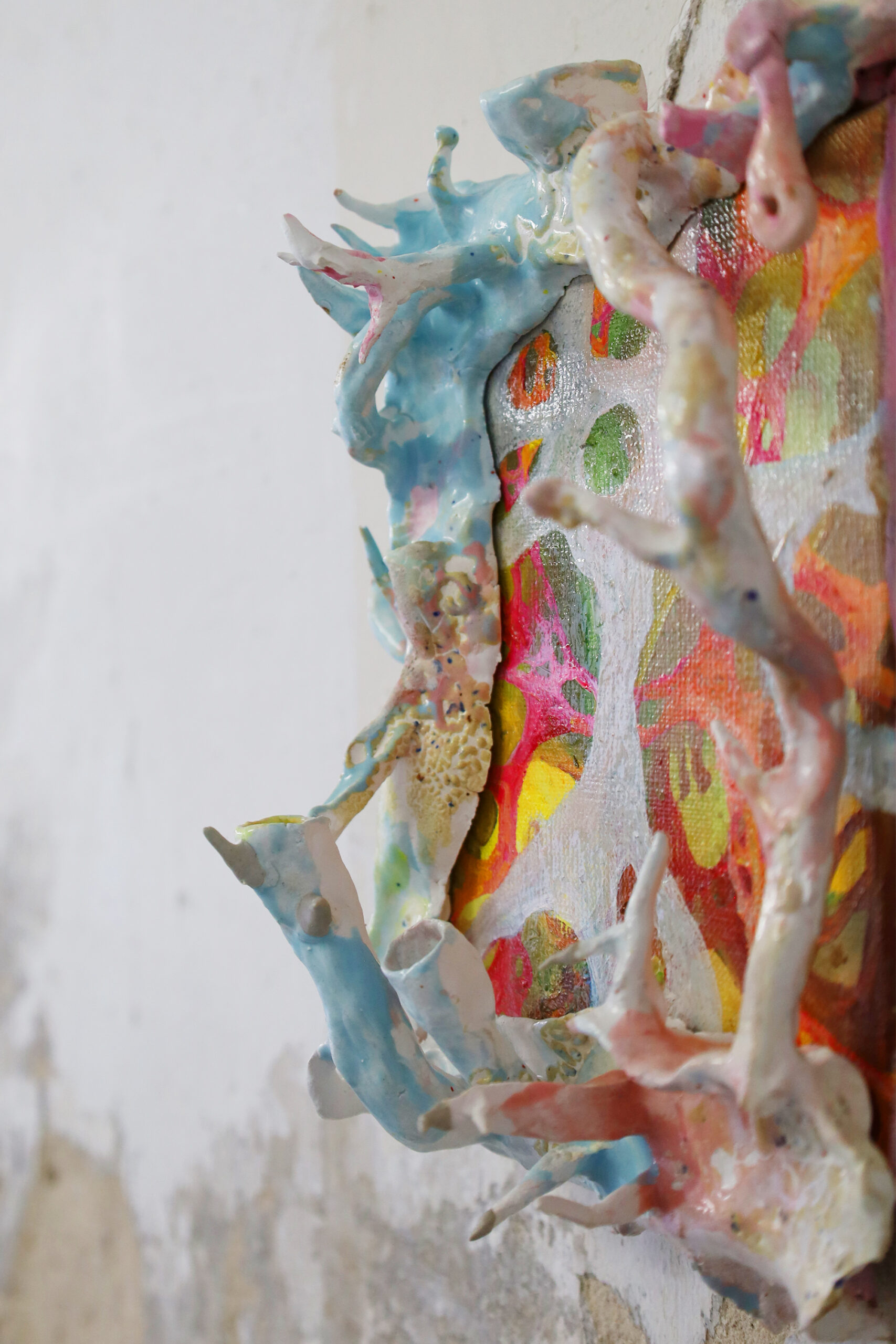
The *Waterlogues* (2023) —sediments of shells, crab claws, pearls, glazes, and pipes— cling to the walls like mollusks, creating a multiplicity of flow systems. Together, these interwoven ceramic sculptures form superorganism-like structures, reef builders.
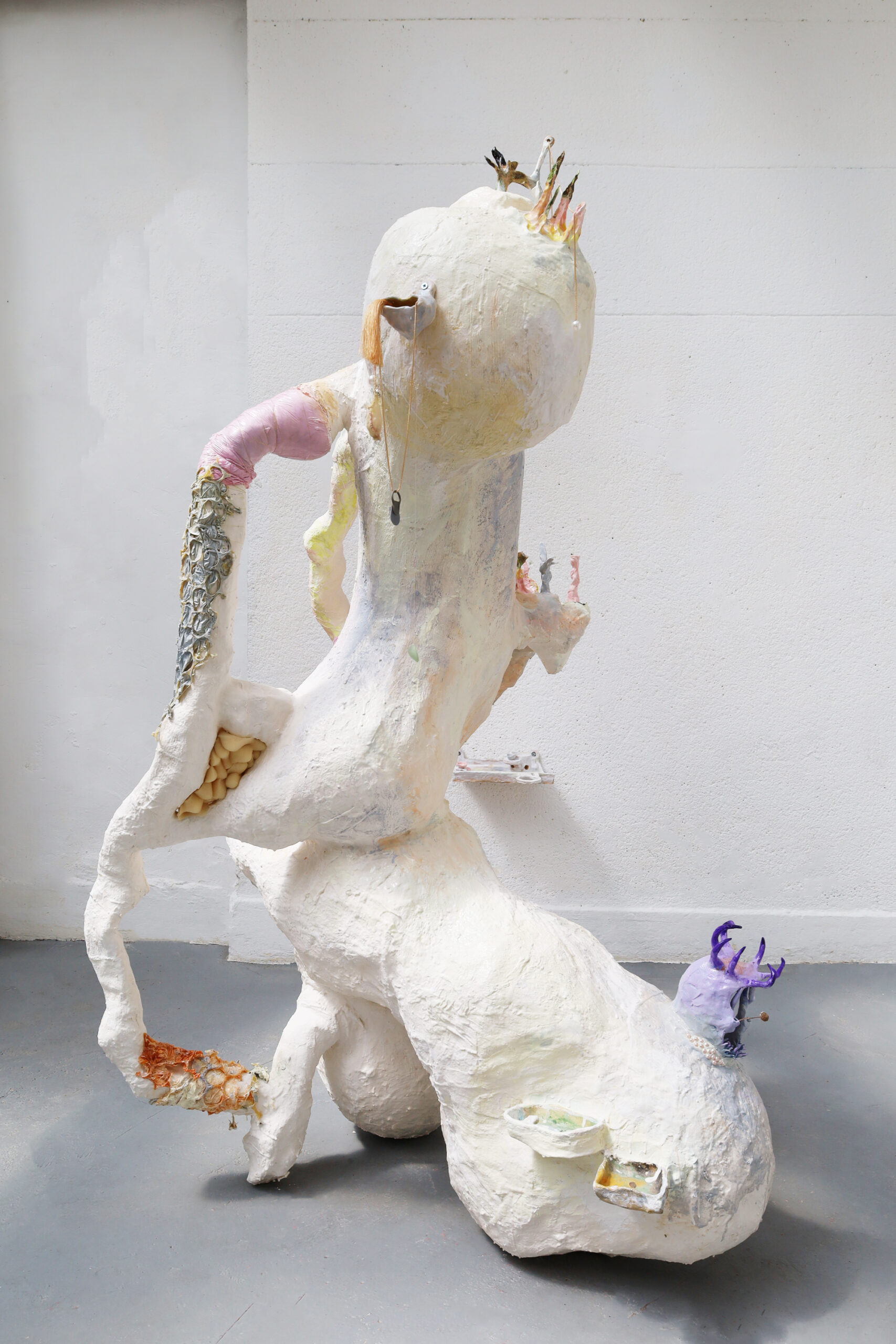
At the heart of this setting wander *Franky goes to Hollywood* (2023) and *Freaks Shall Inherit the Earth* (2023), like “blinking fish in the sea,” soliloquies with undefined subjectivity (8). They reflect the concept of the anti-portrait developed by the artist in their films—characters that can be considered both themselves and other.
This attraction to the ineffable is ultimately grounded in the notion of the “middle voice” (9). For Madison Bycroft, floating, drifting, not being anchored to anything—while remaining in contact with water and all it contains—can be a way of opening another path, of attempting to resist the constraints by which we are defined. At the heart of this reef, they recreate a form of collective intelligence. In the shimmer, the fracture, the diffraction, the fragmentation of the self, *Waterlogue ~ spin cycle* unleashes a “disco revenge” capable of recreating community:
because if you can do this impossible thing, then there’s hope for all of us. and this impossible thing —if you manage it— then there is hope for all of us.
1. Planktos refers to animals “wandering” on the surface of the waves in Homer’s Odyssey.
2. From an interview with Édouard Glissant by Laure Adler, Tropismes, France Télévisions, December 2009.
3. Translation proposed by Gabriel René Franjou: écumetric (foam + metric); étalectic (slack tide + -lectic).
4. Possibly formed by combining the words “sea” or “tide” with the suffix “-ic,” these new adjectives, relating to technique, allow the author to probe ocean depths and their effects on the world and landscapes, as tools for understanding colonial history and environmental disruptions.
5. Currently in production, filmed in Switzerland during the artist’s residency at La Becque.
6. See Édouard Glissant, La Cohée du Lamentin. Poétique V, Gallimard, 2005.
7. Borrowing the vocabulary of Nausicaä of the Valley of the Wind by Hayao Miyazaki; in the manga, these are protected by spores and the fukai through sea winds.
8. Similar to the protagonists of The Waves by Virginia Woolf.
9. A grammatical category from Ancient Greek describing verbs that are neither active nor passive, or both at once.