
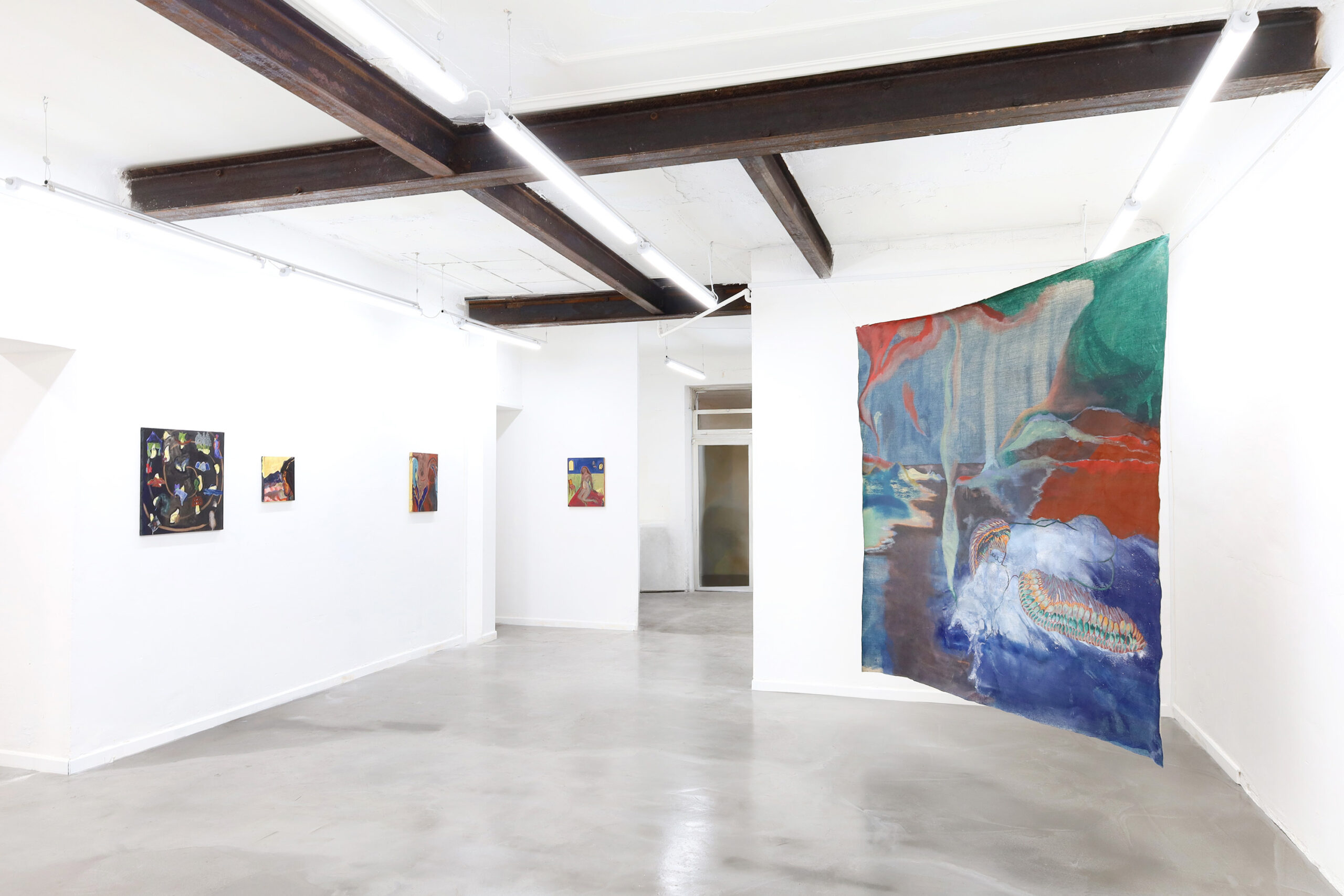
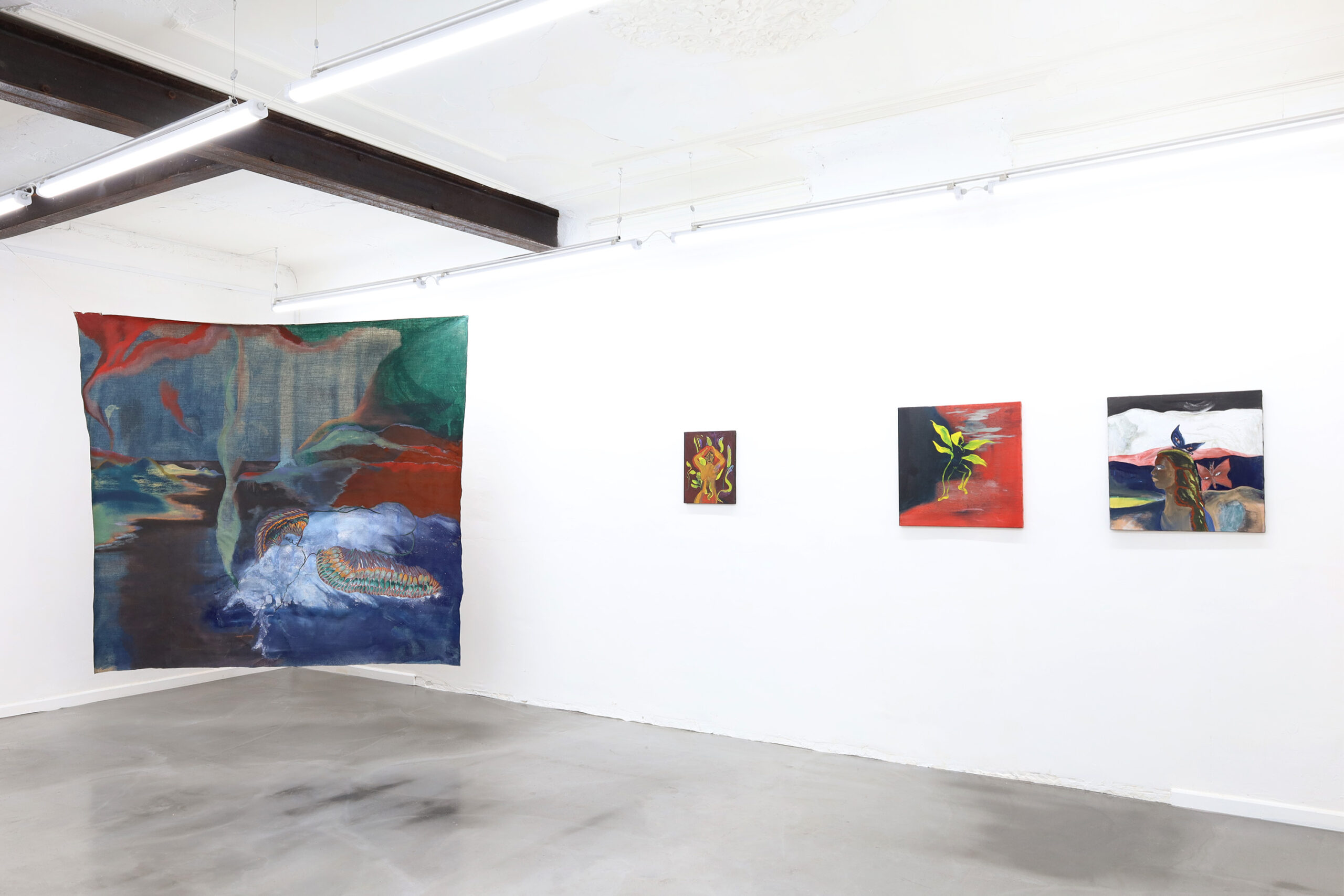
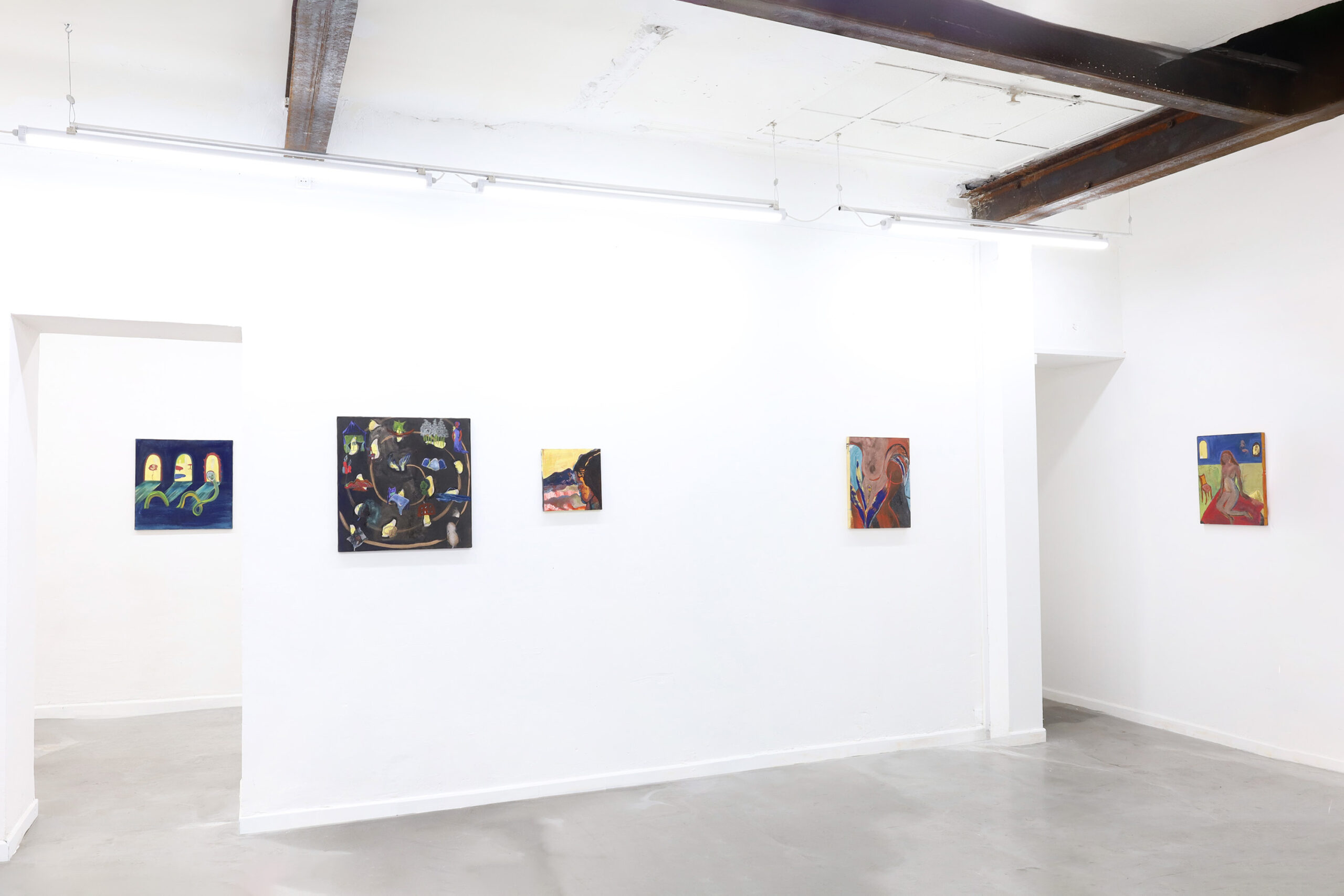
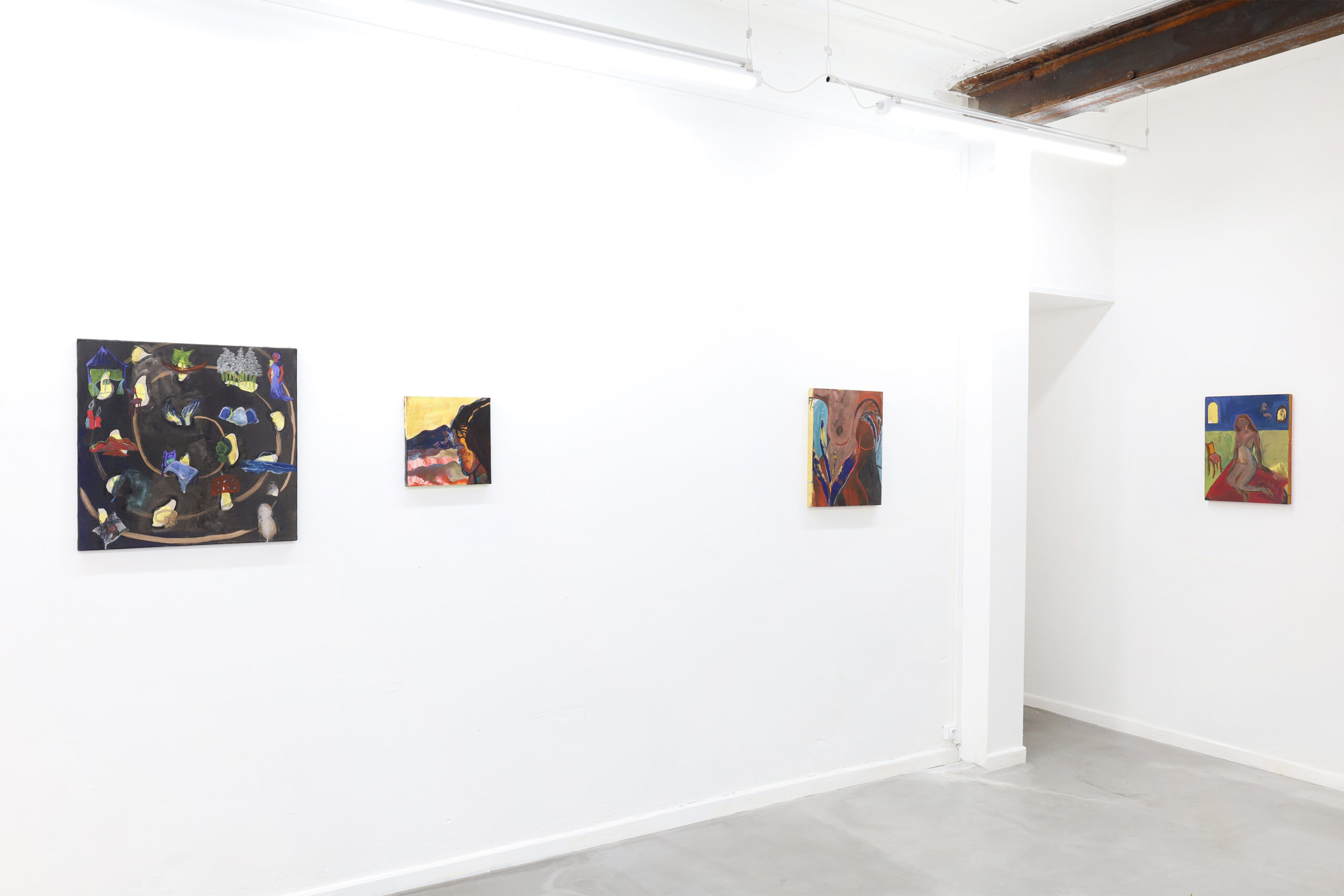
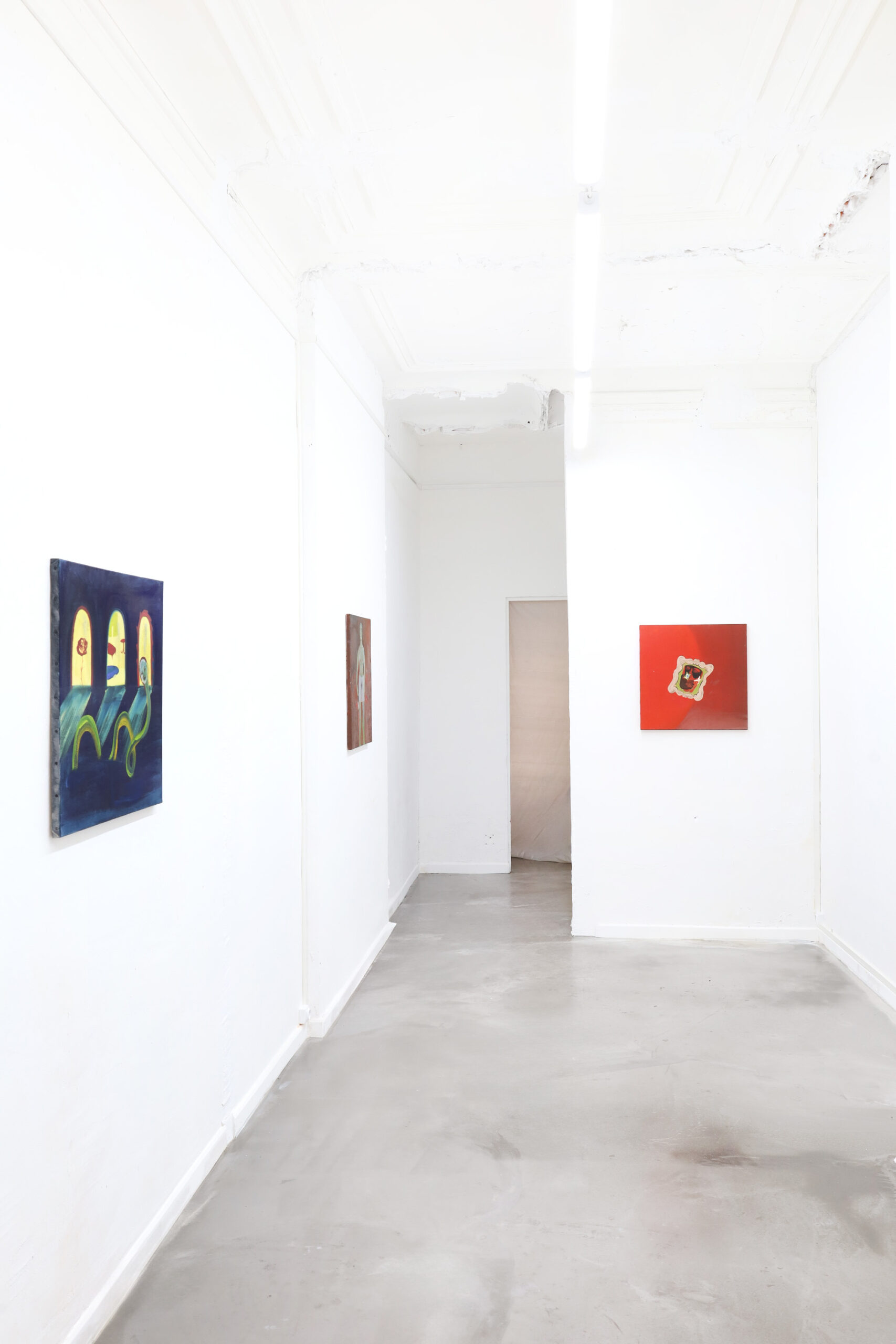
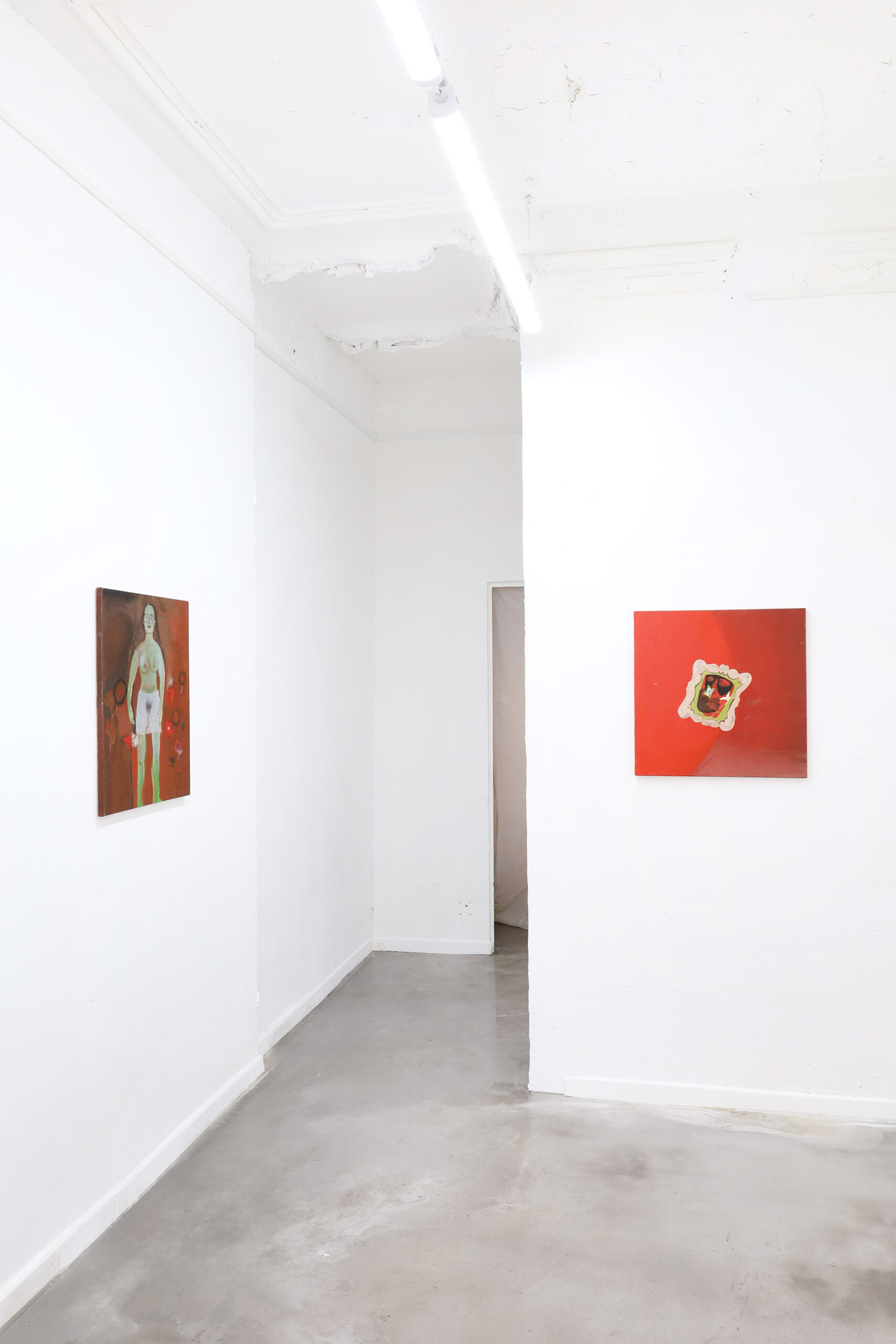
Entitled ‘Cantou’, this exhibition brings together new productions celebrating fire, night and their mysterious energies. Playing on the sound and meaning of the ‘Cantou’, the Occitan fireplace, and the ‘Kanoun’, the terracotta stove of ancient Kabyle architecture, the artist pays tribute to her designated origins, and invokes a range of literary, musical and spiritual references.
In the manner of tales told by the fireside, the artist tells us different stories. Lit at a time of rest, the fire keeps us awake, invites us to gather and sing, like a pagan and transgressive moment of resistance to sleep and toil. It is near this light that spirits, fairies, demons and angels appear: the magical and holy entities of many folklores. Within this group of figures, the artist invites us into a dream that is both enigmatic and familiar, a moment of transformation. The works address the viewer in a playful, defiant way, at a crossroads.
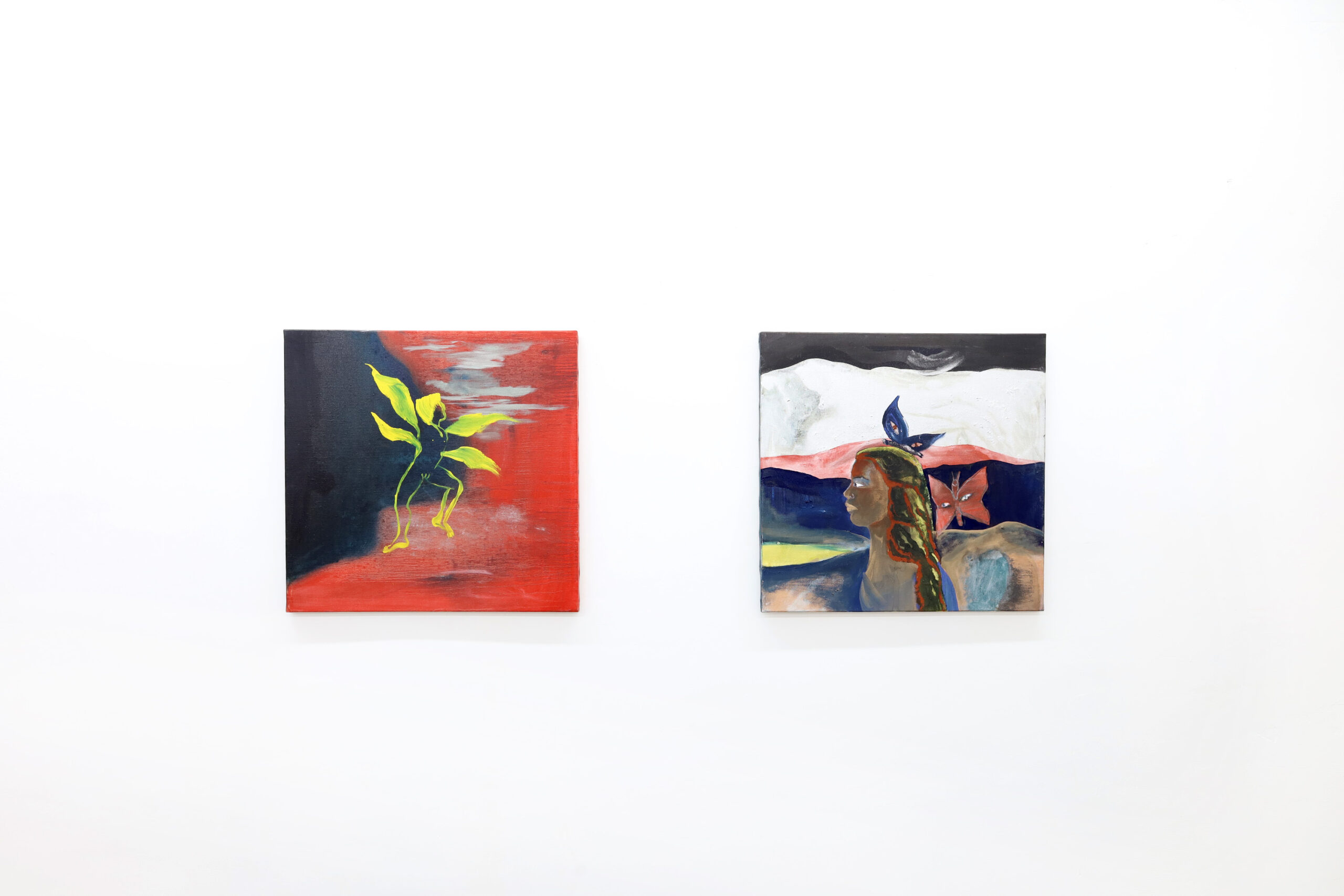
Vast and interior landscapes follow one another in the fiery dawn, inhabited by all that has been told of the previous night. A woman’s face appears in the relief of a mountain, visions appear through the eyes of butterflies. The characters merge and metamorphose with their environment, a search for symbiosis, a relationship of listening, to use the artist’s words.
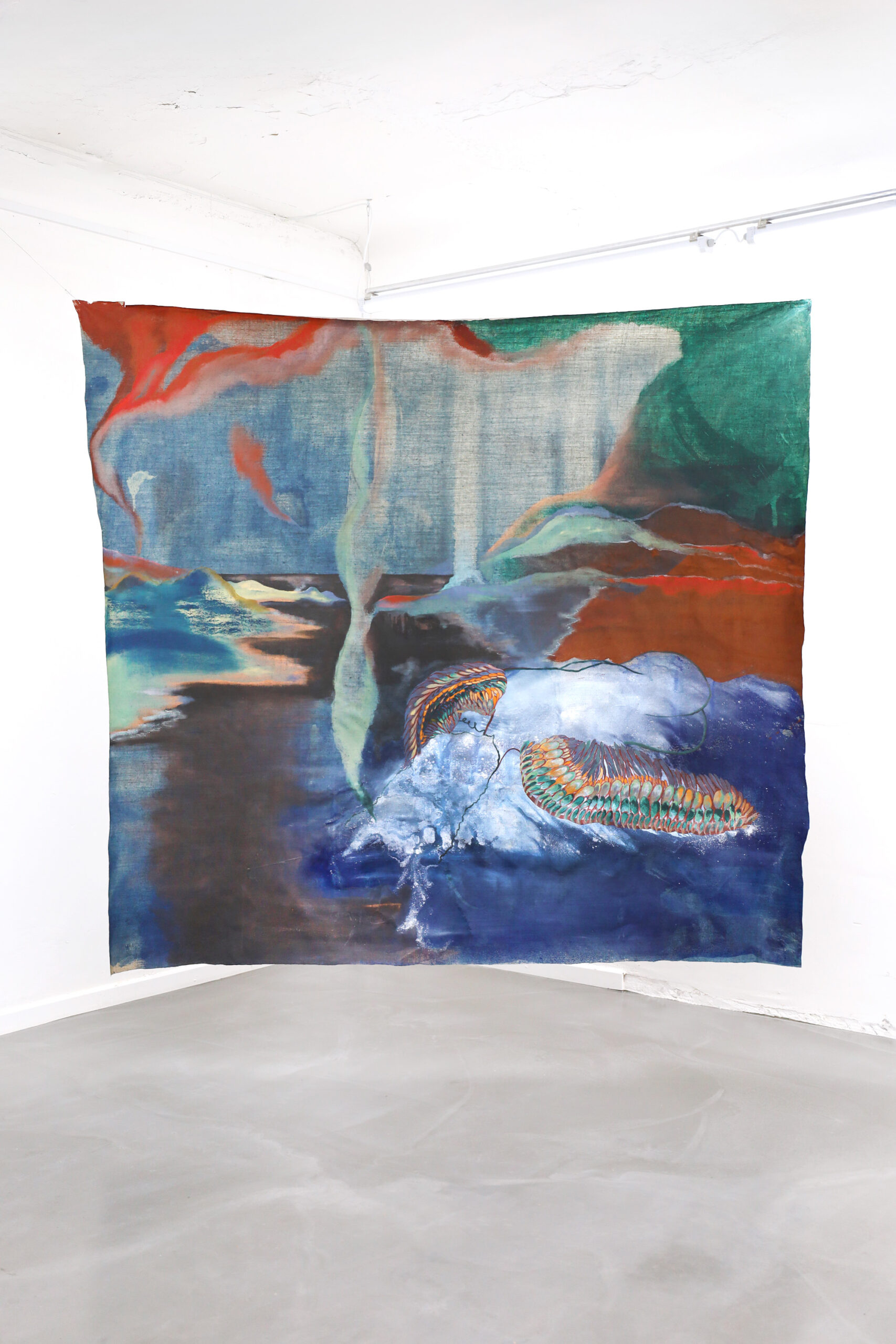
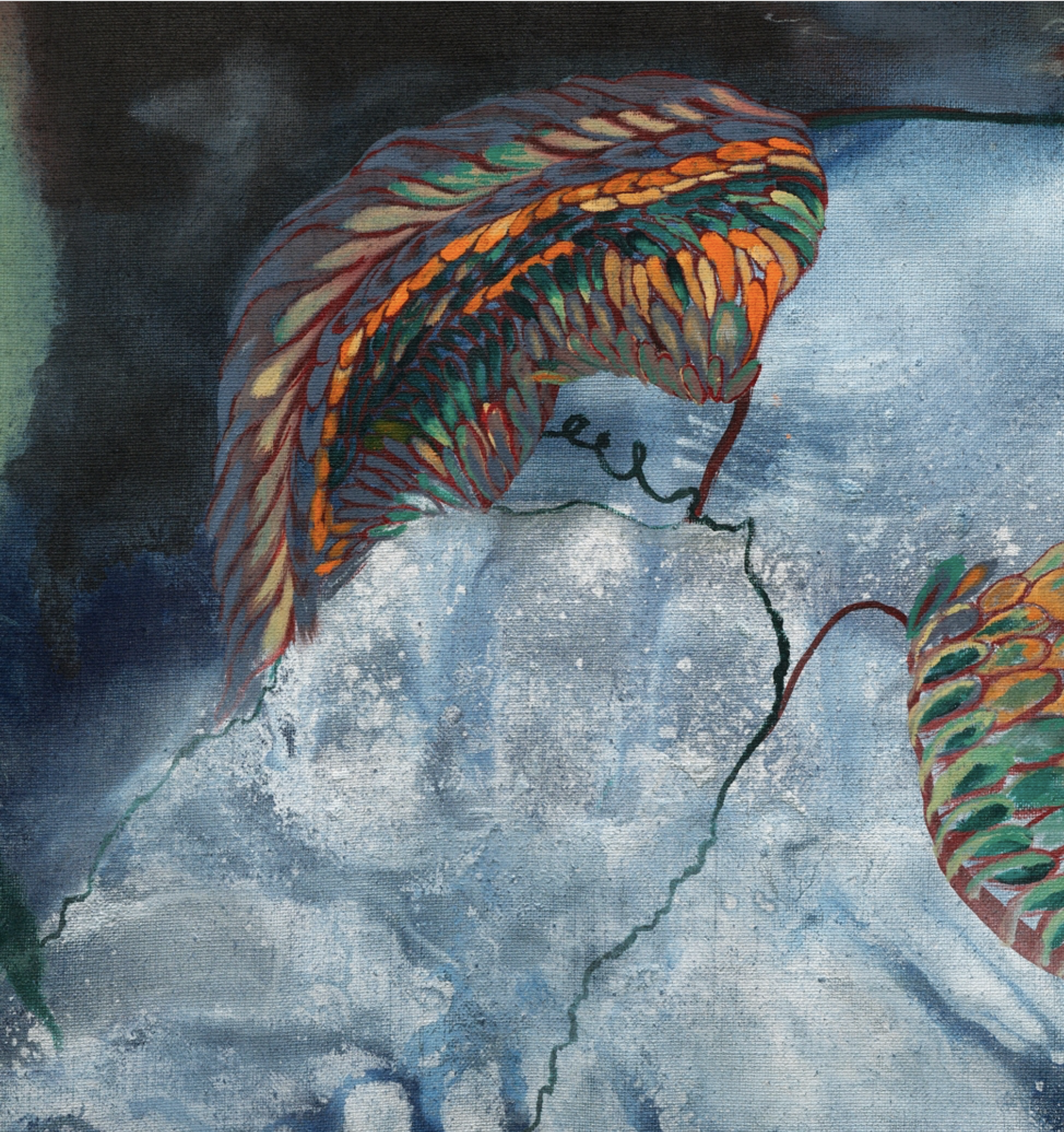
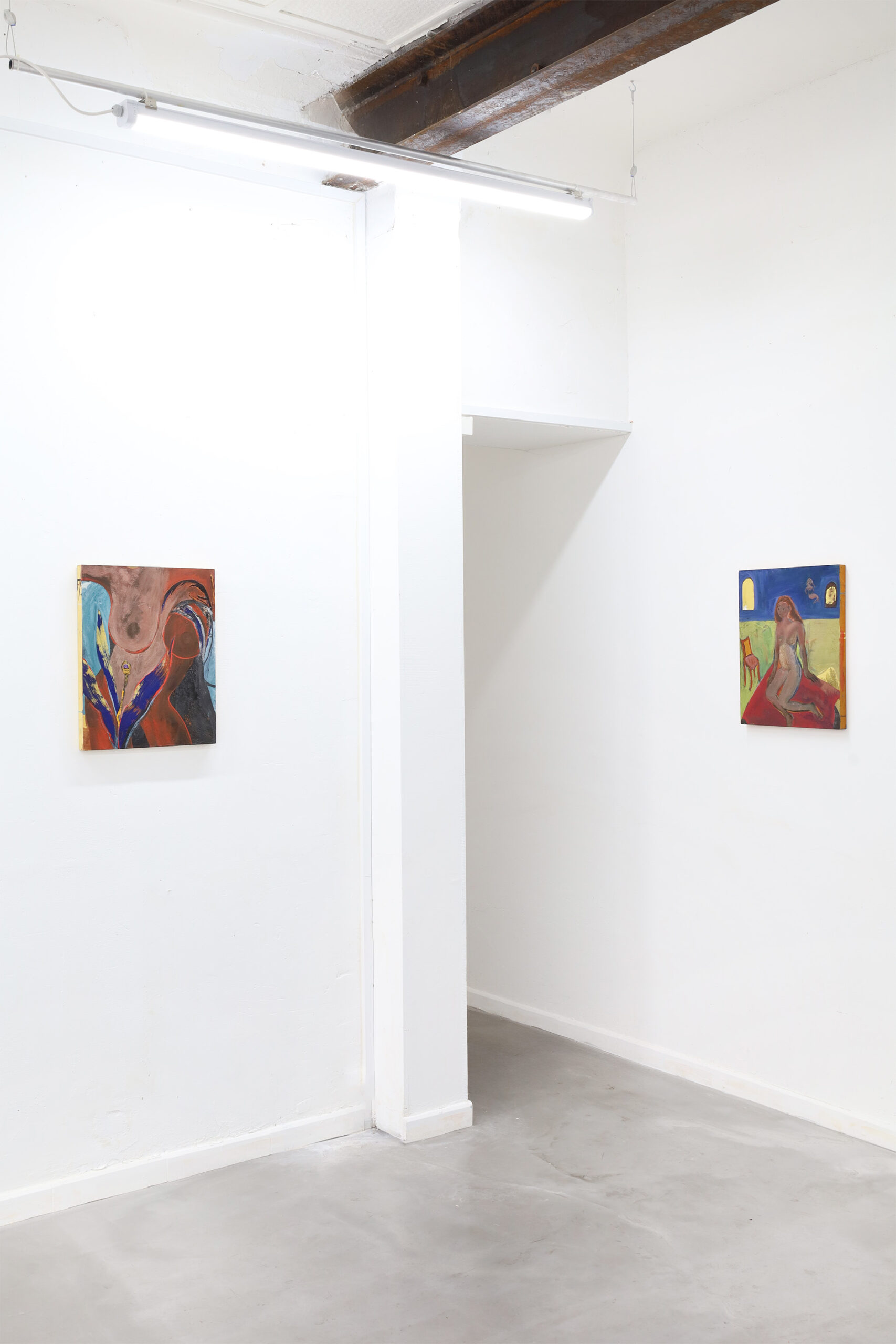
At the heart of this reflection emerges L’oreille à terre (2024), a representation of the birth of an angel. As well as representing a mystical legend in its vital form, the artist is evoking the strength required to give birth to such creatures, whether mortal or immortal. The meticulousness of the wings contrasts with the body, still transparent in the chrysalis state, in moult, made of foam and white fumaroles.
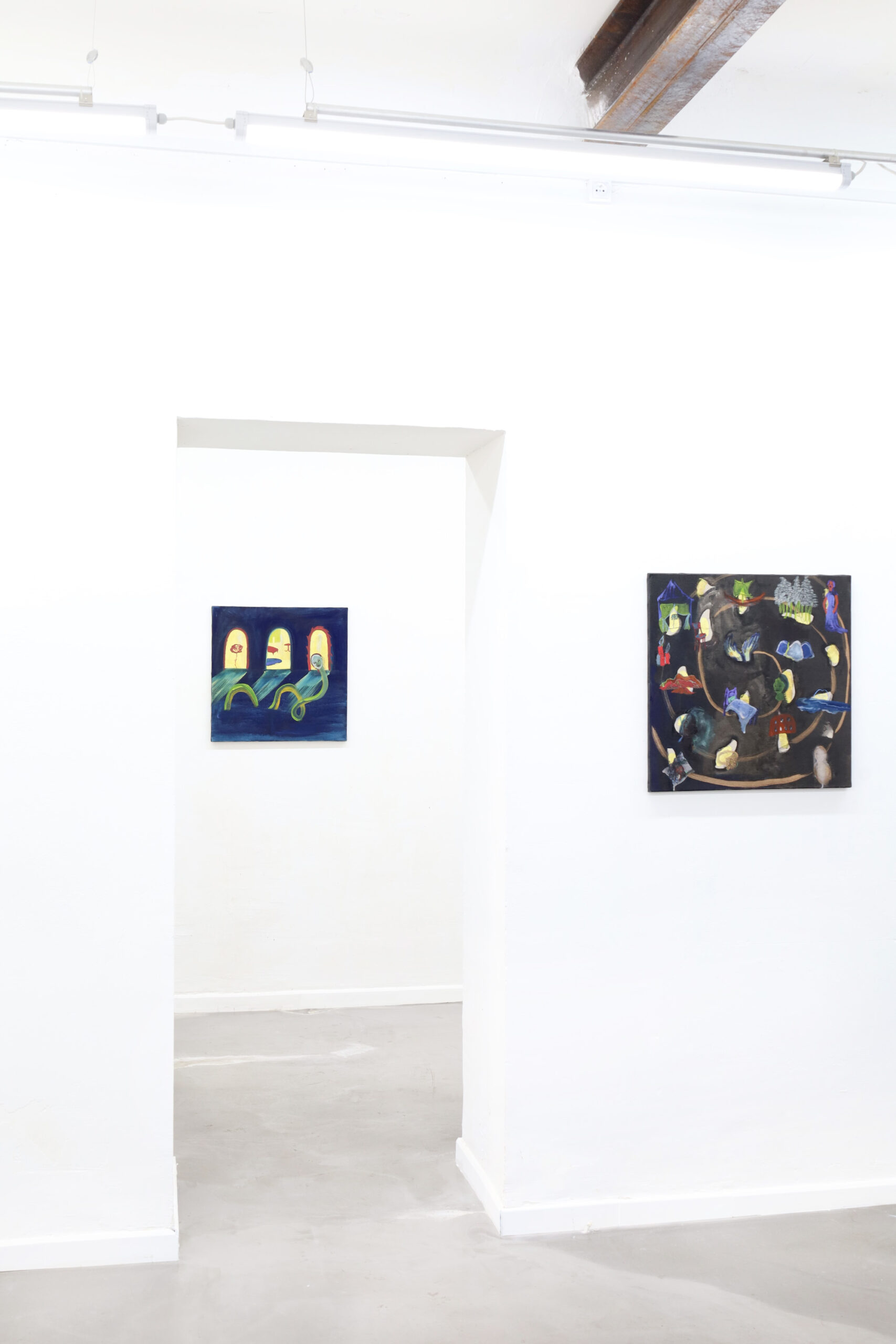
Drawing inspiration from different mythologies, geographies, travels and memories, Inès Di Folco Jemni bears witness to her attraction to places where magic works, where there is a more serene relationship with the unexplained and with legends, she says. By drawing on the ubiquitous power of paint, in the image of Petite constellation, she captures the feeling of belonging to several places at the same time, of having these worlds cohabit simultaneously in her life and on the canvas.