
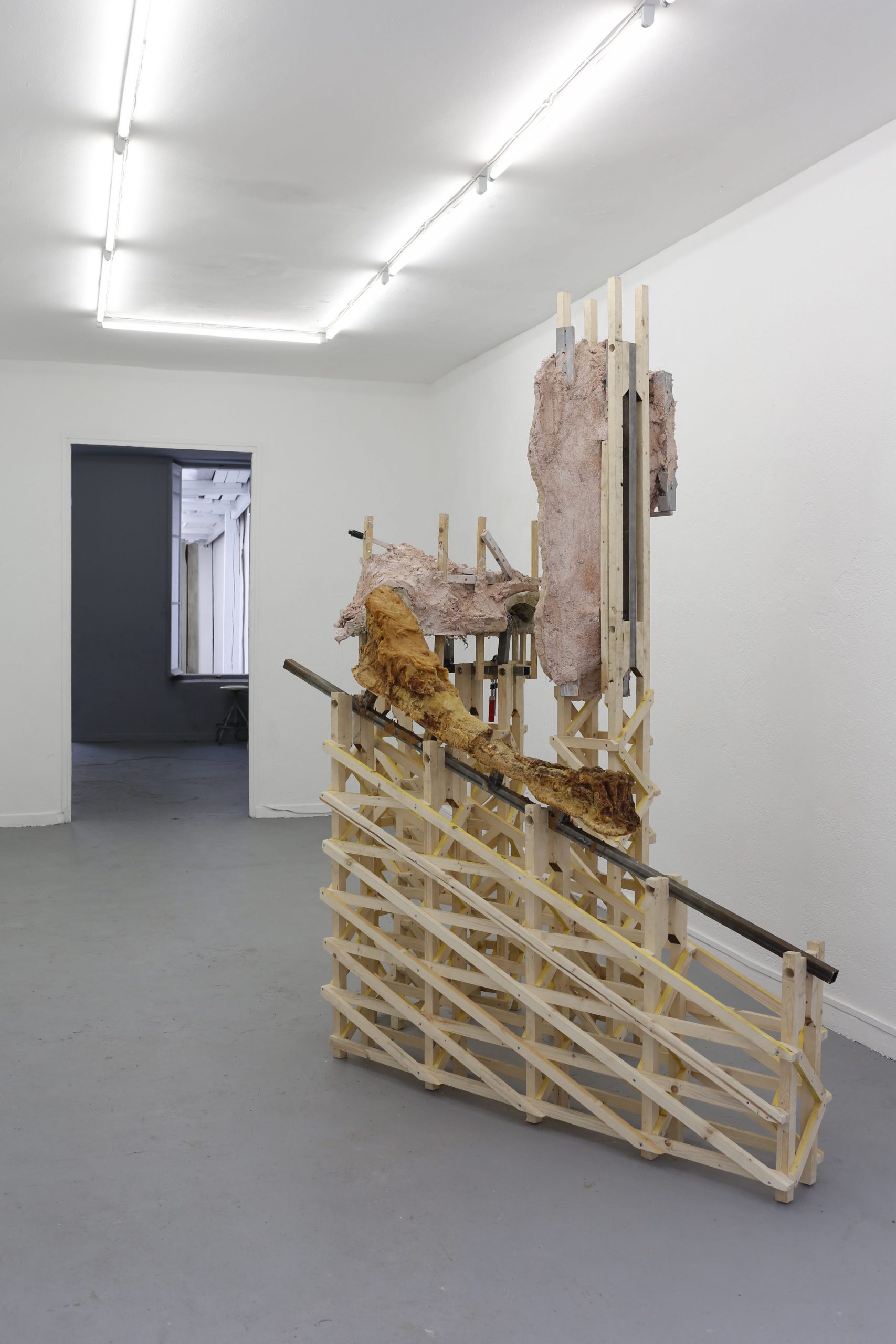
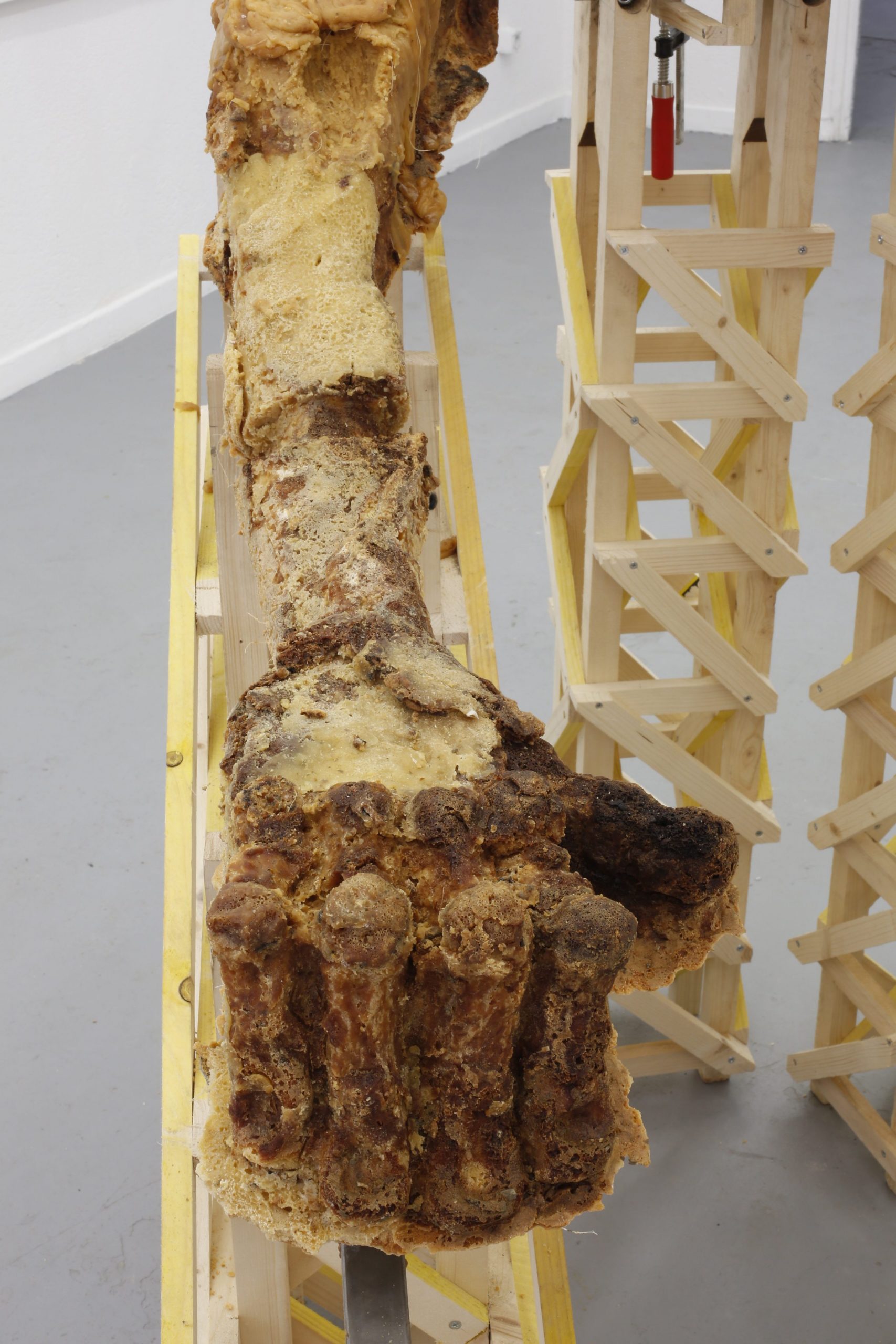
At the foundation of capitalist thought, Adam Smith developed the theory of the invisible hand, according to which workers, initially driven by their own self-interest, are led to contribute to the common good regardless of their intentions. With irony, the invisible hands—here gigantic—are depicted in a cartoonish manner. They face us: one stretched toward the sky, the other directed toward the earth. Detached from any bodies, they represent both the one who creates and the one who labors, manipulating the mind and acting at will, like Thing from The Addams Family.
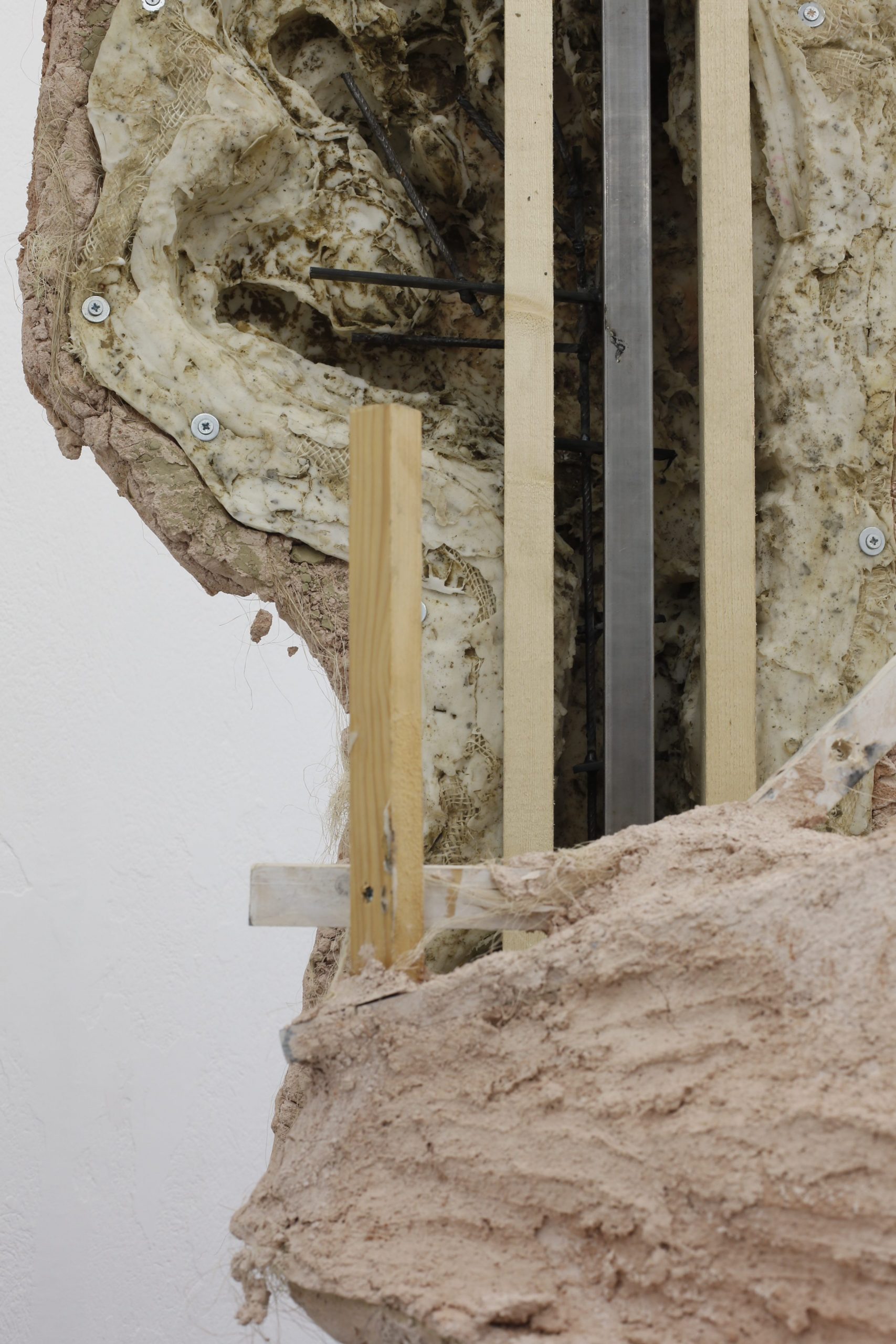
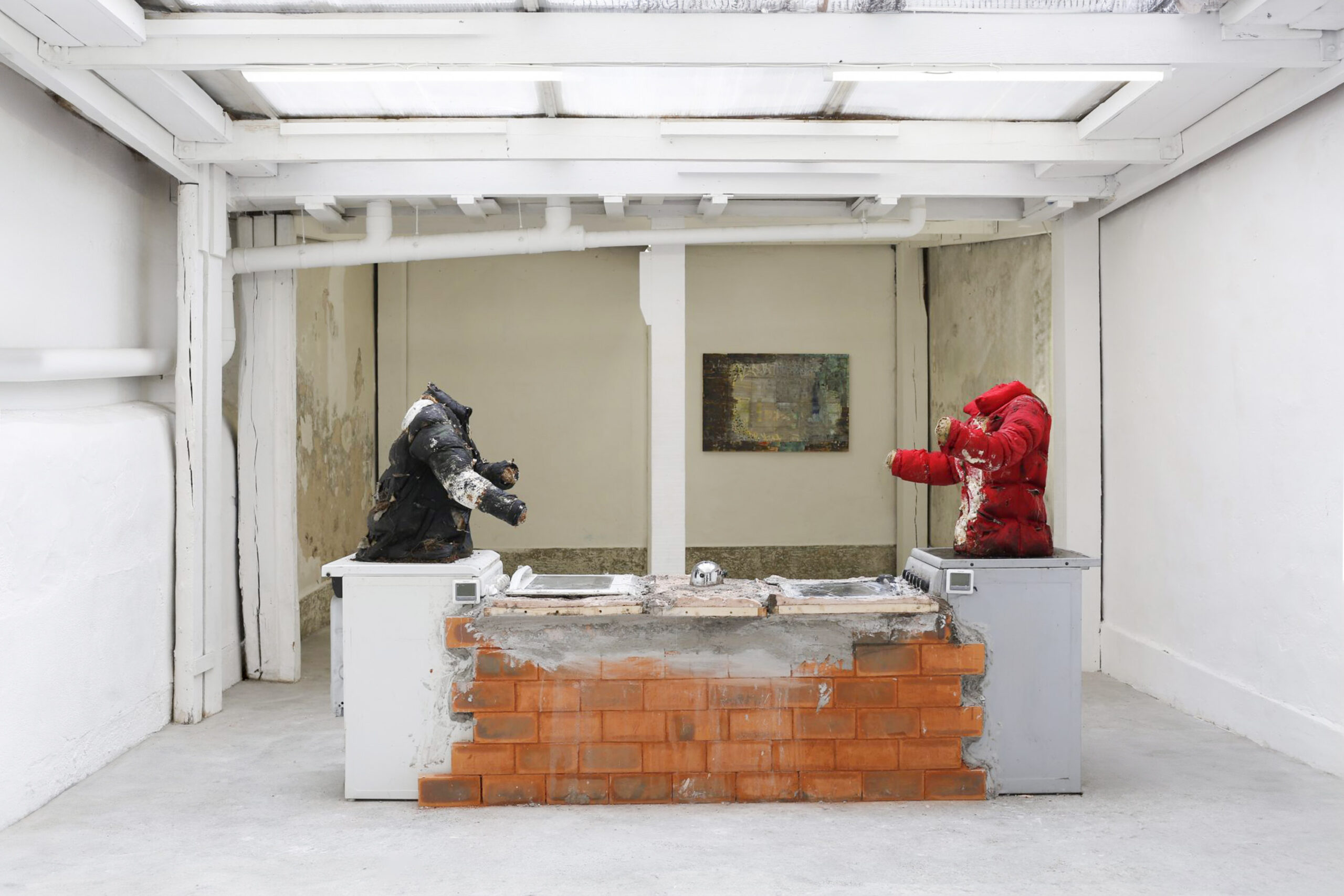
To create them, the artist constructs plaster molds and a massive wooden structure to hold the different parts together. During the exhibition, he pours madeleine batter into it—the final material of the work. To bake it, he builds a giant curing chamber on site using domestic ovens, bricks, and a fan, combining in a single invented object cooking techniques from different eras and uses. The oven, as a source of heat, becomes the origin of the process, the hearth of creation.
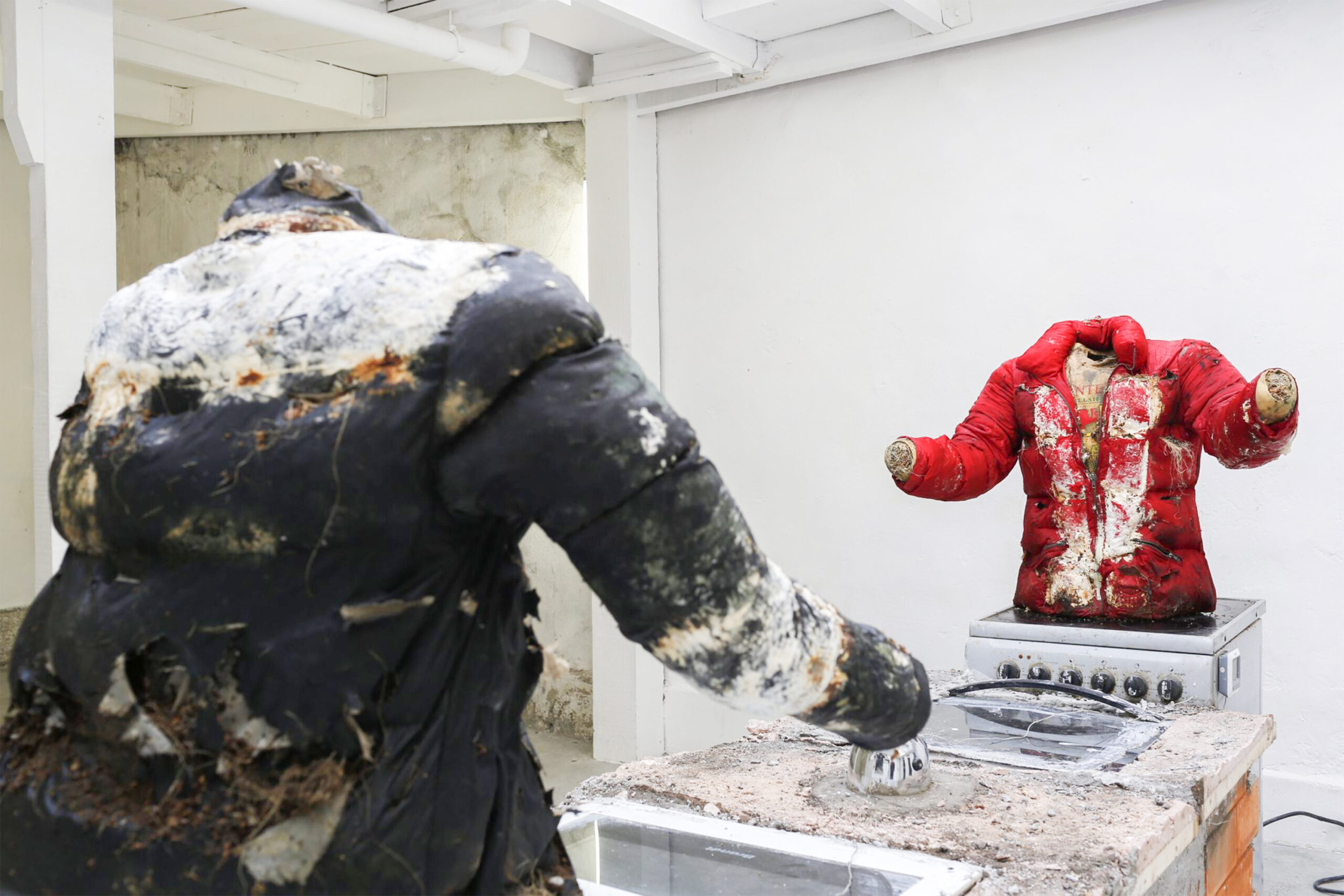
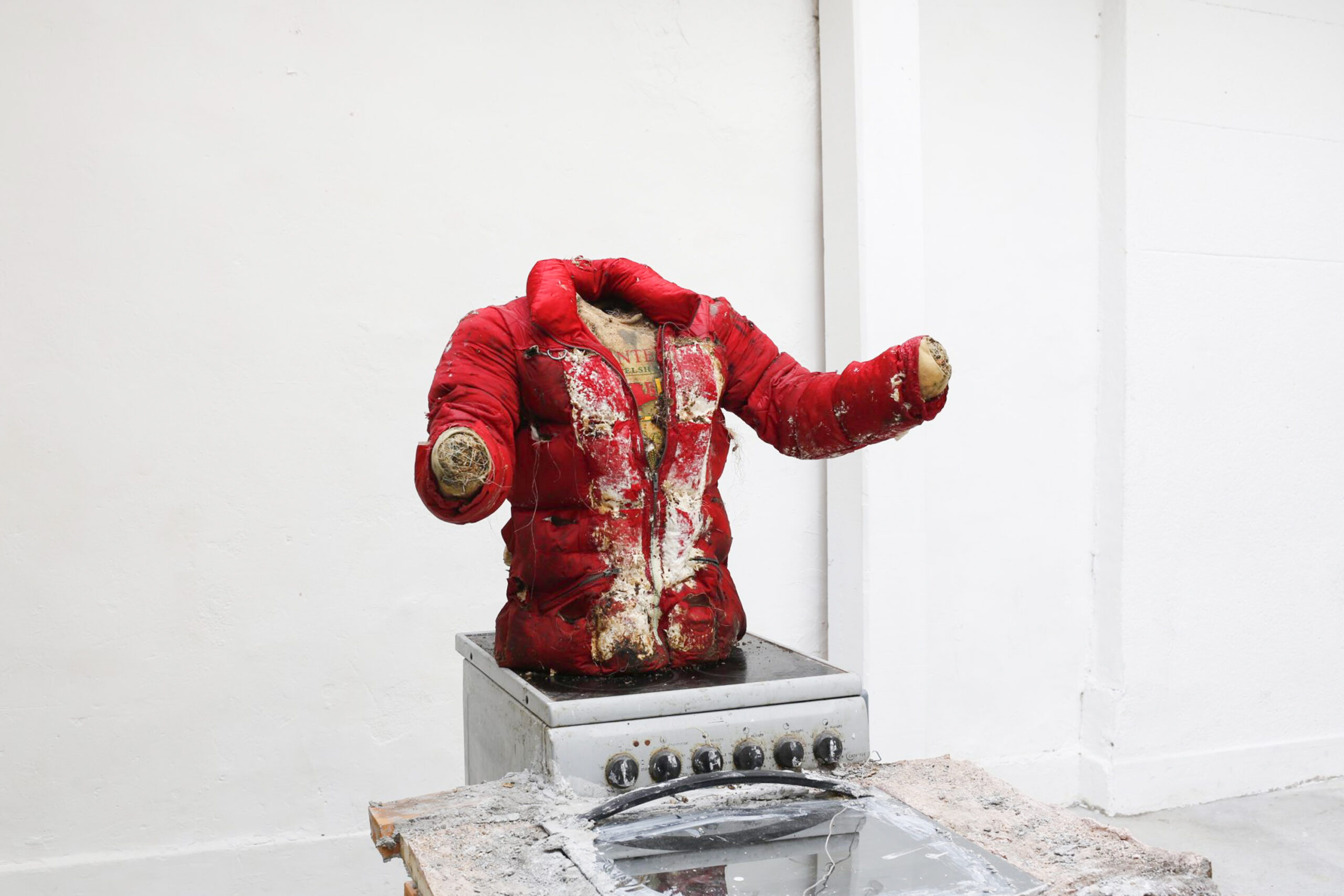
Placed on top are two puffer jackets, like ghostly, spectral presences. The distance between them and their gestures leave their interaction undefined—somewhere between embrace and confrontation. The hands and bodies have disappeared, and several species of fungi now inhabit this inorganic membrane. Supposed to devour one another in order to survive, they grow here in random and uncertain ways.
Through a reflective approach, Lucas Vidal dissects his entire creative process, reveals the importance of physical laws beyond his control, and takes a risk: that it might not bake, might not come into being, might collapse.
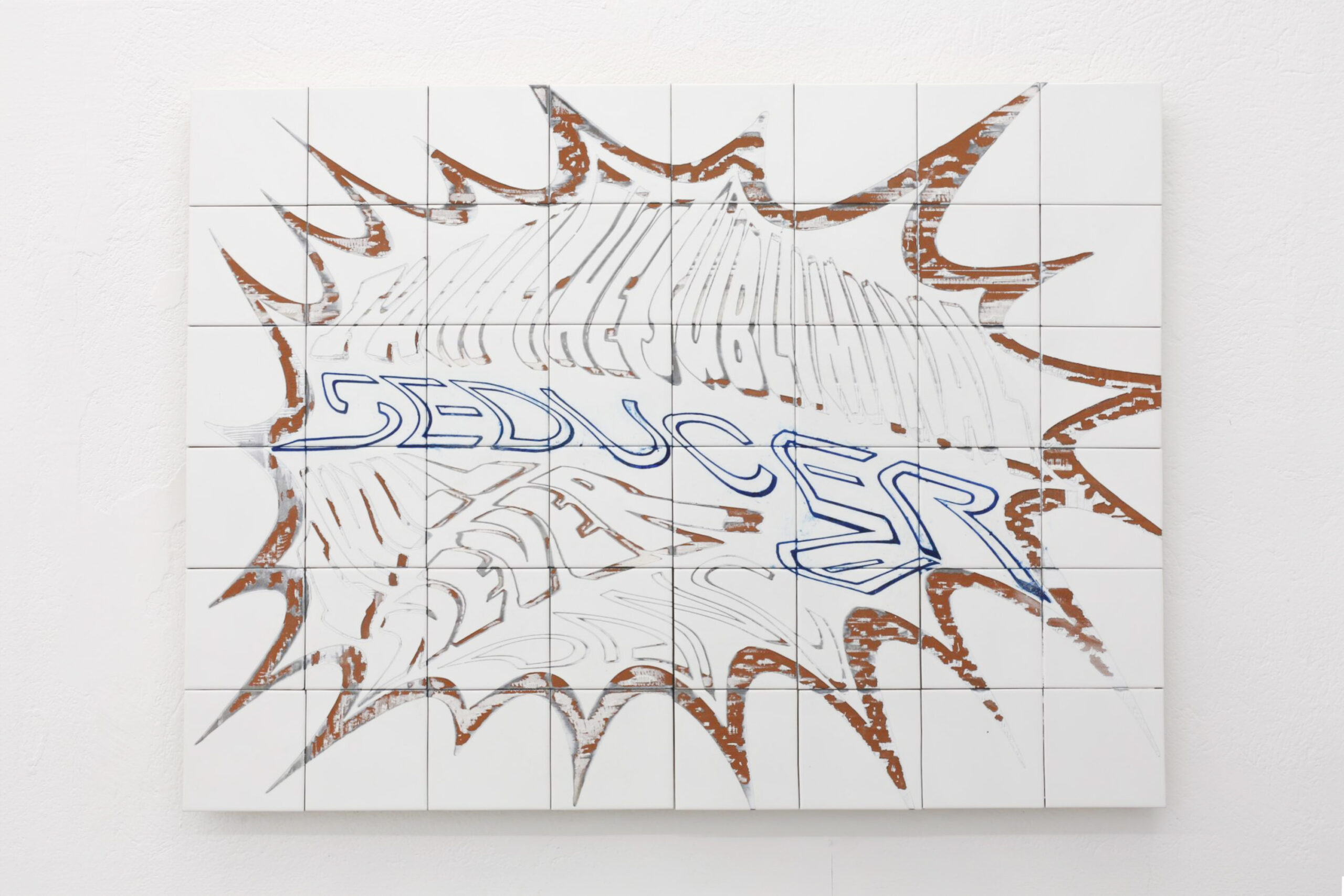
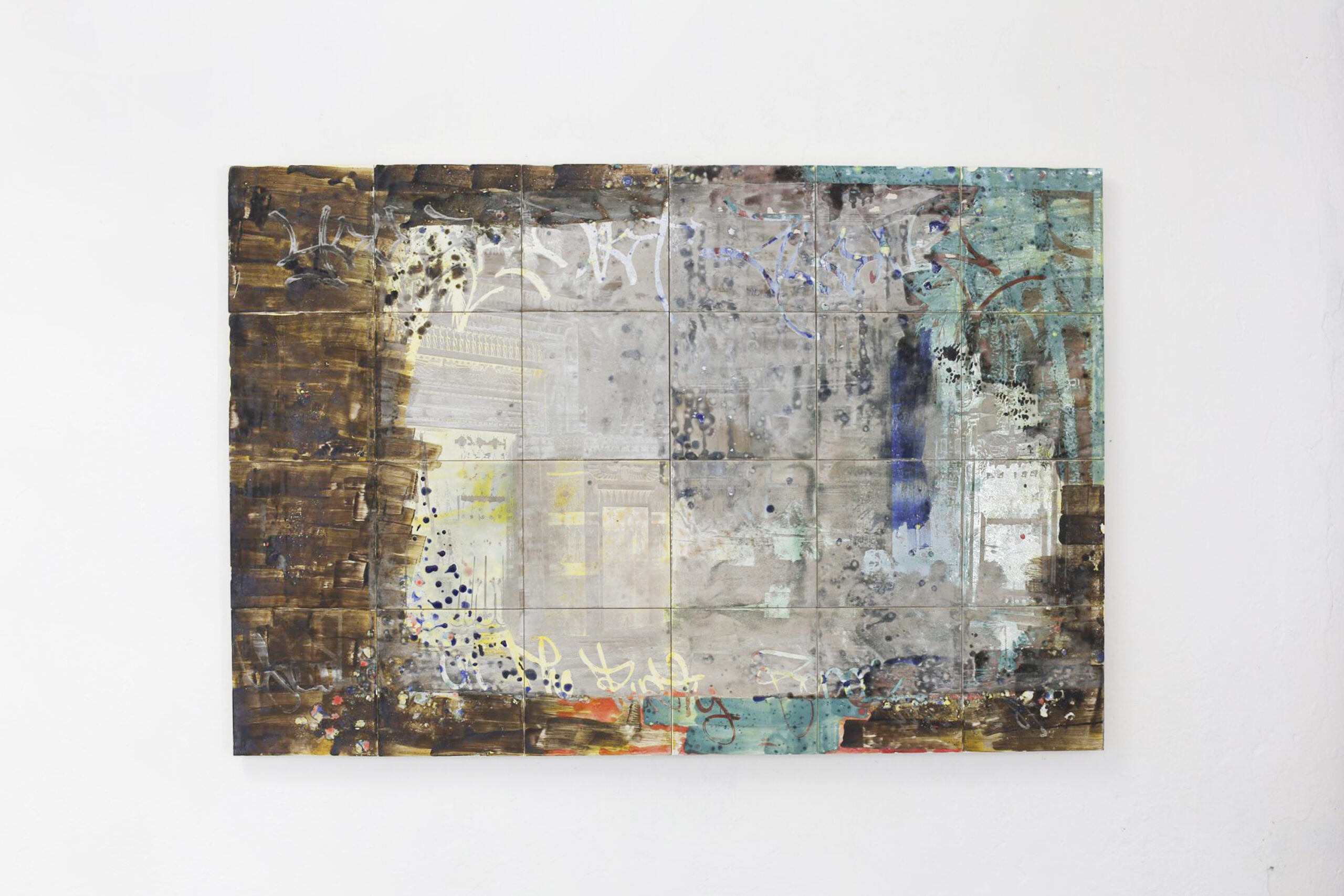
Finally, drawing on the tradition of azulejos, two tiled panels are fixed to the wall, adorned with lyrics by Parliament. Incorporating into their music a wide range of popular artistic fields—from cinema to comics—they deploy a comic-book imagery across their lyrics, album covers, and performances. Conceived as a diptych, like two panels from the same page, a speech bubble bursts across the white faience of the first piece: I am the subliminal seducer / I will never dance. This address resonates in the second ensemble: You’re not alone / You’re in the party zone.
This exhibition is discovered by feeling one’s way through it, as one advances step by step into a cave marked by a musty, increasingly moldy smell. Systematically doubling forms—Invisible Hands, Frozen Hands, Negative Hands—they ultimately encounter no one, leaving an impression of absence and isolation. They are imprints, traces of a past presence, a call toward a future alterity.